

Nguyen The Minh, Director of Retail Client Analysis at Yuanta Securities Vietnam, emphasized this point when discussing the issue.
- This morning, FTSE Russell reiterated its plan to upgrade the Vietnamese stock market. What is your assessment of this?
- Basically, this upgrade announcement didn't come as a surprise to investors, as the market had already somewhat anticipated that Vietnam would be approved and that the upgrade would take effect around September. However, there are some factors that the market may not have fully reflected.
Could you elaborate?

- First of all, from a psychological perspective, this information significantly improves investor expectations, especially given the sharp decline in liquidity over the past two weeks due to geopolitical tensions. With external risks showing signs of easing, combined with the official approval of the upgrade, the market will receive crucial support, leading to less cautious sentiment.
From a prospective perspective, this upgrade could be a convergence of favorable circumstances. Notably, within index baskets like the MSCI Emerging Markets Index, many markets in the Middle East are under significant pressure as their market capitalization declines sharply due to geopolitical risks. If this trend continues, the weighting of these markets in the index basket will shrink.
According to the allocation principle, when the weighting of a market decreases, capital flows will be reallocated to other markets. In this context, Vietnam – a newly upgraded market with a stable foundation – could become an alternative destination, thereby increasing its weighting in international investment portfolios.
This means that the scale of capital inflows, especially from ETFs, could exceed initial expectations (around $1–1.5 billion). Furthermore, if favorable factors continue, the upgrade process to higher levels according to MSCI standards or other international rating agencies could occur sooner than initially projected (2–3 years).
In short, the opportunities in the Vietnamese market stem not only from its internal dynamics but also from the relative shifts in global capital flows.
Furthermore, in June, Vietnam will undergo a national credit rating review by international organizations such as S&P Global Ratings, Moody's, and Fitch Ratings. A positive outcome from this market upgrade will be a significant advantage, contributing to strengthening the prospects for improving the national credit rating.
If its credit rating is upgraded, Vietnam will be in a more favorable position to raise capital in international markets at a more reasonable cost, thereby supporting economic growth and the financial market in the medium and long term.
- In your opinion, how might the upgrade of Vietnam's stock market attract international capital? Which sectors would benefit most significantly?
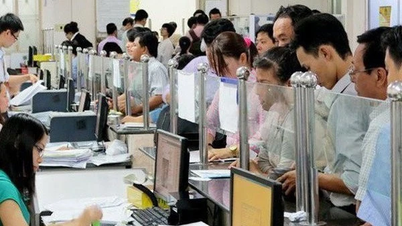
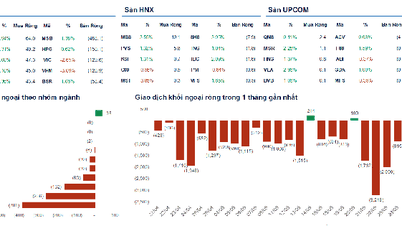
- Recent events have shown a strong net selling trend among institutional investors, leading to greater market volatility. However, once the market is upgraded, the likelihood of attracting capital back from institutions – especially foreign investment funds – will increase.
This helps increase the proportion of institutional investors in the market structure, thereby contributing to reducing volatility and helping the market operate more stably and sustainably in the medium and long term.
In terms of attracting international capital, they can be divided into two main groups: passive investment funds and active investment funds.
For passive investment funds (ETFs), initial estimates suggest that capital inflows into Vietnam could reach approximately $1–1.5 billion. However, this capital will not be disbursed all at once but will be allocated in multiple stages, typically in increments of 10%, 30%, and two subsequent stages of 35% each. This helps to limit volatility and create stability in the market during the capital absorption process.
Furthermore, actively managed funds have significantly larger asset sizes, typically around five times larger than passive funds. Therefore, the total expected capital inflow could reach approximately $5–6 billion. However, compared to the current market capitalization of the Vietnamese stock market, this figure is still not very large.
The more promising outlook lies in the next phase, especially if Vietnam is upgraded according to MSCI standards. In that case, the scale of global passive capital flows could increase significantly, creating a greater boost for the market.
Regarding the group of stocks that will benefit, the trend is not too differentiated by industry but mainly by market capitalization. Specifically, large-cap stocks, especially those in the VN30 index, will be the first to benefit because they meet the important criteria of international indices.
Two key factors determining the allocation of funds are: market capitalization size and the remaining foreign ownership ratio (foreign room). Companies that meet both of these conditions will have a significant advantage in attracting capital when the upgrade process takes place.
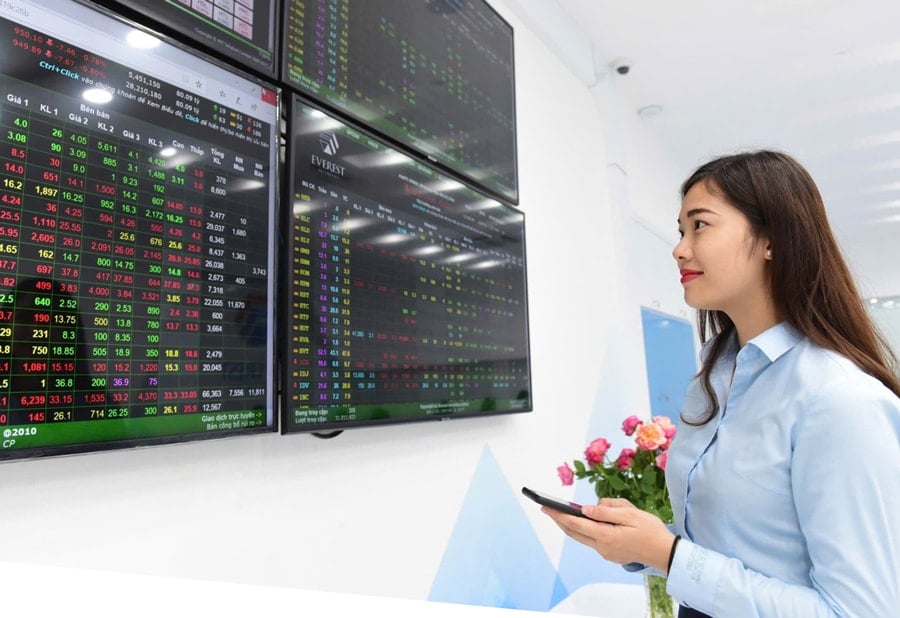
- To truly attract this large-scale capital flow sustainably, the challenge lies not only in improving technical infrastructure, trading mechanisms, or expanding market access, but more importantly, in enhancing the quality of securities on the stock market. So, what is the solution, sir?
Currently, the market has three exchanges: HOSE, HNX, and UpCoM, with over 1,600 listed stocks. However, the total market capitalization is only equivalent to about 70% of GDP – lower than many emerging markets in the region such as Thailand, where this ratio is usually over 100%. This shows that there is still enormous potential for improving the quality and size of Vietnam's market.
To solve this problem, several solutions need to be implemented simultaneously. Firstly, the market system needs to be restructured. Merging the two exchanges, HOSE and HNX, and using HOSE's listing standards as a common benchmark will help raise the overall quality of businesses. In the long term, it is necessary to continue raising listing criteria to approach international standards.
Secondly, we need to strongly develop investment products, especially ETFs. ETFs, with their stringent stock selection criteria, will put pressure on businesses to improve their size, liquidity, and transparency if they want to be included in the portfolio. This will contribute to improving the overall quality of goods in the market.
Third, strengthen oversight and tighten corporate governance standards. This is a common weakness today, yet it is a core element in assessing a company's transparency and compliance.
Fourth, a systematic evaluation system for investor relations (IR) activities needs to be established. Currently, this activity is mainly based on encouragement and lacks clear ranking criteria. If rankings or index baskets specifically for companies with high-quality IR are created, it will incentivize businesses to improve transparency and be more proactive in disclosing information.
Finally, indirect incentive mechanisms could be considered, such as credit incentives or reduced capital costs for businesses that meet high standards of transparency and governance. This would further motivate businesses to improve quality, thereby elevating their market position.
Overall, improving the quality of goods not only serves the goal of upgrading the market ranking, but also forms the foundation for sustainable market development, attracting long-term capital flows and strengthening investor confidence.
Thank you very much, sir!
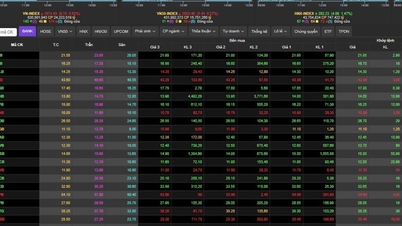
Asian stock markets rose across the board on positive news regarding a two-week ceasefire in the Middle East. Simultaneously, FTSE Russell released its March 2026 interim assessment, confirming that Vietnam fully meets the criteria for an upgrade from a frontier market to an emerging market. Following this positive news, domestic investors increased buying activity, causing the VN-Index to surge.
At the close of trading on April 8th, the VN-Index rose 79.01 points (4.71%) to 1,756.55 points; the VN30-Index reached 1,931.01 points, up 90.05 points (4.89%). The market was almost entirely in the green, with 322 stocks gaining and only 27 declining. Within the VN30 basket, only one stock fell, while the rest all increased.
Source: https://hanoimoi.vn/nang-hang-thi-truong-cu-hich-ngan-han-cua-sang-dai-han-cho-dong-tien-743759.html

![[Photo] The heat at the fireworks display site on the opening night of the Da Nang International Fireworks Festival 2026](https://vphoto.vietnam.vn/thumb/1200x675/vietnam/resource/IMAGE/2026/05/27/1779889741485_ndo_br_z7872039145157-fecaba5112f39e8352544099d7ef4738-5140-jpg.webp)

![[Photo] The courage of new recruits of Brigade 144 on the training ground.](https://vphoto.vietnam.vn/thumb/1200x675/vietnam/resource/IMAGE/2026/05/27/1779881651341_anh-man-hinh-2026-05-27-luc-18-32-52.png)



























































![[Photo] The courage of new recruits of Brigade 144 on the training ground.](https://vphoto.vietnam.vn/thumb/402x226/vietnam/resource/IMAGE/2026/05/27/1779881651341_anh-man-hinh-2026-05-27-luc-18-32-52.png)































Comment (0)