

According to Dr. Nguyen Hong Son, Head of the Department of Plastic Surgery, Aesthetics and Rehabilitation at the Central Dermatology Hospital, basal cell carcinoma is the most common type of skin cancer, accounting for approximately 75% of all skin cancer cases.
Globally , basal cell carcinoma is the most common type of cancer in Caucasians, with an increasing incidence rate. In Vietnam, this disease is also being recorded with an increasing frequency, with lesions particularly common in areas of skin frequently exposed to sunlight such as the face, ears, and neck.
The condition often develops subtly, without pain or itching, and is easily mistaken for a mole, benign tumor, or ordinary scar.
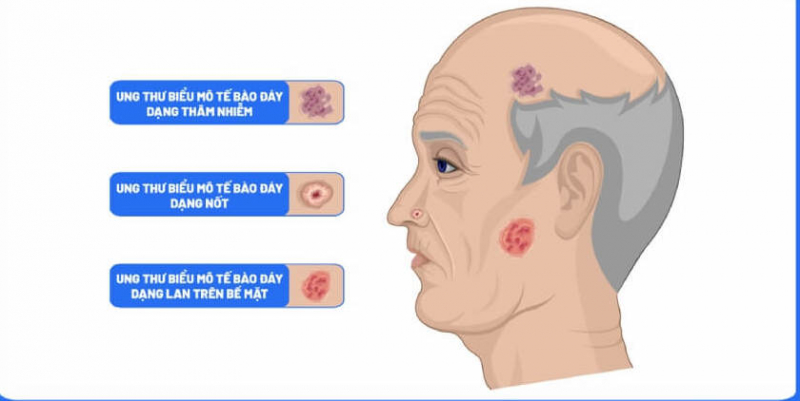
Despite having a much better prognosis than other forms of cancer, the disease can recur multiple times and become increasingly complex – even with proper treatment. This stems from the biological characteristics of some high-risk basal cell carcinomas, which have the ability to invade silently and are difficult to control.
Sharing about this disease, Dr. Son said that recently the hospital received a male patient, nearly 60 years old, who began to notice an abnormal thickening of the skin on his right upper lip. After examination at a specialized oncology hospital, he was diagnosed with basal cell carcinoma and underwent his first surgical removal of the tumor.
About three years later, the area around the old surgical scar began to harden, thicken, and change color. He returned to the hospital and was diagnosed with recurrent skin cancer, requiring a second surgery.
Just three months after the second surgery, the area near the right nostril continued to thicken and harden. He went to Hanoi Medical University Hospital, where a biopsy was performed and he was diagnosed with skin cancer of the right nostril on the background of basal cell carcinoma of the upper lip that had been surgically removed.
Although further surgery was recommended, the family did not agree to hospitalization. He then sought advice and specialized treatment at the National Dermatology Hospital.
After examination and skin analysis, doctors discovered atypical cancer recurrence on a scarred background – a sign easily overlooked with the naked eye.
The results confirmed that he had basal cell carcinoma of the nasolabial fold with a particularly dangerous characteristic: simultaneously possessing three types of tumors—small, superficial, and infiltrative.
This is a complex case of skin cancer where the patient has three histological types simultaneously within a single lesion, and the lesion location is classified as one of the most advanced approaches in the treatment of basal cell carcinoma.
Following a specialist consultation, the patient was prescribed Mohs surgery combined with defect reconstruction – the most advanced method currently available for treating high-risk and recurrent basal cell carcinoma, with a cure rate of up to 90–95%.

Basal cell carcinoma is a malignant tumor originating from cells in the basal layer of the epidermis. This type of cancer is curable if detected and treated early.
The cause of DNA damage in basal cells is believed to be directly related to ultraviolet (UV) radiation. Most patients with basal cell carcinoma are due to prolonged exposure to ultraviolet (UV) radiation from sunlight.
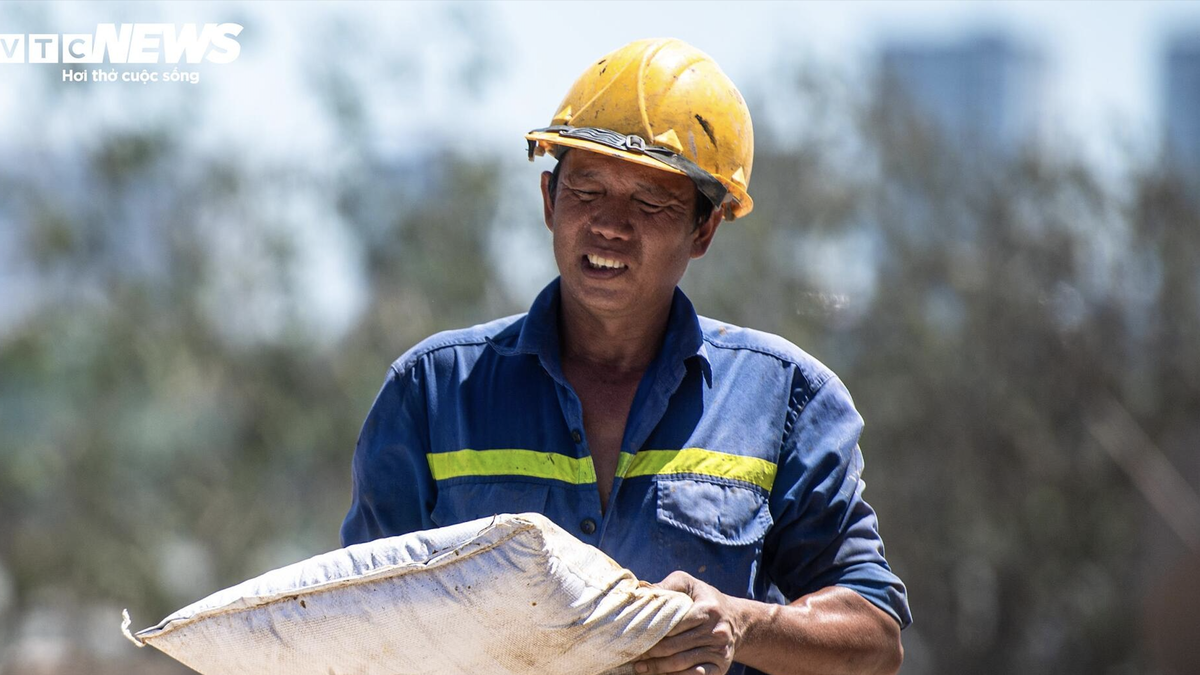
People who are frequently exposed to direct sunlight without any protection are believed to have an increased risk of developing basal cell carcinoma. In addition, UV rays are also present in the lights of tanning beds.
With summer approaching, doctors advise that avoiding sun exposure by wearing wide-brimmed hats, sun-protective clothing when going outside, and using sunscreen are effective measures to prevent this type of cancer.
Dr. Nguyen Hong Son advises that if you notice any of the following signs on your body: the appearance of bumps or patches of shiny, transparent skin, pink or skin-colored, possibly with small dilated blood vessels around them; ulcers that do not heal, or heal and recur repeatedly; areas of thickened, hardened skin with indistinct boundaries, especially on the face, ears, neck, or areas frequently exposed to sunlight; old scars that show signs of hardening, swelling, or discoloration... you should proactively seek examination at a dermatology specialist for a comprehensive assessment.
Patients who have previously been treated for this type of skin cancer need to have regular follow-up appointments with their specialist, even if the wound appears stable.
If you notice any changes in an old scar (hardening, thickening, discoloration, swelling), inform your doctor as soon as possible.
Source: https://cand.com.vn/y-te/nang-nong-can-trong-voi-can-benh-ung-thu-da-i803876/

![[Image] Close-up view of the interchange connecting the two expressways and Long Thanh Airport.](https://vphoto.vietnam.vn/thumb/1200x675/vietnam/resource/IMAGE/2026/05/25/1779703378210_ndo_br_z7863716673926-224453a31600126cce10622af6290afd-4549-jpg.webp)


![[Image] Hanoi's urban life under the challenge of a "scorching hot" environment](https://vphoto.vietnam.vn/thumb/1200x675/vietnam/resource/IMAGE/2026/05/25/1779706979265_nang-nong-t5-2026-minh-duy-7-4636-jpg.webp)






















































































Comment (0)