I remember that in the old days, at the beginning of the twelfth lunar month, my grandfather would start drying tangerine peels. The bright yellow peels were torn into small pieces and hung to dry on a bamboo tray on the porch. He said he saved them to use as a seasoning for wrapping pork sausage.
My homemade beef sausage is seasoned with many spices, but the most distinctive is the aroma of crispy, roasted, and finely ground dried tangerine peel. This fragrance blends with the tender stewed beef, tightly wrapped in banana leaves, a touch of spicy black pepper, the sweet aroma of cardamom, and the crunchy texture of wood ear mushrooms… All these elements combine to create a unique flavor. Take a bite of the sausage, dip it into a bowl of fish sauce with a squeeze of lemon, add a few slices of red chili, and eat it with pickled onions and cucumbers. That's enough to know Tet (Vietnamese New Year) has truly arrived. Tet is present in every familiar bite.


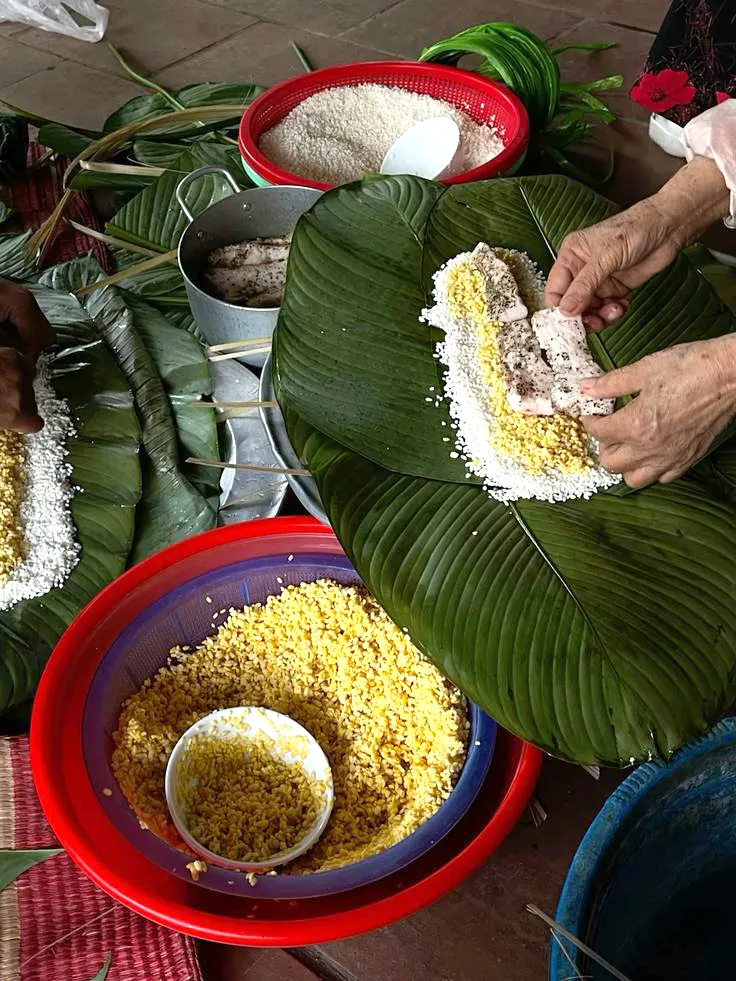
The festive atmosphere of Tet truly permeates from the 23rd day of the 12th lunar month, the day of the ceremony to bid farewell to the Kitchen God. My mother would often wake up early to cook glutinous rice balls, then go to the market to buy some golden carp to release in the afternoon. On that day, every household would begin erecting the New Year's pole and hanging flags. My grandfather would be busy with his usual tasks: buying bamboo tubes to split into strips, preparing dong leaves and banana leaves, washing glutinous rice, and rinsing mung beans. He even made a small wooden mold himself to wrap the square-shaped banh chung (traditional Vietnamese rice cakes). The glutinous rice was soaked beforehand, mixed with a little salt, and combined with the water from the leaves of the glutinous rice plant to make it green and fragrant. The mung beans were steamed until cooked, mashed, and rolled into balls to use as filling along with pork belly. The pork had to be a cut with a little fat, marinated with dried onions, fish sauce, and black pepper for flavor. Layers of rice, beans, and meat were carefully arranged. The cakes had to be tightly wrapped and square. After boiling, the cakes were pressed under a heavy wooden board to drain the water. During those times, I would excitedly run around, watching him work and then imitating him wrapping them. Every year, I would make myself a tiny little cake. That one was usually eaten first, both to "taste" the whole pot of cakes and as a small reward for the eager child.
The night of making banh chung (traditional Vietnamese rice cakes) is a true celebration. In the biting cold of the year-end, the whole family gathers around the fire. Some add firewood, others add water, and still others chat animatedly. The children can't forget burying sweet potatoes in the ashes to roast them. The sweet potatoes, cooked to perfection, are fragrant and delicious; peeled and eaten hot, hands stained with grease but smiles beaming. With so many people in the house, everything tastes good. But really, just being together, beside the steaming pot of banh chung, is a great joy in itself.
Now that I'm an adult and a father of young children, I understand the feelings of my parents in the past: they only hoped to provide their children with a fulfilling Lunar New Year celebration. The worry now isn't about food or clothing shortages, but about the fear that children will no longer experience the unique excitement of the twelfth lunar month – that simple, unhurried, warm excitement – as we once did.


Source: https://www.sggp.org.vn/nao-nuc-thang-chap-post835131.html