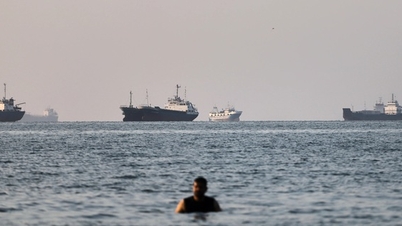
According to the Izvestia newspaper, Breeze 2026 is led by the Bulgarian Navy and will last approximately one month. The official schedule of the exercise was announced by the Supreme Command of Allied Forces Europe (SHAPE) of NATO.
However, this time, the organizers kept the number of personnel and the list of warships participating a secret. Experts believe that the increased secrecy is due to concerns about provoking Russia amidst the serious regional crisis.
To prepare for the current campaign, the relevant agencies carried out local tasks: clearing mines in maritime areas, conducting tactical exercises, and programming algorithms for interaction between the navy and civilian and government agencies.
The Breeze exercise has been held annually since 1996. Traditionally, it is distinguished by its openness and large scale.
For example, in the summer of 2025, units from 14 countries participated in the exercise: the United States, the United Kingdom, France, Italy, Turkey, Romania, Poland , the Netherlands, Belgium, Greece, Latvia, Albania, Georgia, and Bulgaria.
At that time, the forces involved included surface ships, air groups, diving units, and unmanned naval vehicles.
The format of the exercise
It is understandable that the organizers are keeping the composition and exact size of the Breeze-2026 force secret. Given the ongoing conflict in the Black Sea region, any actual deployment of NATO warships in the area carries the potential for direct escalation.
Therefore, according to Russian military expert Alexei Leonkov, the exercise will likely be conducted in a command and staff format, and will eventually shift to cyberspace.
"This is entirely consistent with the Alliance's modern global strategy of conducting multi-domain operations, in which key roles are played by personnel coordination rather than the physical presence of the fleet."
"Certainly, some elements will be practiced on the ground, for example, anti-landing defense on the Bulgarian coast or live-fire training... but all of this will be strictly limited to the national borders of NATO countries," Leonkov said.
The alliance is trying to avoid unnecessary provocations, recognizing that in the current situation, Russian air defense and coastal defense systems will consider any unidentified airborne or maritime targets approaching their air defense zone as legitimate targets.

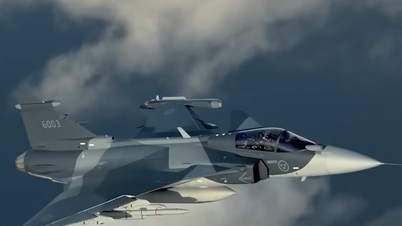
The situation is further complicated by the fact that the Ukrainian Armed Forces currently operate the same type of F-16 fighter jets as other countries in the bloc, the expert explained.
"Regarding the scenarios being planned, NATO is showing nothing new. The rhetoric in the exercises remains heavily anti-Russian. The traditional narrative is 'repelling aggression from a hypothetical adversary' and a collective retaliatory attack," Alexei Leonkov emphasized.
While the Kaliningrad region has always been a potential flashpoint for confrontations on NATO's northern flank, Crimea remains the alliance's primary "virtual prize" on its southern flank.
This expert believes that during the exercises, the command will concretize scenarios of blockading or assuming the capture of the Crimean Peninsula, which is the ultimate goal in all recent strategic exercises of the alliance in the Black Sea region.
The Montreux element and its true members
In previous years, Breeze's involvement was extensive: Ukraine actively mobilized warships from NATO countries outside the Black Sea, including the US and Italy, for the exercises.
However, the geopolitical and legal realities in the region have now changed significantly, military expert Vasily Dandykin noted in an interview with the Izvestia newspaper.
"The fact that the coalition leaders have decided not to disclose the exact composition of the force and the number of members involved speaks volumes, and it's clear they're hiding something."
However, this will not be a secret to the Russian Armed Forces: This sea area is being constantly monitored from the air, in space, and other reconnaissance means," Dandykin added.
Due to the Montreux Convention, which Türkiye strictly adheres to, ships from NATO countries outside the Black Sea region are currently unable to enter the restricted area through the strait.
Therefore, the core of the current exercises could include the "trio" of coastal states of the alliance: Bulgaria (the host country), Romania, and Türkiye.
Politically, the rest of the Ukrainian Navy could also participate. Furthermore, some operations could take place on the Danube River, from which river vessels from other European countries could depart.



"It's clear that the exercise scenarios, as observed in the Baltic region, are aimed solely at Russia. Under the guise of 'repelling external threats,' the participating parties will practice their own port defenses, air defense missions, and mine-laying," expert Dandykin said.
It is noteworthy that these exercises began just days after another major exercise concluded: the multinational Noble Blueprint 2026 (NOBL26) exercise in Romania, which ended on June 27th.
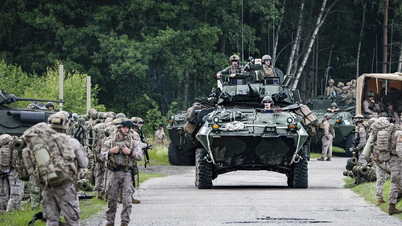
The exercise took place in the Focsani Gate area, a strategic corridor between the Carpathian Mountains and the Danube River.
Officially, their goal is to implement a regional defense plan, but according to experts, in reality NATO is carrying out troop and supply movements toward Ukraine.
Source: https://giaoducthoidai.vn/nato-tap-chiem-giu-ban-dao-crimea-post783405.html