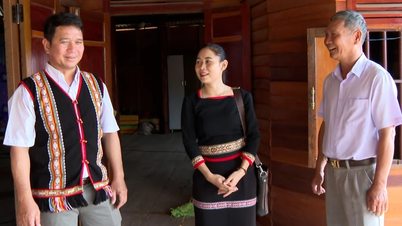
His skill in tuning gongs, his ability to identify ancient gongs, and his extensive knowledge of Jrai culture have propelled the name of Meritorious Artisan Nay Phai beyond his village, making him one of the most exemplary artisans of the Central Highlands.
After decades of wandering through various villages, in his old age, artisan Nay Phai returned to his village and built a longhouse, primarily to preserve Jrai cultural values.
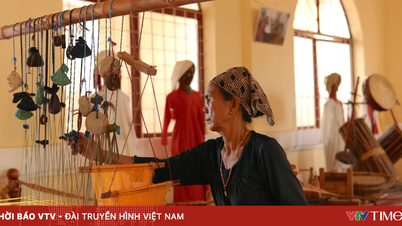
He displays dozens of ancient gongs, a collection of drums made of animal hide, and many other ethnographic artifacts, including a buffalo hide drum over 200 years old that has received high bids from many people, but he still keeps it.
He said that preserving these artifacts is not about possessing valuable possessions, but about letting future generations know how their ancestors created and poured their souls into culture.
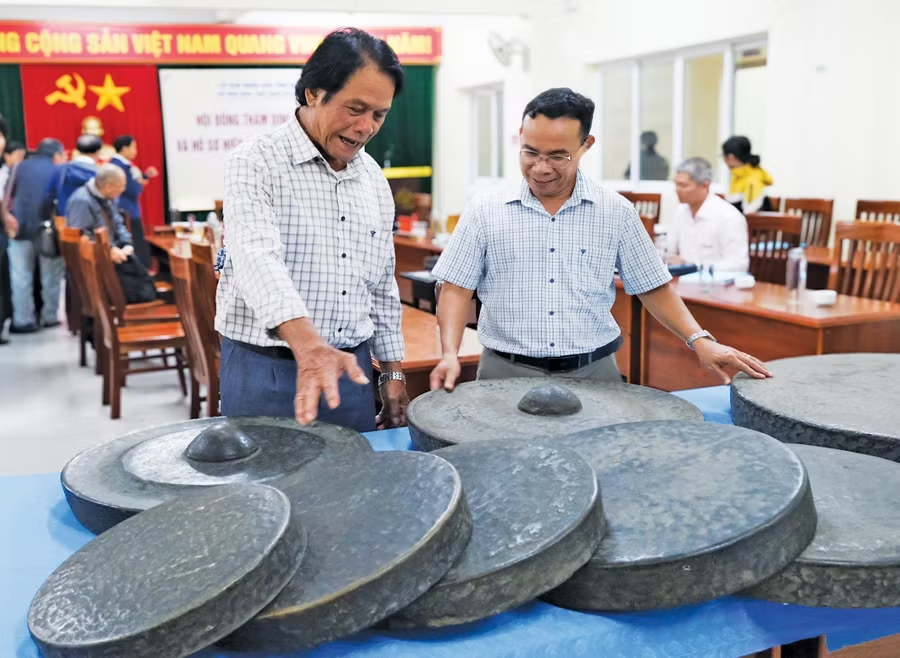
Nay Phai became a renowned artisan at a very young age thanks to his skill in tuning gongs. He was awarded the title of Outstanding Artisan in 2015 in this field. But what makes people remember him is not only his ability to assess the value of precious and ancient gong sets, but also his special love for the gong scales.
Nay Phai's passion for gongs began in his childhood. His father was a renowned trader and seller of gongs throughout the Jrai region. Following his father on trading trips, young Nay Phai quickly became familiar with various types of gongs from the Central Highlands, Laos, and Cambodia. Simply by holding a gong and tapping it a few times, he could discern the quality and value of each set.
It is this expertise that leads many researchers and specialized organizations to seek his assistance when they need to appraise artifacts. Recently, he helped the Pleiku Museum appraise the Kơ Đơ gong set, contributing to the completion of the dossier for the gong set to be recognized as a National Treasure.


Slowly picking up an ancient gong, he tapped it with his hand and listened to the resonant sound echoing in the longhouse, saying, "Each gong has its own voice." He pointed to different parts of the gong and explained how to adjust the sound if it was out of tune or off-key.
According to him, each ethnic group has its own musical scale. Therefore, a gong tuner needs not only technical skills but also an understanding of the culture of the community that owns the gong set.
"Gongs are like people; sometimes they're healthy, sometimes they're sick. If a gong is out of tune, you have to find the right spot to adjust it," he said, using an analogy. Perhaps that's why, for decades, people in the area have called him the "gong healer" or the "master gong tuner."
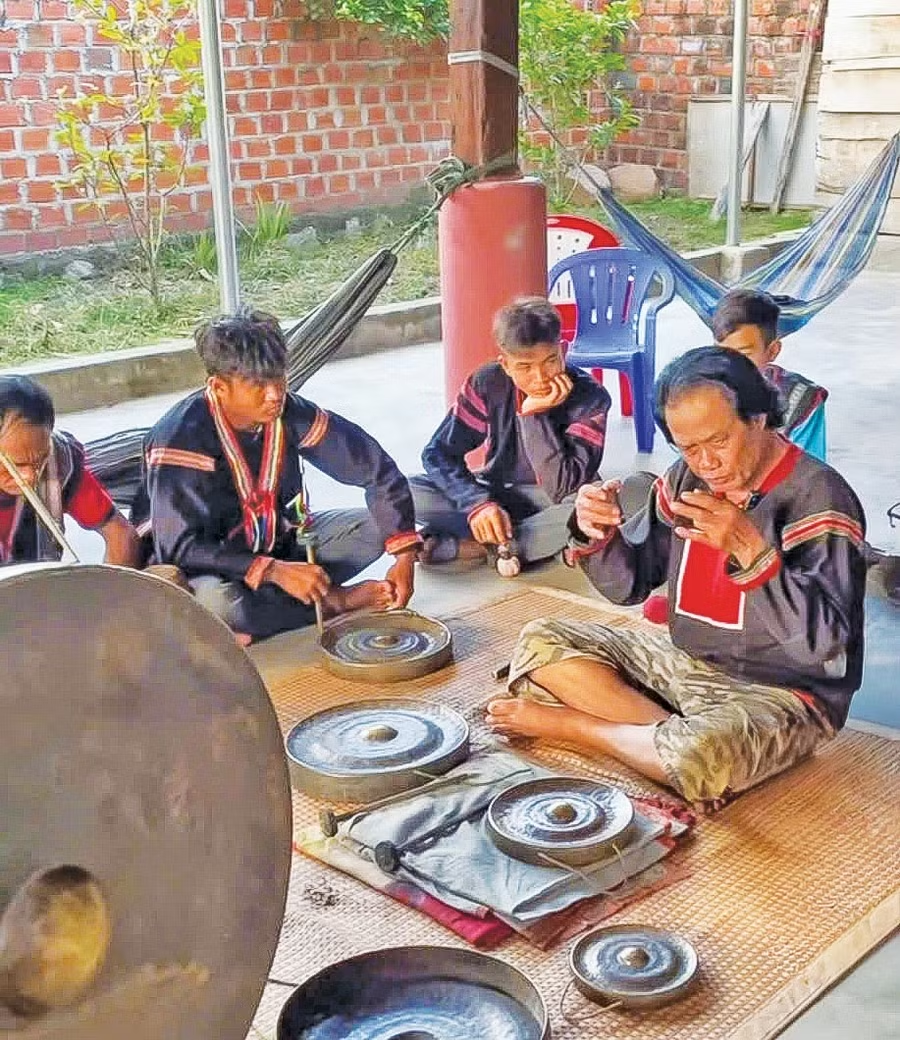
What worries him most now is not the lack of ancient gongs, but the lack of people who know how to tune them. Therefore, he also spends a lot of time teaching the craft to the younger generation in the village or at schools.
What he cherishes most is that his students have now become respected artisans in their villages; that is the greatest achievement after a lifetime dedicated to gong music.
Among those outstanding students is artisan Ksor Kok (Sai village, Phu Tuc commune).
Mr. Kok recounted that, from a young age, he was guided by his teacher Nay Phai to various villages to learn the craft and accumulate experience. The most valuable thing he learned was not only the technique of tuning gongs but also the responsibility of preserving the heritage. It was his teacher's passion and dedication that inspired him to continue the profession and pass it on to the younger generation.

The contributions of Meritorious Artisan Nay Phai have also been recognized by the community and local cultural managers. Mr. Ngo Duc Mao - Director of the Cultural, Information and Sports Center of Phu Tuc commune - assessed: "Artisan Nay Phai has made important contributions to preserving and promoting the gong culture heritage in the lower reaches of the Ba River."
His house is not only a repository of valuable artifacts but also a destination for culture enthusiasts to learn about the Central Highlands' gong culture and the life of the Jrai people.
Source: https://baogialai.com.vn/nay-phai-bac-thay-chinh-chieng-post590275.html
![[Image] Ho Chi Minh City: Ma Lang area, Chicken-Rice Market about to change its appearance](https://vphoto.vietnam.vn/thumb/1200x675/vietnam/resource/IMAGE/2026/06/25/1782377698627_ndo_br_m1-jpg.webp)
![[Photo] General Secretary and President To Lam receives Palestinian Ambassador Saadi Salama](https://vphoto.vietnam.vn/thumb/1200x675/vietnam/resource/IMAGE/2026/06/25/1782365384740_a1-bnd-9423-8322-jpg.webp)
![[Image] Schools organize meetings and introduce teaching models to students admitted to grade 10.](https://vphoto.vietnam.vn/thumb/1200x675/vietnam/resource/IMAGE/2026/06/25/1782368077271_ndo_br_z7970052192242-1ec8daeb77a6eed1a4e9f58c564ddd3e-jpg.webp)