

Fifty years after the liberation of our homeland, Hai Lang is striving to become a new rural district and aims to develop it into a key industrial district of Quang Tri province before 2030, and a town by 2040. To achieve remarkable economic success in this heroic homeland, and to realize its vision and aspirations for development, Hai Lang district is preparing its mindset and internal resources for the road ahead.
Favorable conditions for expanding development space.
It is clear that, in order to create its own development space, both in the present and in the future, no other locality in Quang Tri province has as many favorable conditions as Hai Lang district.
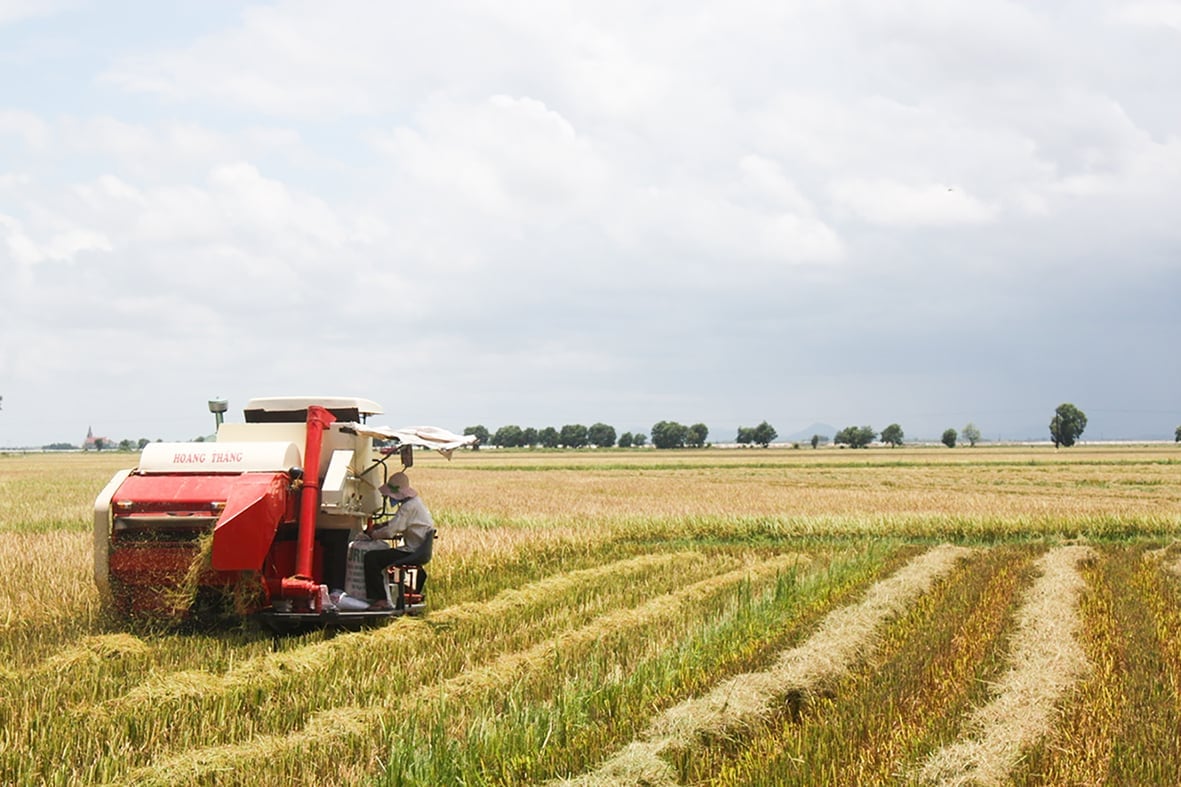
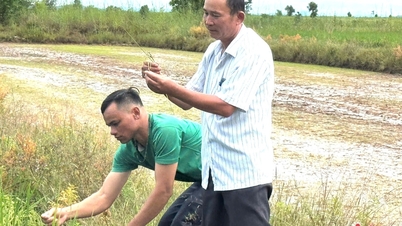
Rice harvesting in the Hai Lang rice fields - Photo: D.T.
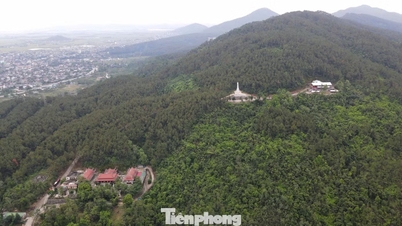
Hai Lang is located just 40 km south of Hue City, a centrally-governed city; and only about 20 km from Dong Ha, the provincial capital. It borders Trieu Phong District and Quang Tri Town, boasting a fertile plain considered a key rice-growing area of the province, accounting for 32% of the district's natural area. To the west, it borders Dakrong District, with its hilly and mountainous terrain occupying 55% of its natural area. Once a battlefield ravaged by enemy forces, and a gathering point for returning troops liberating their homeland, Hai Lang now has nearly 23,000 hectares of forest land covered in lush greenery.
Hai Lang also boasts a coastline of approximately 14 km, a vast fishing ground, and coastal sand dunes covering 12% of its natural area, or over 6,600 hectares. These coastal sand dunes were once home to arid cacti.
The constant problem of shifting sands, shifting sands, and sand encroachment throughout the year tormented people's lives. Now, this sandy area has been transformed into an eco-village, a place where vegetable and fruit crops, bitter melon, and shrimp farms are beginning to develop, bringing significant profits to farmers. According to economic experts, Hai Lang district possesses all the necessary potential and strengths in terms of marine resources, plains, hills, and forests.
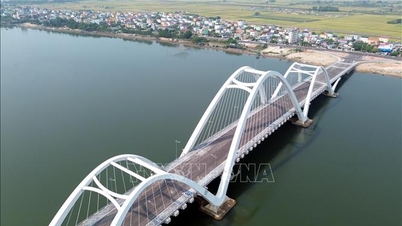
Transportation connectivity is one of Hai Lang district's major advantages. The locality is located on important national transportation routes such as National Highway 1, National Highway 49C, the planned National Highway 15D connecting La Lay International Border Gate to My Thuy Port; the North-South railway line; and the central road along the Southeast Quang Tri Economic Zone, which has been completed and put into use.
The projects have met the objectives of improving transportation infrastructure, connecting key transportation routes of the province such as the road from National Highway 1 through Quang Tri town to Cua Viet port, My Thuy port, passing through the Cua Viet - Cua Tung service and tourism areas and connecting the Southeast Quang Tri Economic Zone with provinces and cities in the region.
Mentioning the place name Hai Lang, we remember the famous generals and talented people of this ancient land such as Nguyen Quan, Bui Duc Tai, Nguyen Duc Hoan... In particular, Doctor Bui Duc Tai, from Cau Nhi village, Hai Tan commune, was the first person to achieve the doctoral degree in Dang Trong in 1502, was granted a royal decree of honor and his name is inscribed on the stone stele at the Temple of Literature (Hanoi).
He held the official position of Left Vice Minister of the Ministry of Personnel, and served as a military advisor. He had returned to his hometown to conduct administrative affairs but did not cause any trouble for the local people. The character and integrity of the people living in O Chau today stem from their efforts in reclaiming and developing the land, establishing villages and communities, and creating regulations and customs for future generations to inherit and elevate into a beautiful tradition: "Stones may drift away, but the village will not..."
To develop tourism and make it a key economic sector, Hai Lang district has initially focused on exploiting its diverse and abundant natural and cultural tourism resources. The district currently has 81 historical and cultural relics that have been demarcated for protection, restoration, renovation, and upgrading. Tourist areas and attractions such as Tra Loc Eco-tourism Area, La Vang Church, My Thuy beach, etc., are being exploited and developed; potential eco-tourism destinations such as Chorong Waterfall, Chan Hoang Waterfall, Cau Mung Lake - Heo Waterfall, Khe Khe Lake, Tram Lon, Tram Khang, Tren Dam, etc., have been exploited and included in planning to attract investment in infrastructure and service development to attract tourists to visit and experience.
A vibrant and dynamic economic landscape.
In recent years, Hai Lang district has achieved many great successes, making a prominent mark in the field of economic development compared to other localities in the province. The total value of agricultural, forestry, and fisheries production in the district has reached 2,852 billion VND. The value of agricultural production per hectare of cultivated land reached 126 million VND.
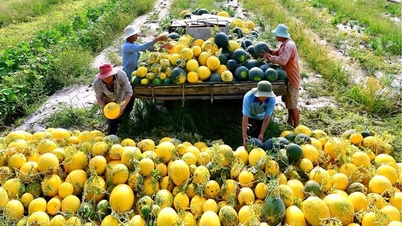
Total grain production reached over 90,000 tons. As a key rice-growing area of the province, Hai Lang currently has an annual rice cultivation area of 13,637 hectares (2 crops/year), with an average yield of 64.67 quintals/hectare. The area of large-scale rice fields has reached nearly 1,700 hectares, with nearly 9,600 hectares of high-quality rice and 410 hectares of organically grown rice. Besides rice, other crops such as neem and gourds in sandy areas, and oranges in the K4 region... are characteristic products that provide a stable source of income for the people.
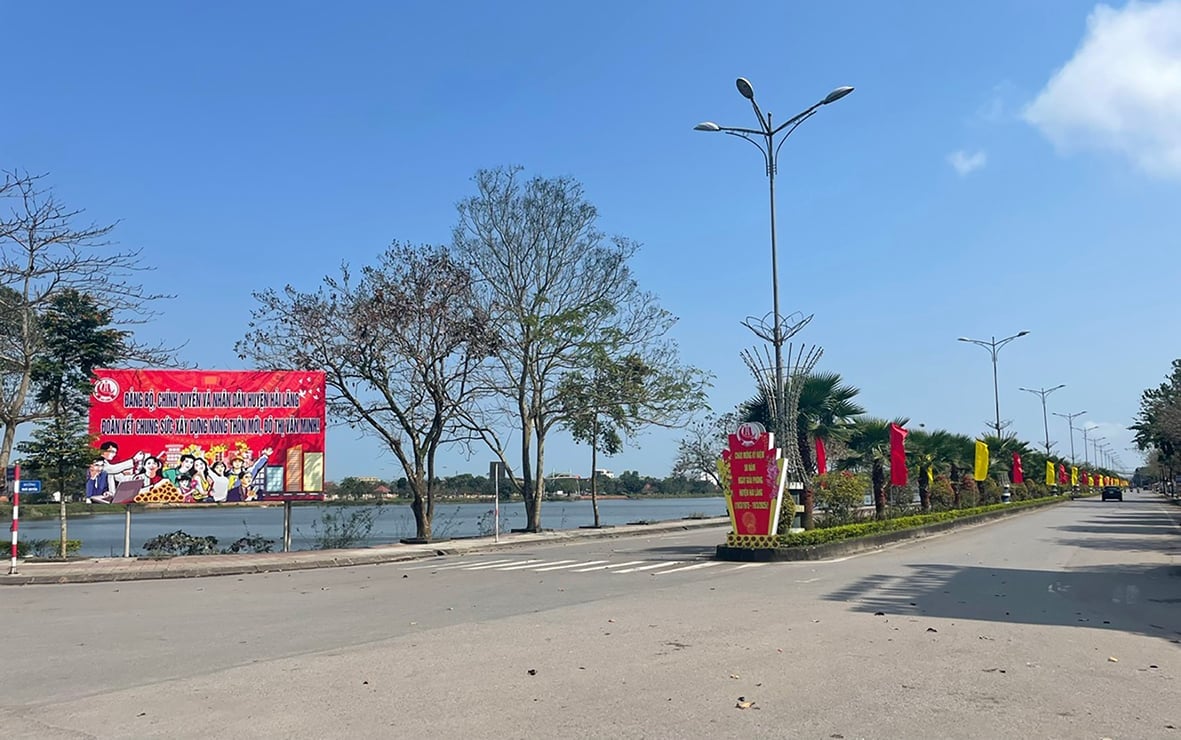
The central road of Dien Sanh town, Hai Lang district - Photo: D.T.
Speaking of rice farming in Hai Lang, the author recalls a story that journalist Dinh Nhu Hoan recounted in a 2004 memoir about Hai Lang: that to produce a grain of rice, the people of Hai Lang have to put in three or four times more effort than elsewhere. During Tet (Lunar New Year) in 2000, on the morning of the first day, the journalist and provincial leaders visited the villagers. It was just after 8 a.m., but there wasn't a soul in the village. It turned out that since midnight on New Year's Eve, the villagers had been out in the fields irrigating to save their rice crops. Hai Lang had 21 communes and towns (at that time), and 10 of them were in remote, low-lying areas.
The entire rice-growing area of Hai Lang is located nearly one meter below sea level. The flood season here is terrifying. Water surges from the O Lau River, and water from the sand dunes overflows, submerging the land three or four meters deep. This illustrates that maintaining the current annual rice cultivation area of 13,637 hectares (two crops per year) in Hai Lang, with an average yield of 64.67 quintals/hectare, is a truly commendable achievement...
Once, while reading the collection "Poetry and Prose of Hai Lang" published in 2015, I came across the poem "Hanh Hoa Village" by poet Le Ngoc Phai, with its evocative lines: "Oh, Hanh Hoa! The pink dust flies with the leaves / The four corners of the earth still remember our land ." Reading this, I was reminded of two ancient lines by Du Mu, a poet of the late Tang Dynasty (China): "Asking which wine shop is the best / The shepherd boy points to Hanh Hoa Village ."
Whether the Hanh Hoa village of the poet Le is a real or dream world is unknown, but Hai Lang has long been famous for its Kim Long fine wine. The Dai Nam Nhat Thong Chi, in the eighth volume under "Local Products," solemnly records: "Hai Lang's Kim Long wine is better, and it is taxed." And indeed, through the vicissitudes of time, Kim Long wine, a gift from the water, rice, yeast, and fire of Hai Lang's rice-growing land, remains fragrant and delicious to this day.
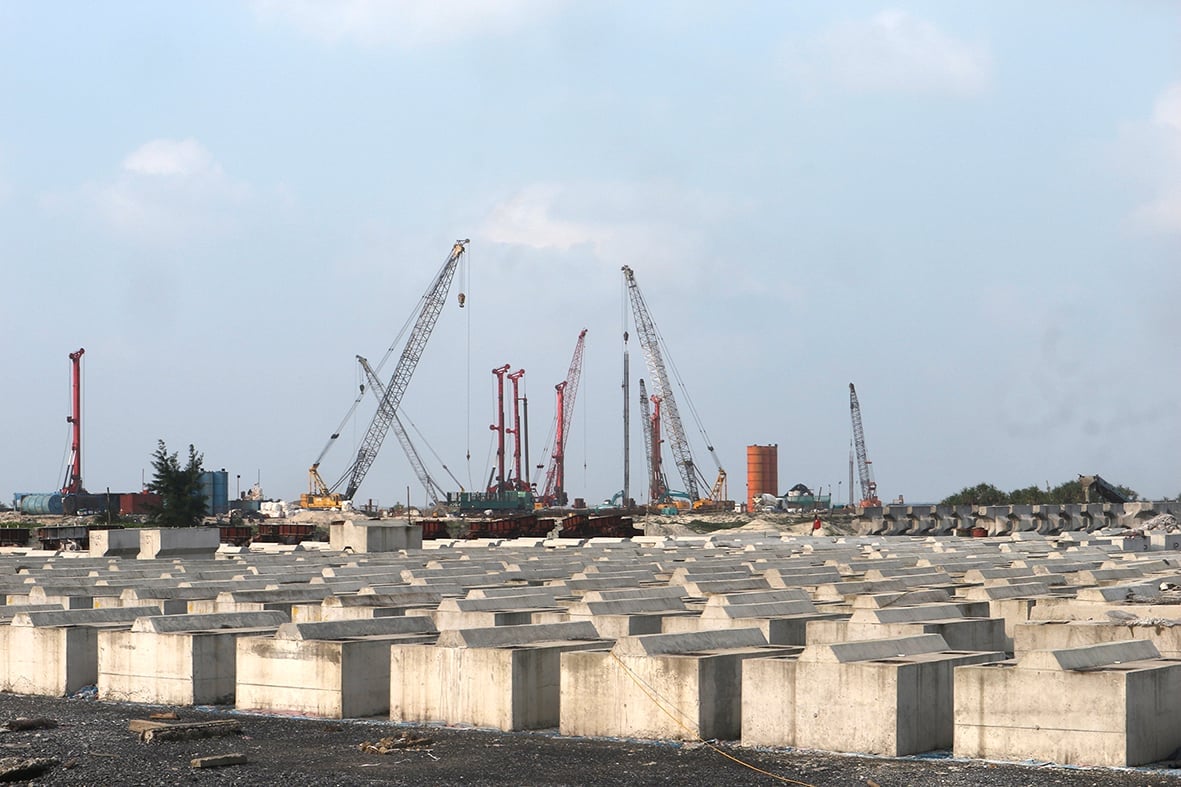
Construction site in My Thuy coastal area, Hai Lang district - Photo: D.T.
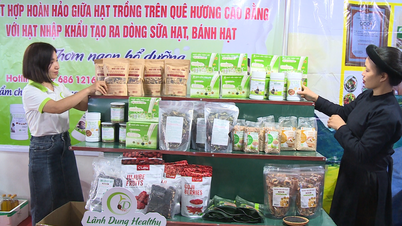
Hai Lang is not only famous for its renowned Kim Long wine. Currently, more and more products from Hai Lang have been recognized as OCOP products. These include My An fish sauce (a 4-star product) and 20 products that achieved 3 stars, including: Dai An Khe moon-shaped sticky rice cake, Hue tapioca cake, Hai Duong fermented pork sausage, My Thuy fish sauce, Ba Vay shrimp paste, seaweed peanut salt, Hai Linh cereals, Hai Lang rice, K4 oranges, Phuong Anh lemongrass bean salt, Bao Ngoc melaleuca essential oil, Hai Dinh chili powder, Hai Phong chili sauce, Hai Son lotus seeds, freeze-dried fermented pork sausage, freeze-dried bitter melon, fresh lotus seeds, Hai Hung dried lotus seeds, chewy dried bananas, Quang Lam oranges...
In this new phase of development, industry, small-scale handicrafts, and rural occupations are receiving attention and investment attraction, creating a foundation for building Hai Lang into a key industrial district of Quang Tri province before 2030. The district currently has 2,610 industrial and small-scale handicraft establishments with 7,795 workers; 34 projects are currently investing in 3 industrial clusters, providing employment for over 2,400 workers. The occupancy rate of Dien Sanh Industrial Cluster is 100%, Hai Thuong Industrial Cluster is 63%, and Hai Chanh Industrial Cluster is 67.5%. The district has effectively issued and implemented Resolution No. 06-NQ/HU dated December 13, 2022, on the development of industry and small-scale handicrafts until 2030, and policies supporting industrial promotion activities in the district for the period 2021-2025. The average production value of industry and handicrafts reached 3,407 billion VND, an increase of 3,310 billion VND compared to 2010.
In addition, Hai Lang district is attracting and implementing two key projects of the province: the Southeast Quang Tri Economic Zone project and the Quang Tri Industrial Park project. The Southeast Quang Tri Economic Zone has a total area of 23,792 hectares, of which Hai Lang district is included in the planning of the Southeast Quang Tri Economic Zone with an area of 9,167 hectares, passing through 6 communes: Hai Ba, Hai Hung, Hai Que, Hai Duong, Hai An, and Hai Khe. The overall area comprises 14 projects. These include factories producing precast concrete components and ready-mix concrete; processing organic rice; industrial shrimp farming on sand; and producing stainless steel and alloy steel. Aluminum ingot production from scrap metal... Notably, there is the My Thuy Port Area construction project with a total investment of over 14,234 billion VND, covering 685 hectares of land and water surface, currently in phase 1 construction. The Quang Tri Industrial Park, with an area of 481.2 hectares and a total investment of 2,074 billion VND, has also commenced phase 1 construction. These are favorable conditions to promote the development of industry, trade, and services, opening up many investment opportunities and economic development for the district in the coming years.
To achieve its goal of becoming a town by 2040, Hai Lang district has focused on implementing a comprehensive and progressively complete plan for the construction and investment in socio-economic infrastructure. This includes the Hai Lang District Regional Development Plan to 2040, with a vision to 2050; the Dien Sanh Town General Development Plan to 2030, with a vision to 2035; and the La Vang New Urban Area General Plan to 2045, all of which have been approved by the Provincial People's Committee. The planning for urban-service and industrial zones surrounding the VSIP project and the general development plans for communes within the district to 2035 are currently underway.
Typically, all future achievements of a region stem from aspirations and realities built and nurtured today. On its journey to become a key industrial district of Quang Tri province before 2030, and a town by 2040, Hai Lang has many favorable conditions because it has made thorough preparations for the future.
That preparation stemmed from keen foresight into the development path of the land and people of Hai Lang, forged by the deep and rich cultural traditions of this heroic homeland.
Dan Tam
Source: https://baoquangtri.vn/nen-kinh-te-hai-lang-tam-nhin-va-khat-vong-phat-trien-191619.htm

![[Image] "Journey of Hope" promotes the organ and tissue donation movement in Vietnam.](https://vphoto.vietnam.vn/thumb/1200x675/vietnam/resource/IMAGE/2026/05/20/1779294400833_1-8910-jpg.webp)
























































Comment (0)