

Thanh Hoa province is not only known for its "golden forests and silver seas," but also for its centuries-old traditional craft villages, which embody the rich cultural essence of the locality, preserved and passed down through generations to this day.
“Please visit Hong Do - Thieu Hoa, see the hands of countless young women, spinning the golden moonlight… sending it to someone… Go to Nga Son to buy a pair of mats, give them to someone when spring comes, these Nga Son mats are woven with so many love stories… couples become even more beautiful…”. These lyrics from the song “The Road to Thanh Hoa ” affirm the richness of traditional crafts in Thanh Hoa province. From the plains and coastal areas to the mountains, everywhere there are traditional craft villages cherished, preserved, and considered a “treasure” by later generations. Typical examples include villages specializing in civil carpentry, traditional bronze casting, seafood processing, rattan and bamboo weaving, sedge processing, and brocade weaving…
Among them, the Tra Dong bronze casting village in Thieu Trung commune (Thieu Hoa district) stands out, renowned for its richness and diversity, with many unique and exquisite products "crystallized" from the minds and skillful hands of the craftsmen. According to the artisans in the village, the Vu family brought the bronze casting craft to Tra Dong village during the Ly Dynasty. Therefore, there is a saying in the village: "The land of the Le family - the craft of the Vu family." However, some also say that the bronze casting craft here was passed down by Khong Minh Khong, the founder of bronze casting in Vietnam. And although it has gone through many ups and downs over time, and at times seemed to have lost its flame, thanks to the dedication of many artisans who still love and cherish the craft, they have continued to cling to it and develop it to its current state.
At the bronze casting workshop of Meritorious Artisan Nguyen Ba Chau, the atmosphere is bustling with the sounds of chiseling and hammering from the workers. Mr. Chau shared: "No matter the era, the bronze casting craft of Tra Dong still preserves its traditional handcrafted processes and follows the methods passed down from father to son. This not only ensures that the products are chosen by customers, but also showcases the skillful hands and creative minds of the craftsmen. Because it is done by hand, to produce a high-quality bronze casting, the craftsmen must be very careful and meticulous in every detail and step, such as making molds, mixing compounds, melting the bronze, and casting the product... The bronze casting craftsman must be like an artist, designing the patterns and drawing beautiful motifs on the clay molds, pouring their passion and dedication into it. Then comes the indescribable joy when the bronze products, such as bronze gongs, religious artifacts, incense burners, etc., are found in almost all localities inside and outside the province." The pinnacle achievement is the successful research and restoration of bronze drums using traditional handcrafted methods after centuries of being lost. These bronze drums and other bronze artifacts have transcended the village boundaries, carrying the pride of the people of Kẻ Chè and contributing to a new look for the craft village. Currently, along with well-organized production and business activities, the bronze casting village is also linked with tourism and services to attract visitors to tour and experience the production process. This helps customers see the value and quality of the products, giving them confidence in their purchasing decisions.
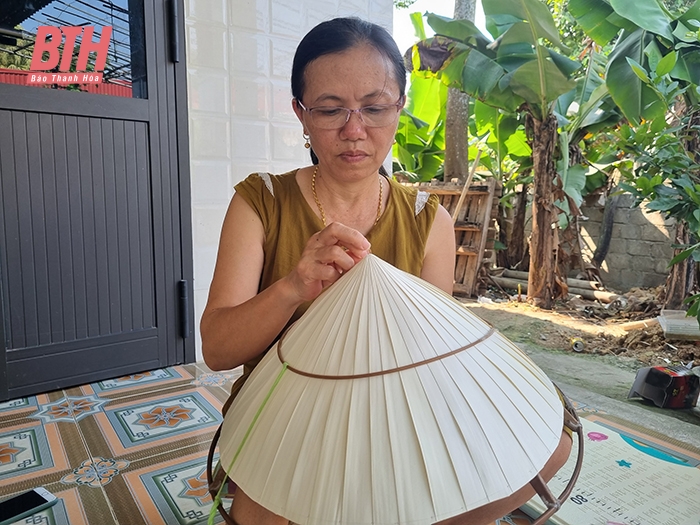
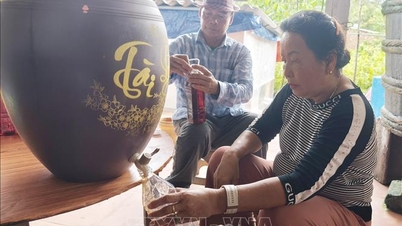
Each traditional craft village is a cultural, socio- economic , and technical environment with a long history, preserving the artistic and technical essence of production, honed by talented artisans. Visiting the Trường Giang conical hat-making village in Trường Giang commune (Nông Cống district), we were immersed in the bustling and warm atmosphere of the people. In groups of two or three houses, adults and children alike eagerly chatted, their hands nimbly manipulating each needle. Each hat produced was made with dedication, meticulousness, and skill by the craftspeople. Therefore, even though she had a connection with hat-making since childhood, Mrs. Ngô Thị Lý, from Trường Thành village, Trường Giang commune, still devotes her heart and soul to the craft even now, at her advanced age. While meticulously shaping the conical hats to make them more vibrant, Mrs. Ly chatted with us: "No one here remembers exactly when the hat-making craft originated; we only know that it's been a tradition since birth. For those who make these hats, it's not just a way to earn a living, but also a family tradition passed down through many generations. The conical hats here are harmonious and balanced, with a pointed crown, a moderately wide brim, both soft and durable, and a characteristic bright white color. Creating a beautiful and durable product is an art form for the craftspeople, from choosing the frame, bending the brim, layering the leaves, cutting the patterns, stitching to complete the hat, and finally polishing and preserving it. Perhaps it's thanks to the meticulousness, attention to detail, and skill of the artisans in each stage that Truong Giang hats are so popular with tourists. As a result, the hat-making craft has helped many local families achieve a stable life."
Throughout the vicissitudes of time and history, craft villages have remained repositories of unique, exquisite handcrafted products bearing the distinct cultural imprint of the locality. Therefore, to preserve the cultural essence of these craft villages, localities in the province have placed special emphasis on investing in the restoration, preservation, and reconstruction of architectural works and folk cultural and religious activities within these areas. The beautiful cultural aspects of craft villages, such as customs and beliefs related to the worship of the patron saint of the craft, are always carefully preserved and developed. Alongside this, localities and craftspeople have focused on integrating craft villages with tourism activities, contributing to diversifying tourism products, promoting cultural and historical traditions, showcasing the talent of craft village artisans, and supporting "on-site export," thus solving the problem of finding markets for craft village products.
Text and photos: Nguyen Dat
Source


![[Photo] Prime Minister Pham Minh Chinh attends the Conference on the Implementation of Tasks for 2026 of the Industry and Trade Sector](/_next/image?url=https%3A%2F%2Fvphoto.vietnam.vn%2Fthumb%2F1200x675%2Fvietnam%2Fresource%2FIMAGE%2F2025%2F12%2F19%2F1766159500458_ndo_br_shared31-jpg.webp&w=3840&q=75)















![[E-Magazine]: Cakes that keep people coming back](https://vphoto.vietnam.vn/thumb/402x226/vietnam/resource/IMAGE/2025/12/19/1766150196532_e-magazine-banh-w1200t0-di2550d199d4150735t11920l1-btnc2-011.webp)






































































Comment (0)