

At the dawn of the Dong Son culture, the Hoang Quy (Hoang Hoa) region was the area chosen by the ancient Vietnamese to live and create the unique Quy Chu culture. Many traditional cultural and religious practices are still preserved in Quy Chu village today. Most notably, the Ky Phuc festival is held from the 6th to the 8th of February in the lunar calendar.
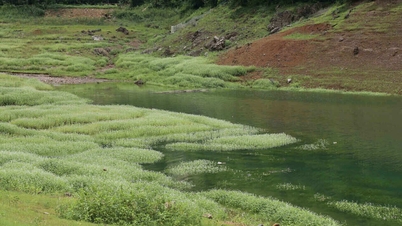
 The traditional boat racing game "Rice Competition, Fish Prize" is held at the Ky Phuc Festival in Quy Chu village, Hoang Quy commune.
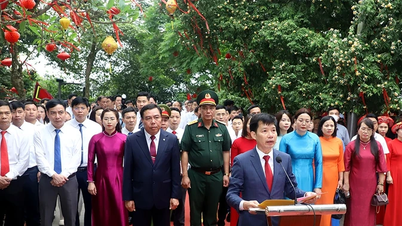
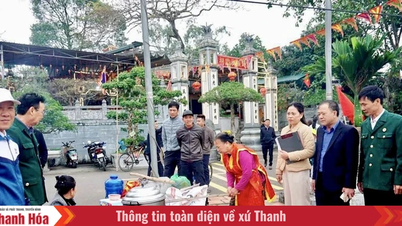
It has been several years since the Quỳ Chử village festival was last held after a period of interruption due to the pandemic. People from all over the village eagerly participated in the festival activities, as it fulfills the cultural, spiritual, and religious needs of the people.
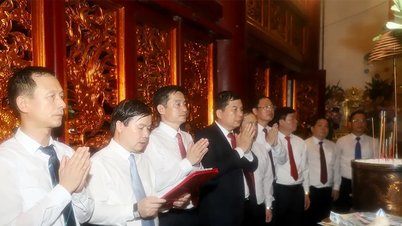
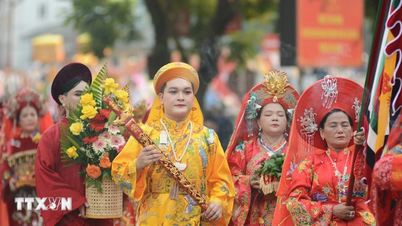
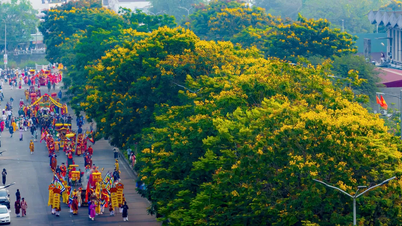
Quỳ Chử village is divided into three hamlets (Trung Tiến, Tây Phúc, and Đông Nam). Although each hamlet has its own spiritual area and cultural center, every year the villagers gather at the Trung Temple to hold the festival. The Quỳ Chử village festival has existed since ancient times, with the ceremonial and festive parts closely intertwined, creating a unique cultural feature of this land. On the main day of the festival, the ceremonial part takes place first with processions and offerings to express reverence to the deities, and to allow people to express their wishes for a year of favorable weather, abundant harvests, and prosperity. After completing the ceremonial part, the entire village begins the festivities. Traditional community performances as well as modern sports and cultural activities attract a large number of people to participate.
There is a unique folk game that has existed for hundreds of years and is still maintained and organized by the people here: the "Rice and Fish Competition" boat race. This folk game is considered a unique cultural feature of Quy Chu village. Teams compete by rowing boats on the pond, catching fish, and cooking rice on the boat. Preparation for the game is quite elaborate, from decorating various types of boats like dragon boats, carp boats, and catfish boats... to preparing costumes for the competing teams. Each boat has a pair of young men and women. The men wear brown shirts, with red headscarves, carrying oars, fishing rods, nets, or seines; the women wear traditional four-panel dresses, with headscarves, carrying pots, stoves, firewood, etc. The game showcases both the rowing and net-pulling skills of the men on the water and the domestic abilities, dexterity, and resourcefulness of the women as they cook rice on the boat. The cheers and encouragement from the people on the shore make the boat race even more lively.
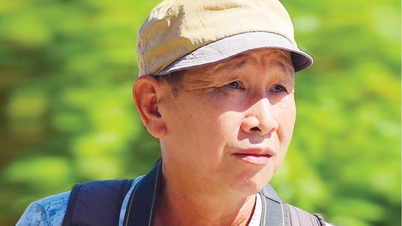
Mr. Le Ngoc Hoa, Head of Trung Tien village and a member of the Organizing Committee of the Quy Chu Village Festival, said: "The festival is a beautiful cultural feature of the locality. Many people come to the festival with feelings of joy and pride as they return to the long-standing traditional culture of their ancestors and origins."
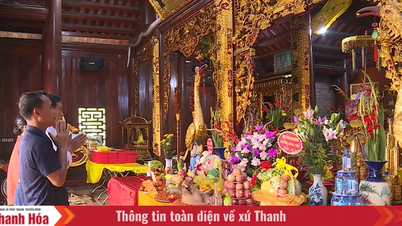
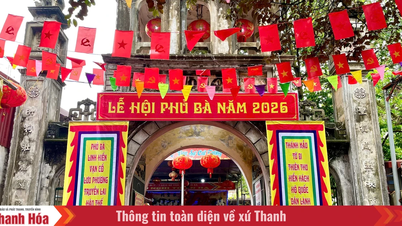
In Hoang Xuan commune, every year in the first days of the third lunar month, the local people eagerly flock to the Phu Vang festival. Phu Vang, built in the 18th century, is a place of worship for the First Holy Mother Lieu Hanh – one of the "Four Immortals" of Vietnam. Legend recounts that when Nguyen Hue led his army north to defeat the Qing army, he stopped at Phu Vang to rest and offer incense. He received a dream from the Holy Mother, who devised a brilliant strategy to defeat the enemy. Upon ascending the throne, Nguyen Hue expressed his gratitude to the Holy Mother, bestowed a royal decree, and erected a temple on Chua Mountain in Vang village.
According to Nguyen Van Tai, Vice Chairman of the People's Committee of Hoang Xuan commune: "Since ancient times, Phu Vang has not only been a place for the people of the commune to engage in cultural and spiritual activities, but also a place that attracts a large number of people and visitors to worship and express their devotion to the First Holy Mother Lieu Hanh. The festival has become an indispensable part of the spiritual and cultural life of the people in the region. The local authorities will continue to restore and renovate the site in the future."
The ancient land of Hoang Hoa is a cultural space rich in identity. From its system of relics, beliefs, and festivals to its diverse and unique folk performing arts, the district boasts 470 relics, including 93 classified historical and cultural sites, comprising 16 national-level relics and 77 provincial-level relics. This densely populated system of relics serves as places of worship for deities, honoring historical figures, cultural luminaries, founders of villages and communes, and those who saved the people from hardship or contributed significantly to the prosperity of their communities, earning the admiration, gratitude, and reverence of the people.
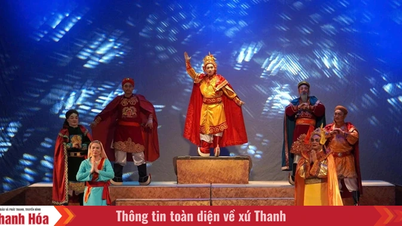
Along with its system of historical relics, Hoang Hoa also preserves many intangible cultural heritages. In the cultural space of village festivals, local people not only enthusiastically organize games and performances showcasing their skills and talents, but also hold cultural and artistic performances where traditional folk songs like Cheo and Tuong, and drum performances are vividly recreated, creating a sense of familiarity and community connection. Notably, many traditional village festivals in Hoang Hoa have become opportunities for younger generations to return, enthusiastically participate in cultural and sports activities, and learn about the cultural and historical stories of their homeland.
Text and photos: Viet Huong
(This article uses some materials from the book "History of Hoang Quy Commune" and "Cultural Geography of Hoang Hoa").
Source













































Comment (0)