

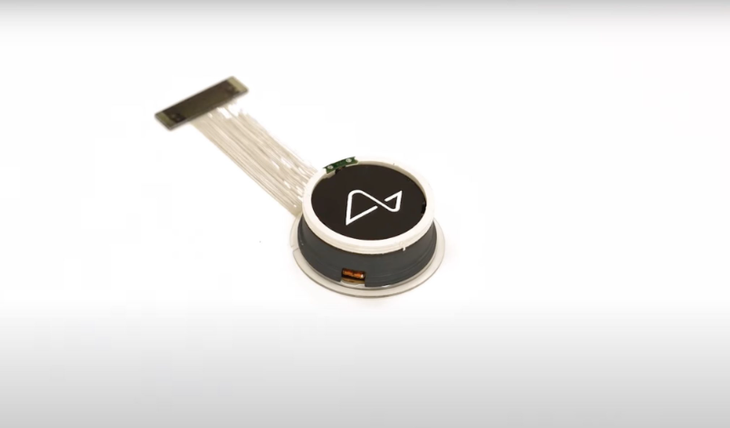
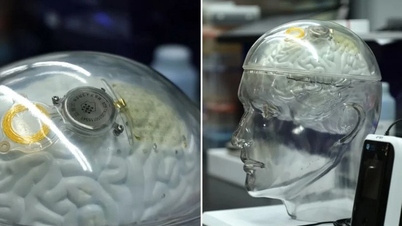
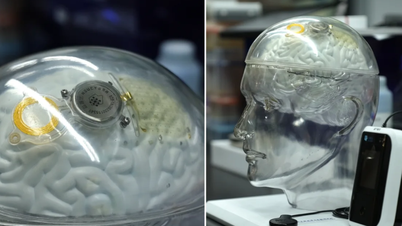
According to Neuralink, the company's implant has "ultrafine" fibers that help transmit signals in the patient's brain. - Photo: Neuralink
This event is considered a significant milestone in the development and commercialization of Neuralink's brain-computer interface technology, opening up prospects for widespread application in the treatment of serious neurological diseases.
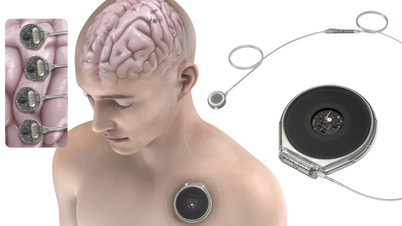
According to updated information released on the morning of July 21st, US time, two patients, identified as patients number 8 and 9, had a chip called "Link" implanted in their brains over the weekend. This device, about the size of a coin, is implanted in the brain through minimally invasive surgery.
Although the exact dates of the surgeries were not disclosed, Neuralink confirmed that both surgeries took place on the same day. Both patients are currently recovering well and are in good spirits.
According to Neuralink, the company's implant has "ultrafine" fibers that help transmit signals in the brains of patients who receive the device.
Billionaire Elon Musk, who co-founded Neuralink in 2016, emphasized that this technology could bring "revolutionary changes to millions, even billions of people."
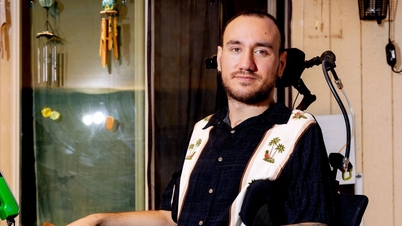
Neuralink's nerve implant technology is currently being tested on patients with amyotrophic lateral sclerosis (ALS) or cervical spinal cord injuries, conditions that can severely impair a patient's mobility and communication abilities.
In the long term, Neuralink aims to expand its treatment scope to include more common neurological disorders such as anxiety, depression, or even cases of vision loss.
In May 2023, the U.S. Food and Drug Administration (FDA) authorized Neuralink to test the implantation of chips in the human brain. Then, in September, Neuralink was permitted to recruit polio patients for a six-year human brain implant trial.
Several companies are currently conducting similar research, including Sychron, based in Australia. In July 2022, Sychron announced that it had implanted a brain-computer interface device into a patient with ALS in the United States.
The purpose of implanting this device is to allow patients to communicate, even if they have lost the ability to move, by using their thoughts to send emails and text messages.
Source: https://tuoitre.vn/neuralink-lan-dau-cay-chip-cho-2-benh-nhan-trong-mot-ngay-20250722202718648.htm


![[Photo] Prime Minister Pham Minh Chinh attends the Conference on the Implementation of Tasks for 2026 of the Industry and Trade Sector](/_next/image?url=https%3A%2F%2Fvphoto.vietnam.vn%2Fthumb%2F1200x675%2Fvietnam%2Fresource%2FIMAGE%2F2025%2F12%2F19%2F1766159500458_ndo_br_shared31-jpg.webp&w=3840&q=75)





























































































Comment (0)