

SGGP
China's purchase of Russia's leading fossil fuels plays a huge role in helping Russia overcome Western sanctions...
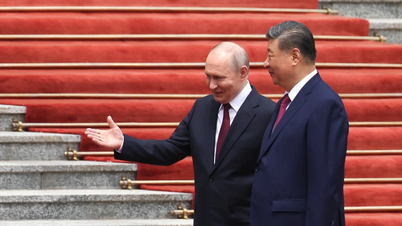
Russian President Vladimir Putin has just concluded a two-day official visit (October 12 and 13) to Kyrgyzstan, a Central Asian country with close ties to Russia. Following this, the Russian President is expected to travel to China to attend the 3rd Belt and Road International Cooperation Forum in Beijing.
Influence in Central Asia
These two visits are seen as crucial for the Russian leader in breaking the economic blockade imposed by the West. According to the South China Morning Post, the highlight of Putin's visit to Kyrgyzstan is the summit of the Commonwealth of Independent States (CIS), a group comprising several former Soviet republics.
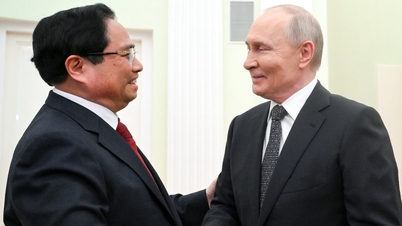
During his meeting with Kyrgyz President Sadyr Japarov, Putin emphasized Russia's role as a key trading partner and the largest investor in the Kyrgyz economy.
Russia's relationship with CIS members has been tested by pressure from Western sanctions imposed on Russia in connection with the conflict in Ukraine. Prior to this, a series of meetings took place between the presidents of five Central Asian countries and US President Joe Biden and the leader of the European Union (EU) to find ways to develop alternative transport corridors and energy import sources to replace Russia.
According to Nikkei Asia, Kate Mallinson, a fellow in the Russia and Eurasia program at the Chatham House Institute for Policy Studies (UK), believes that through the CIS summit, Putin showed the West that he is not isolated and still retains influence. Except for Georgia, Ukraine, and most recently Moldova, which have left the CIS, most of the remaining countries are loyal allies of Russia.
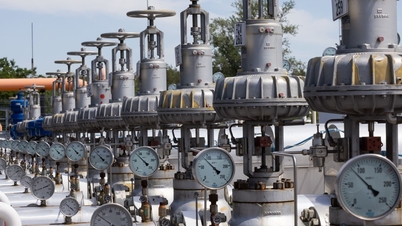
Last week, Kazakh President Kassym-Jomart Tokayev and Uzbek President Shavkat Mirziyoyev traveled to Moscow with President Vladimir Putin to attend the groundbreaking ceremony for a gas pipeline that will supply gas from Russia to Uzbekistan via Kazakhstan.
 |
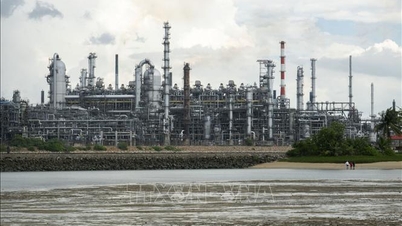
| A Russian oil refinery. Photo: The Moscow Times/VNA |
Mutually beneficial relationship
The Tass news agency quoted President Vladimir Putin as saying recently at the Eastern Economic Forum in Vladivostok, Russia: "The relationship between Russia and China in the field of economic cooperation has reached a very high level."
According to the International Energy Agency, Russia is currently China's largest supplier of crude oil, with approximately 80% of China's oil imports coming from Russia, generating an estimated $15.3 billion in revenue for Moscow.
Conversely, Russia imports the majority of its consumer goods from China. Data from China's General Administration of Customs shows that bilateral trade volume rose to $21.18 billion in September, the highest since February 2022 when Russia began its special military operation in Ukraine.
According to AP, Joseph Nye Jr., emeritus professor at Harvard Kennedy School (USA), assessed that China's purchase of Russia's leading fossil fuels played a huge role in helping Russia overcome Western sanctions.
Ali Wyne, a senior analyst at the US-based Eurasia Group consulting firm, said that China balances its relations with Russia and the EU because both are important partners for Beijing and the nature of the relationship is mutually beneficial.
Source













































































Comment (0)