

Logistics is one of the most important service sectors in any economy worldwide. In recent years, the logistics industry in Vietnam has developed quite strongly. However, according to experts, the logistics sector still has many limitations and its development has not yet reached its full potential.
[caption id="attachment_608545" align="aligncenter" width="1068"]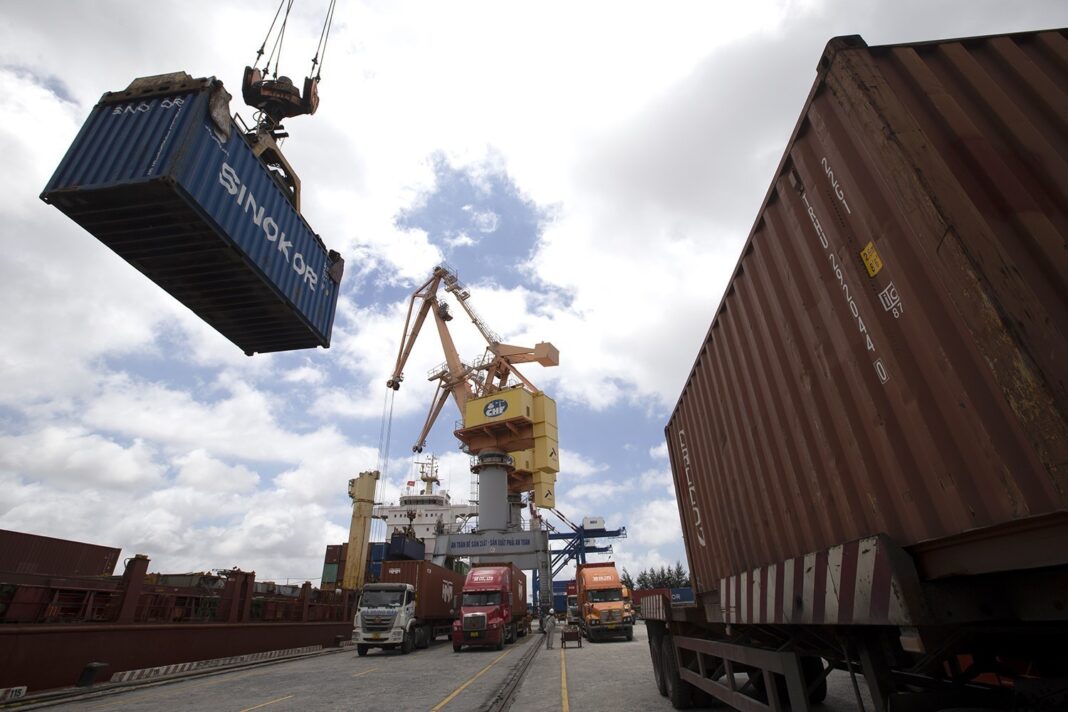 Logistics is one of the country's important service industries. [Image caption: TTXVN]
Great potential
According to the emerging market index ranking by transportation and logistics provider Agility, Vietnam is currently among the top 10 out of 50 emerging logistics markets in the world . In terms of international logistics opportunities, Vietnam ranks 4th globally and is considered a leading country in Southeast Asia with significant logistics development potential.
Speaking at a logistics forum in Ho Chi Minh City in mid-December, Mr. Ta Hoang Linh, Director of the European and American Market Department under the Ministry of Industry and Trade , stated that with its unique position in a dynamically developing region of the world, a hub for goods, Vietnam has many advantages in boosting production, exports, and developing logistics services.
Sharing that view, speaking at the World Congress of the International Federation of Freight Forwarders Associations (FIATA) in Brussels, Belgium, in October 2023, Mr. Anis Khan, CEO of Intrapass GmbH, a Swiss-based company, said that last year he visited Vietnam and recognized the enormous potential of the country's logistics industry. In particular, the government is very interested in and supportive of the logistics sector. These are favorable conditions for Vietnam to strongly develop this service industry.
Meanwhile, Edwin Chee, CEO of SLP Vietnam – a logistics company – emphasized that with its strategic location, Vietnam is a prominent transit hub in Asia. Leveraging this advantage, businesses can significantly reduce logistics costs. Vietnam will become even more attractive to FDI investors and global third-party logistics (3PL) providers.
A significant challenge.
Based on the aforementioned potential and advantages, the Vietnamese logistics industry has made significant progress in recent years. Currently, Vietnam has nearly 35,000 businesses operating in the logistics sector, of which about 5,000 are professional enterprises.
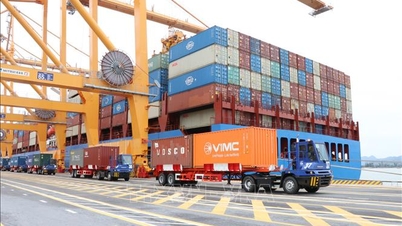
[caption id="attachment_606798" align="aligncenter" width="1068"]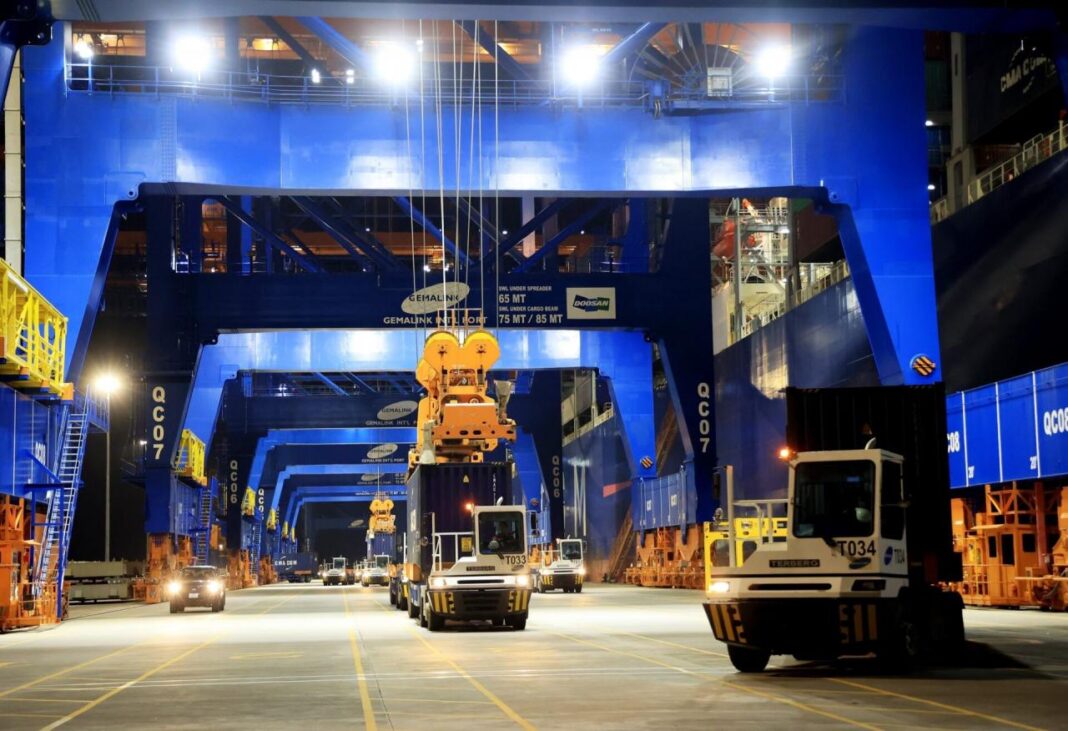 Gemalink International Port in Ba Ria-Vung Tau province. Photo: VNA
According to the latest report from the World Bank (WB), Vietnam ranks 43rd in the Logistics Performance Index (LPI) and is among the top 5 ASEAN countries in this index. The average annual growth rate of Vietnam's logistics market is 14-16%, making a significant contribution to boosting Vietnam's import and export turnover over the past several years.
However, according to the Vietnam Logistics Business Association (VLA), Vietnam's logistics costs average 16.8-17% of GDP, much higher than the world average of 10.6%. Meanwhile, domestic logistics infrastructure remains limited, lacking synchronization and connectivity; port planning is inadequate, and there are no major hub ports… This hinders the improvement of the logistics industry's competitiveness in the context of strong global economic integration.
Mr. Le Duy Hiep, Chairman of VLA, shared that the linkage between different modes of transport remains limited. This is due to the low capacity of waterway transport, with inland waterway transport accounting for only 21.6%; road transport remains the most common mode of transport, accounting for 73%. The total volume of goods transported via sea accounts for only 5.2%, rail 0.2%, and air 0.01%. This leads to high logistics costs and reduces the competitiveness of Vietnamese goods.
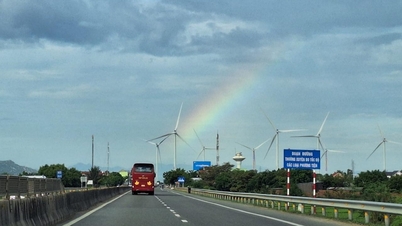
Regarding the domestic logistics network, Mr. Truong Nguyen Linh, Deputy General Director of Vietnam International Container Terminal (VICT), stated that the current difficulty in cargo transportation is the limited road and inland waterway infrastructure connecting to the ports, which does not meet actual needs. Specifically, road routes connecting to the ports are often overloaded and congested, affecting routes and costs for businesses. The waterways connecting the ports to the sea also do not meet the needs of large vessels.
Regarding the railway system, Mr. Nguyen Xuan Hung, Deputy General Director of Ratraco Railway Transport and Trade Joint Stock Company, stated that the advantage of rail transport is that it is more cost-effective than road transport and faster than waterway transport. However, this type of transport in Vietnam is currently limited by infrastructure conditions. Vietnam currently has a total of over 3,000 km of railway lines stretching from South to North; of which, only 15% of the length has tracks that meet international standards (1,435m wide), allowing for faster freight transport. With most of the railway lines being narrow, the maximum transport speed only reaches 80 km/hour, while international railways can reach speeds of 160 km/hour. For example, transporting goods from Ho Chi Minh City or Dong Nai station to Hanoi to access the international railway system takes up to 4 days. Therefore, the volume of goods transported by rail within Vietnam and connecting to export markets is very small compared to many other countries.
On the other hand, the World Bank's assessment report also shows that, along with improvements in infrastructure, customs, and international shipping, Vietnam's logistics service sector still has many limitations in terms of the capacity of logistics service providers, as reflected in indicators of logistics service quality, punctuality, and cargo tracking capabilities. Digital transformation in most logistics businesses is still in its early stages and has not received adequate investment.
Furthermore, in the context of a struggling global economy, increasing geopolitical instability, and escalating and complex non-traditional security threats, the global logistics industry in general, and the Vietnamese logistics industry in particular, are facing numerous challenges.
According to Chandler So, natural disasters, geopolitical tensions, trade disputes, or pandemics can create major challenges for the logistics industry, leading to delays, increased costs, and supply chain bottlenecks.
Furthermore, global supply chains are becoming more complex with the involvement of numerous stakeholders and interconnected networks. This complexity poses challenges to coordination and risk management capabilities for logistics businesses.
Chandler So noted that constantly fluctuating consumer demand requires logistics providers to react quickly. Meeting changing demand patterns while maintaining efficiency is a significant challenge.
Yellow River


![[Photo] Prime Minister Pham Minh Chinh attends the Conference on the Implementation of Tasks for 2026 of the Industry and Trade Sector](/_next/image?url=https%3A%2F%2Fvphoto.vietnam.vn%2Fthumb%2F1200x675%2Fvietnam%2Fresource%2FIMAGE%2F2025%2F12%2F19%2F1766159500458_ndo_br_shared31-jpg.webp&w=3840&q=75)














































































Comment (0)