

Stay close to the villages and the people by following the "four together" principle.
The "four together" motto: eating together, living together, working together, and speaking the local language together, has become a beautiful tradition and a unique working method of the Border Guard, profoundly reflecting the essence of "coming from the people, serving the people" of the green-uniformed soldiers on the border of the Fatherland.
The K-Ai Border Guard Task Force, under the Cha Lo International Border Gate Border Guard Station, is a vivid example of the effectiveness of this approach. Responsible for the K-Ai village area, primarily inhabited by the May and Sach ethnic minorities, the officers and soldiers of the task force not only stay close to the village and its people but also directly participate in daily life and work alongside them. Simple conversations by the fire, or visits to individual households to disseminate information, mobilize support, and provide guidance, have become part of the daily routine for the border guards. They directly guide and instruct the people on small daily tasks, such as maintaining hygiene and cleaning their homes, organizing their lives, and caring for their children, to larger issues related to production organization and livelihood development. This close and persistent guidance has gradually helped the people change old habits and form a new way of life.
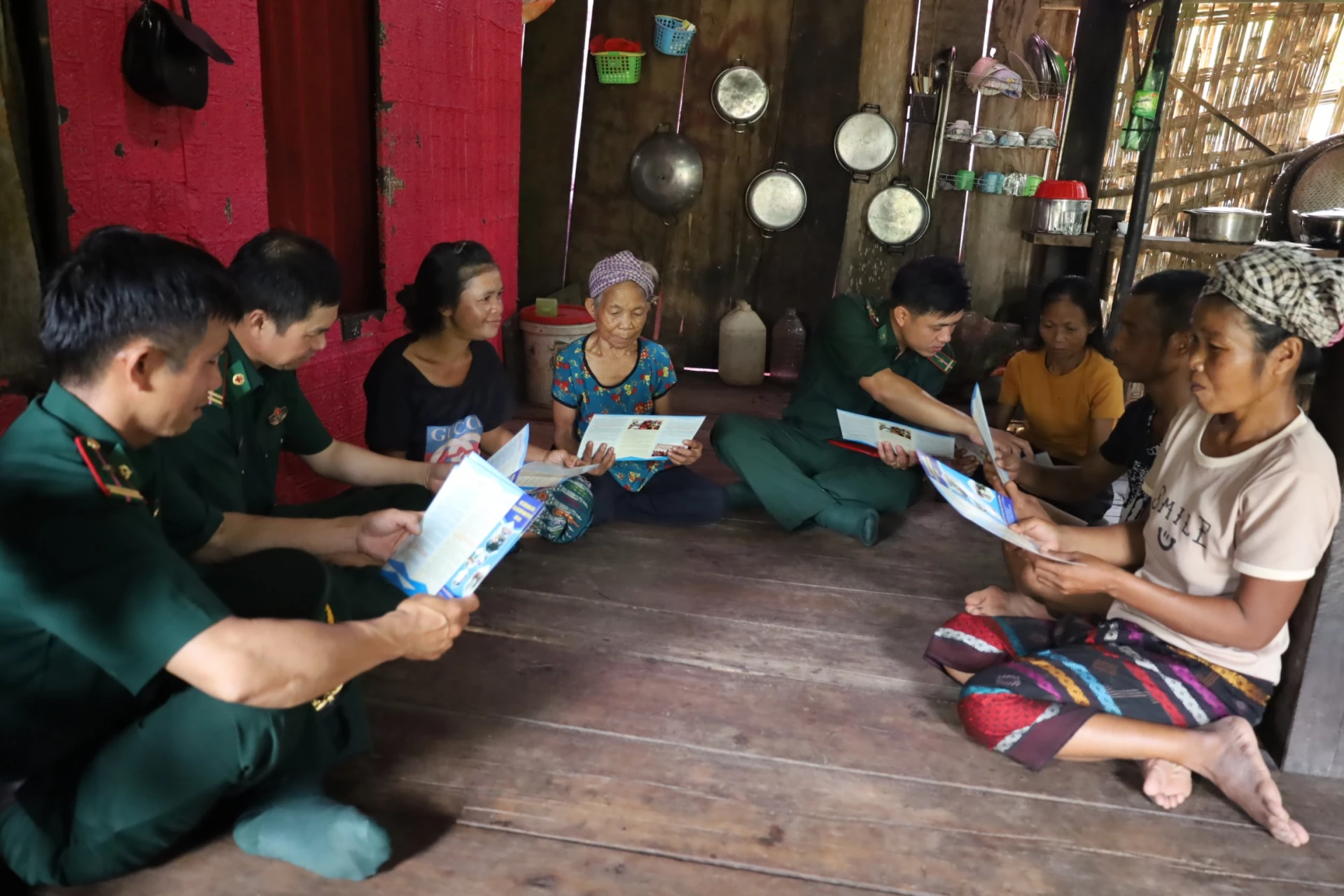 |
| Officers and soldiers of the K-Ai Border Guard task force consistently and persistently "go to every alley, knock on every door, and explain every issue" so that the people understand and trust them - Photo: H.Chi |
According to the officers and soldiers of the task force, in order for the people to listen and follow, it is first necessary to understand the people and the local area. Therefore, each soldier strives to learn the language of the ethnic minorities, learn about their customs and traditions, and listen to their thoughts and concerns. This has created a foundation for positive changes in the work of mass mobilization.
K-Ai rice paddies: A mark of changing mindsets.
One of the clearest examples of the transformation of the May and Sach people is the K-Ai wet rice paddy model, implemented by the Provincial Border Guard since 2013. After more than 12 years of implementation, the model has become a turning point in the lives of the people here. To date, the wet rice paddy covers nearly 5 hectares, with an average yield of 4-5 tons/ha, helping the people of K-Ai village to have a year-round food supply.
Ms. Ho Thi Lai happily shared: “We are very grateful to the soldiers. Thanks to their guidance on everything from planting rice to caring for the fields, everyone now knows how to do it. The villagers are very happy and excited. Since we started planting rice, my family no longer worries about rice shortages; we have enough to eat every season.”
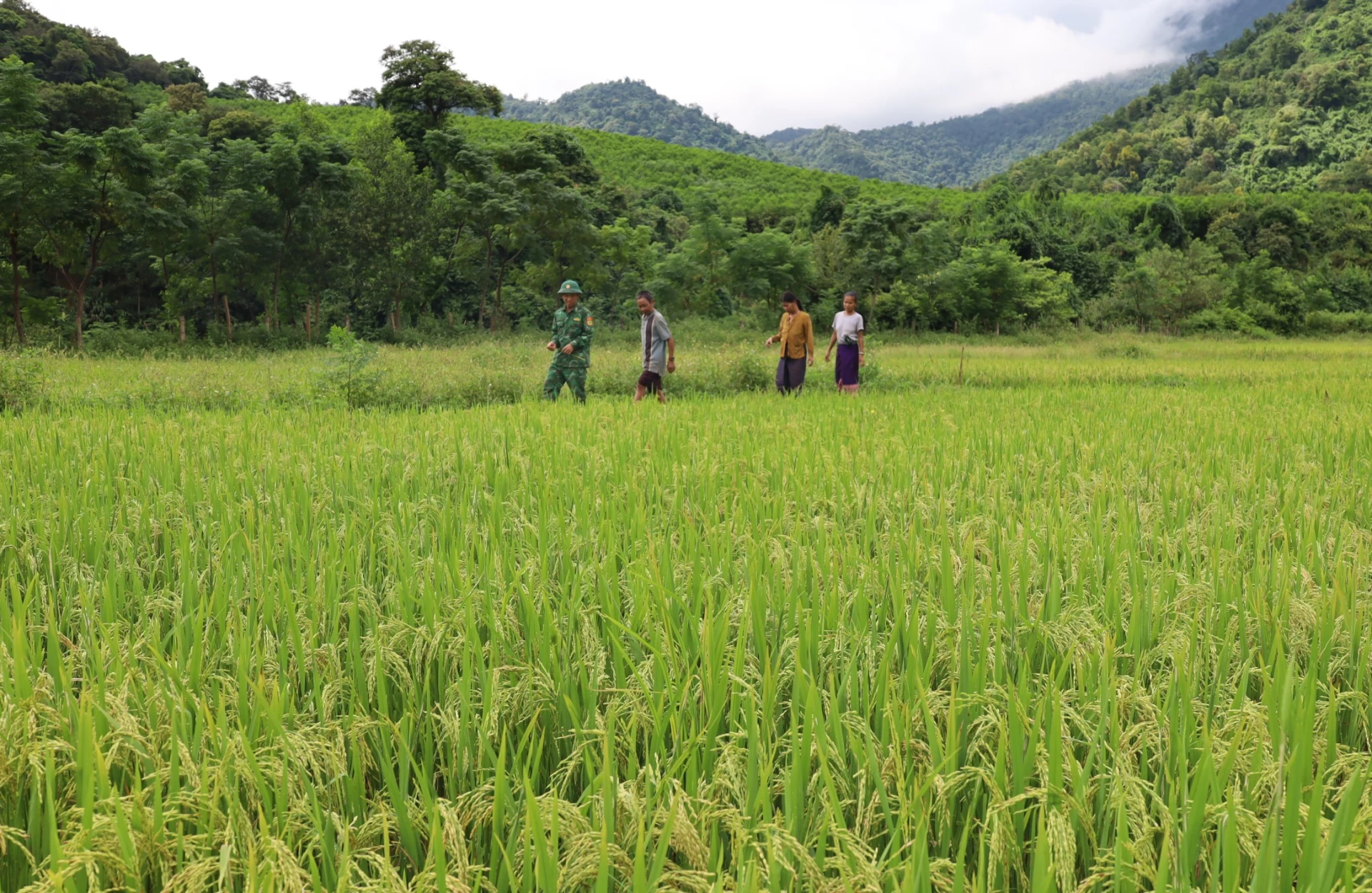 |
| The rice paddies in K-Ai village yield an average of 4-5 tons/ha, helping the people to have a year-round food supply - Photo: H.Chi |
To achieve these results, border guards patiently guided the people through each stage, from land preparation, sowing, weeding, fertilizing, to harvesting. Every task was done together, helping the people gradually become familiar with, understand, and be more proactive in production.
Major Nguyen Thanh Trung, from the Cha Lo International Border Gate Border Guard Station, shared: “In the early days of implementing the wet rice farming model, many households were hesitant and not proactively participated because of their long-standing tradition of slash-and-burn farming, while wet rice cultivation techniques were completely new. Faced with this reality, border guard officers and soldiers persevered, staying close to the fields and the people, directly guiding them through each stage, from selecting and germinating seeds, preparing the land, sowing, transplanting rice seedlings, to caring for the plants and controlling pests and diseases.”
Thanks to clear, easy-to-understand guidance and hands-on practice in the fields, people gradually grasped the techniques and actively participated in production. To date, many households have taken on most of the stages in the rice cultivation process themselves, gradually forming new, more proactive and efficient production habits.”
With two harvests per year, the rice paddies in K-Ai village not only yield abundant rice grains but also demonstrate a shift in the mindset of ethnic minority communities, moving from dependence and reliance to proactive labor, valuing the fruits of their own labor to gradually escape poverty sustainably.
Building a strong foundation of public support.
Major Bui Van Hai, Deputy Political Officer of the Cha Lo International Border Gate Border Guard Station, said: “Along with maintaining working groups that regularly stay in the area, living and working alongside the people, the unit pays special attention to improving the capacity of its officers and soldiers in mass mobilization. Every year, the unit organizes training courses to improve mass mobilization skills and propaganda and public relations skills suitable to the specific characteristics of the ethnic minority region. Based on a thorough understanding of the local situation, the unit proactively advises the local Party committee and government on building and implementing practical and effective solutions, contributing to bringing the Party and State's guidelines and policies to the people in an easily understandable and implementable way.”
Thanks to the close coordination between border guards, local Party committees and authorities, and village elders and leaders, Dan Hoa commune has achieved significant results in poverty reduction. Propaganda activities have been implemented flexibly and appropriately to the lives of the local people. People's awareness has gradually improved, and they are learning how to manage their lives, apply technological advancements to production, develop household economies , and work towards sustainable poverty alleviation.
Secretary of the Party Committee of Dan Hoa commune, Dinh Xuan Thong, affirmed: “The commune is implementing many solutions to support the people in the goal of sustainable poverty reduction, focusing on changing perceptions, developing livelihoods, preserving cultural identity, and improving the quality of healthcare and education . In this process, the active and effective coordination and support of the Border Guard force plays a crucial role, contributing to creating a solid foundation for the long-term development of the locality.”
Gone are the days of dilapidated, makeshift houses; many families in Dan Hoa commune have now built sturdy homes, their fields are lush green, and their livestock and poultry are thriving, demonstrating the remarkable transformation of this border region. Behind these changes lies the dedication and perseverance of border guards, with their spirit of "going to every alley, knocking on every door, and addressing every issue."
Besides their duty to firmly protect national sovereignty and border security, border guards are also a reliable support and companion to the people in the process of poverty alleviation and building a new life. They are the bridge that brings the Party's guidelines and the State's policies closer to the lives of the people.
Hien Vy
Source: https://baoquangtri.vn/xa-hoi/202512/thay-doi-tu-duy-khoi-sac-cuoc-song-ban-lang-62529f4/

![[Photo] Prime Minister Pham Minh Chinh attends the Conference on the Implementation of Tasks for 2026 of the Industry and Trade Sector](/_next/image?url=https%3A%2F%2Fvphoto.vietnam.vn%2Fthumb%2F1200x675%2Fvietnam%2Fresource%2FIMAGE%2F2025%2F12%2F19%2F1766159500458_ndo_br_shared31-jpg.webp&w=3840&q=75)



































































Comment (0)