

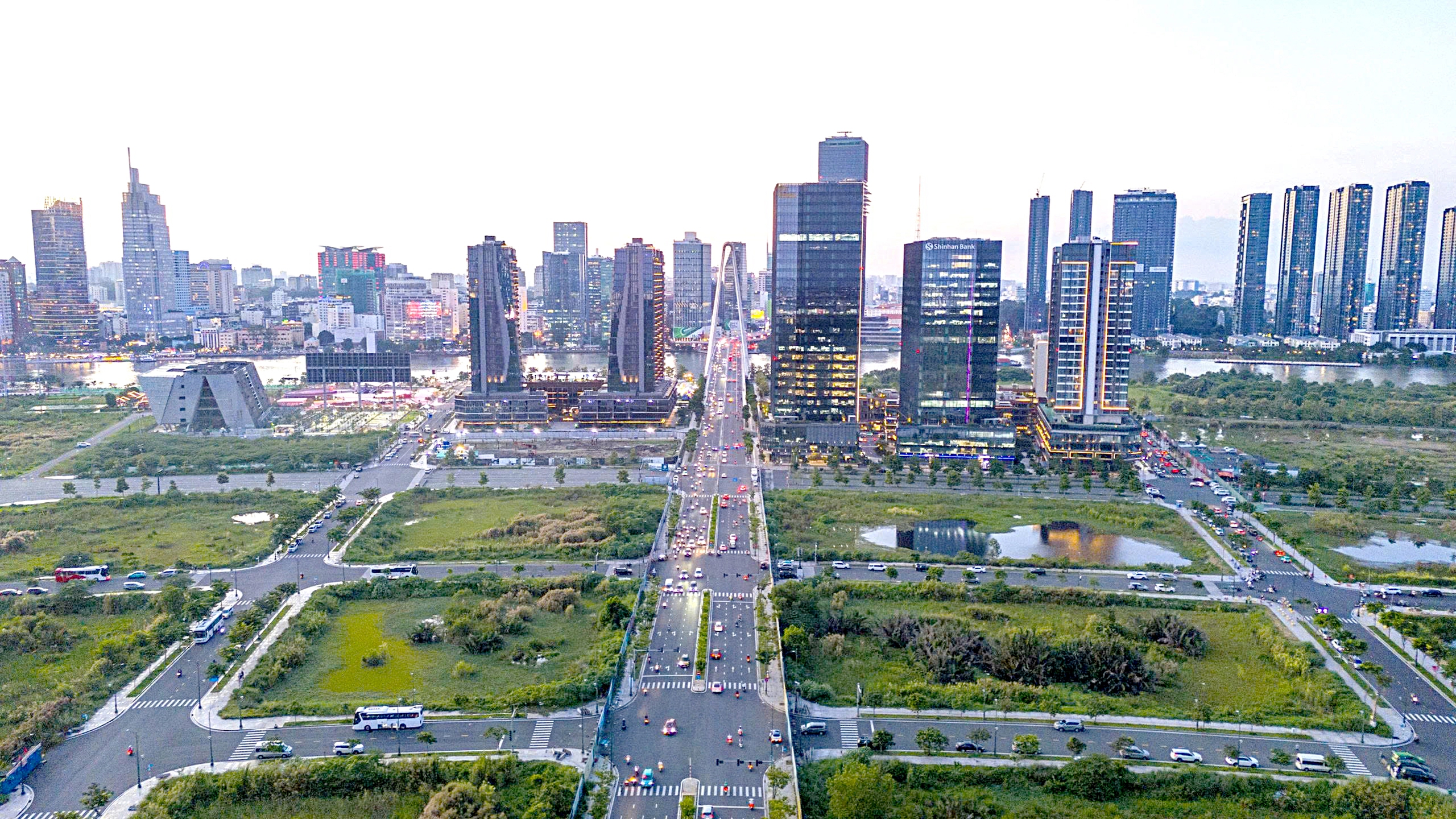
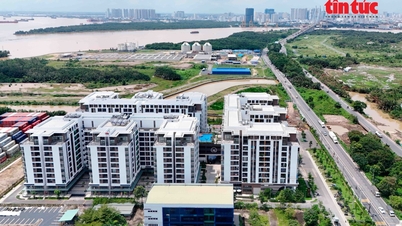
The private sector is expected to make significant contributions to the infrastructure landscape of the new Ho Chi Minh City - Photo: QUANG DINH
The simultaneous commencement and inauguration of 234 infrastructure projects nationwide, with a total capital of approximately 3.4 trillion VND, not only reflects the government 's determination to boost growth but also sends a message: using public investment to lead, pave the way, and build confidence, thereby attracting private sector investment.

This assessment was made by economist Do Thien Anh Tuan from the Fulbright School of Public Policy and Management regarding a series of projects that commenced and were inaugurated yesterday, December 19th.
In a context where growth needs a new impetus, this round of investment sets high expectations for the speed, efficiency, and execution capacity of businesses, viewing the private sector as a central partner in creating momentum for medium and long-term development.
* In your opinion, what does the scale of this series of projects reflect about the government's determination to boost growth and public investment?
- First and foremost, this is a very clear message about the political will to promote economic growth. This series of projects, with a total capital equivalent to 26.5% of GDP in 2025, reflects the decisive choice to accelerate development investment, considering public investment and infrastructure as one of the important pillars to maintain growth momentum in the context of many uncertainties in the domestic and international economies.
Public investment remains a tool that the State can proactively use to stimulate aggregate demand, create jobs, and maintain momentum for the economy in 2026 and beyond.
Another noteworthy point is the capital structure. The majority of total investment comes not only from the state budget but also from non-state resources, reflecting the policy of not replacing the market but using public investment to lead, pave the way, and build confidence, thereby attracting private sector investment.
* How will large-scale infrastructure investment impact economic growth, employment, and resilience in the medium and long term?
- Large-scale infrastructure investment waves typically have a stimulating and productivity-boosting impact. This stimulating impact refers to the short-term effect on growth and employment. Once a project is implemented, the demand for materials, construction, transportation, technical services, and a host of supply chain links increases, thereby creating more jobs and income, ultimately driving social consumption.
Many international studies show that public investment spending generally has a higher impact on output than current spending, and tends to attract more private investment if the projects are properly selected and implemented.
The second impact is on productivity, meaning the medium- and long-term impact, as infrastructure transforms the productive capacity of the economy. Upgrading roads, seaports, airports, energy, urban infrastructure, digital infrastructure, etc., in a coordinated manner will help reduce transportation costs and delivery times, minimize supply chain disruptions, expand markets, and most importantly, enhance national productivity and competitiveness.
In essence, good infrastructure enables businesses to generate more value with the same effort.
However, if we ask whether infrastructure can create momentum, the answer depends heavily on how projects are selected and the quality of their implementation. If projects are behind schedule, over budget, or completed but lack connectivity, or if institutional bottlenecks are not resolved, then the impact will be diminished.
Mr. Do Thien Anh Tuan
* Looking back, there have been projects that failed to achieve the expected "acceleration." In your opinion, what were the core reasons for this?
- The delays and cost overruns in infrastructure projects are not isolated incidents, and the crucial reason is not a lack of funds or determination, but rather the way they are organized and implemented.
As we know, many projects are delayed due to overly cumbersome and complex regulations, which are supposedly for easier management but in reality are stifling resources. The preparation process is too long, procedures are overlapping, and each stage involves multiple agencies, yet no single entity is truly accountable to the end, leading to a erosion of responsibility during implementation.
Furthermore, project management thinking still heavily emphasizes input control rather than output-based management. Many regulations are designed to place too much emphasis on formal compliance with paperwork, records, and procedures, while paying little attention to actual progress, cost, and effectiveness.
Furthermore, the fear of making mistakes and the fear of taking responsibility also lead many officials to choose the safe approach instead of proactively resolving obstacles to accelerate progress. In such a context, no matter how strong the policy is, its implementation is still prone to obstacles and bottlenecks.
Therefore, the demand for greater empowerment of businesses, especially the private sector, is entirely justified. This aligns with the spirit of Resolution 68 of the Politburo.
But how should "empowering" the private sector in infrastructure projects be understood and implemented correctly and adequately?
- Empowerment here should not be simply understood as loosening management or handing projects over to businesses to manage on their own. True empowerment means giving businesses genuine autonomy in design, construction organization, technology selection, and progress management, based on clearly defined objectives and output standards set by the State from the outset.
The state should not interfere too deeply in the way things are done, but should focus on setting goals, monitoring results, and strictly dealing with violations.
Empowerment must also be accompanied by clear accountability. When businesses are given more power, they must be fully responsible for the progress, cost, and quality of the project. If they perform well, they receive deserved benefits; if they perform slowly or poorly, they must face corresponding penalties.
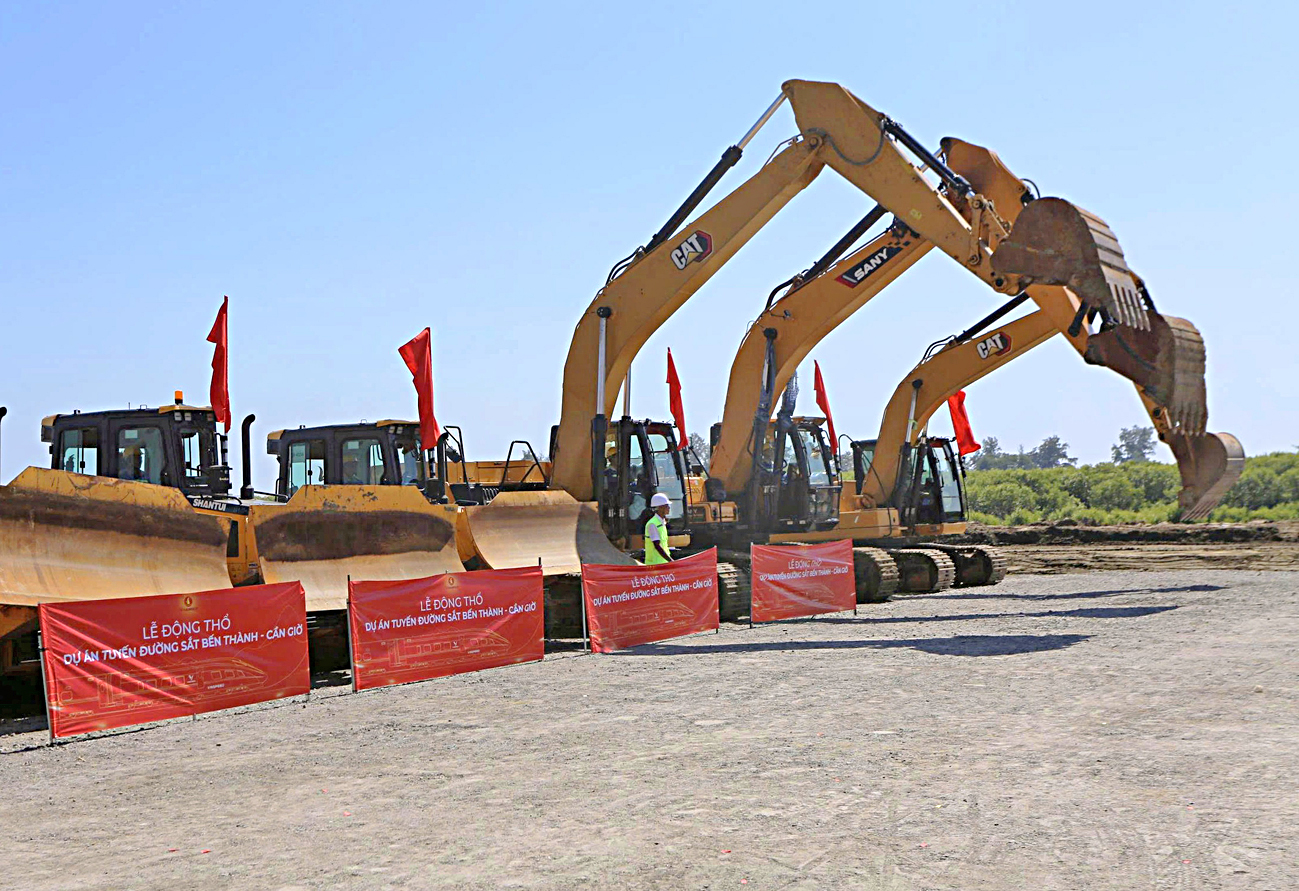
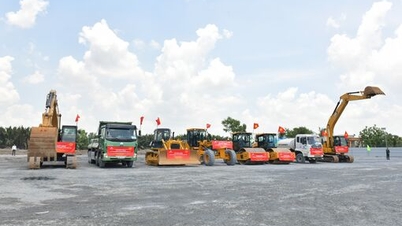
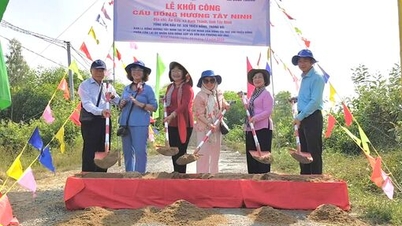
Groundbreaking ceremony for the Ben Thanh - Can Gio railway project on the morning of December 19th - Photo: CHAU TUAN
* What is the most important message the government is sending to businesses through this large-scale infrastructure investment?
- From a policy perspective, I believe the most important message the State is sending to businesses through this large-scale infrastructure investment is that the State is ready to shift from a controlling role to a facilitating and leading role.
When the State agrees to allocate significant resources while simultaneously expanding the space for deeper private sector participation, it implies that infrastructure is no longer a closed sector of the public but rather a long-term collaborative space between the State and the private sector based on mutual benefit.
The second, equally important, message is the demand for speed and efficiency. The simultaneous commencement and implementation of numerous projects shows that the State expects these projects to be implemented quickly, genuinely, and to have a positive impact on growth as soon as possible.
In other words, the government is signaling that time is of the essence and that participating businesses will need to possess strong organizational, financial, and managerial capabilities to meet those demands.
Conversely, what should businesses do to live up to the trust and empowerment granted by the State?
Conversely, to earn the trust of the State, businesses first need to change their approach. Participating in infrastructure projects should not be seen as a short-term opportunity to win projects or maximize immediate benefits, but rather as a long-term investment commitment linked to the reputation and capabilities of the business itself.
Businesses must demonstrate that when given more power, they must proactively take full responsibility for progress, quality, and efficiency, rather than relying on government support and guidance.
More importantly, businesses need to demonstrate their ability to manage risks and ensure transparency in project implementation. Infrastructure is a sector that utilizes significant social resources and has long-term impacts, so adherence to investment, financial, and business ethics standards is fundamental to building trust with the government and partners.
Good infrastructure will change the structure of Vietnam's growth.
Regarding the potential direction of Vietnam's growth structure in the next 5-10 years if this investment wave is well-utilized, I think there are three major shifts that can be envisioned.
1. Shift from growth heavily reliant on capital and labor expansion to growth more driven by productivity, as good infrastructure helps businesses save costs and promotes the accumulation of technology and management expertise when participating in supply chains.
2. Shift the growth space towards the formation of economic corridors linked to seaports, airports, railways, highways, and industry clusters, thereby improving the quality of urbanization and redistributing production activities based on dynamic comparative advantages.
3. Shift the economic structure towards increasing the proportion of high value-added industries instead of continuing to rely on traditional, labor-intensive processing industries.
* Representative PHAN DUC HIEU (member of the Economic and Financial Committee):
Implement on schedule, increase capital utilization efficiency.
The inauguration and commencement of numerous projects are concrete actions aimed at creating momentum, inspiring new enthusiasm, and contributing to driving the economy towards double-digit growth in the coming years.
Among these, many infrastructure projects are strategically important for socio-economic development and facilitate the daily lives of the people.
More importantly, industrial and energy projects are very significant, demonstrating the results of implementing major policies and guidelines on the development of science, industry, healthcare, and education.
The capital structure of the projects also partly reflects the increasing participation of the non-state sector in socio-economic activities, in line with the State's policy and aspirations for the development of the private economic sector.
The mobilization of a large amount of socialized capital amidst global economic instability demonstrates the market and business confidence in the economic development prospects. Comparing the scale of capital with the number of projects clearly shows that state investment is not scattered but concentrated on important, large-scale, and significant projects.
Ultimately, my wish is for the projects to be implemented promptly, quickly, and with high quality.
This will significantly contribute to achieving the dual objectives of these projects: improving capital efficiency and providing infrastructure to immediately serve socio-economic activities, thereby contributing to achieving growth targets in the coming period.
* Delegate BUI HOAI SON (Hanoi):
A strong commitment to the future.
The series of groundbreaking and inauguration ceremonies for major projects in 2025 – from the August 19th event with 250 projects in 34 provinces and cities, to the December 19th event with 234 projects – demonstrates a new rhythm of national development. It is urgent yet systematic, decisive yet focused, accelerating but not deviating from a sustainable trajectory.
The projects launched today are a strong commitment to the future: a developed Vietnam built on a solid institutional foundation, high political consensus, and a unified spirit of action from the central to local levels.
At its core, the greatest significance of the December 19th event is to inspire and strengthen the belief that the new era is not an abstract concept but is present in every project, every construction, and every policy implemented synchronously, so that the country has the foundation and momentum to go further and more steadily on the path to prosperous and happy development.
For example, the Olympic Sports City in Hanoi is not just an organizational choice, but also a development message. It represents a vision of a new growth model in which modern infrastructure, sports, culture, living spaces, and urban economy are harmoniously integrated, focusing on people – the ultimate subject and goal of development.
That image is very much in line with the demands of the new era: development is measured not only by speed, but also by quality of life, long-term competitiveness, and the soft power of the nation.
In that context, the requirement to implement the "6 clear principles" of Prime Minister Pham Minh Chinh demonstrates a consistent management spirit: words are matched by actions, policies are closely linked to implementation, and responsibility is defined down to each stage, each person, and each specific product.
This is the core requirement of national governance in the new era, where genuine effectiveness is the highest measure of leadership and management capabilities.
Tuoitre.vn
Source: https://tuoitre.vn/dong-luc-moi-va-thong-diep-cho-kinh-te-tu-nhan-2025122008454953.htm#content-1
![[Photo] Prime Minister Pham Minh Chinh attends the Conference on the Implementation of Tasks for 2026 of the Industry and Trade Sector](/_next/image?url=https%3A%2F%2Fvphoto.vietnam.vn%2Fthumb%2F1200x675%2Fvietnam%2Fresource%2FIMAGE%2F2025%2F12%2F19%2F1766159500458_ndo_br_shared31-jpg.webp&w=3840&q=75)























































































Comment (0)