Associate Professor Dr. Tang Chi Thuong, Director of the Ho Chi Minh City Department of Health , shared with a reporter from Thanh Nien Newspaper that in the new era – the era of national progress – the Ho Chi Minh City health sector has identified key activities that require concentrated resources. This aims to meet the increasingly high demand for healthcare not only from the people of Ho Chi Minh City and the southern provinces and cities, but also from foreigners living, working, and traveling in the city.
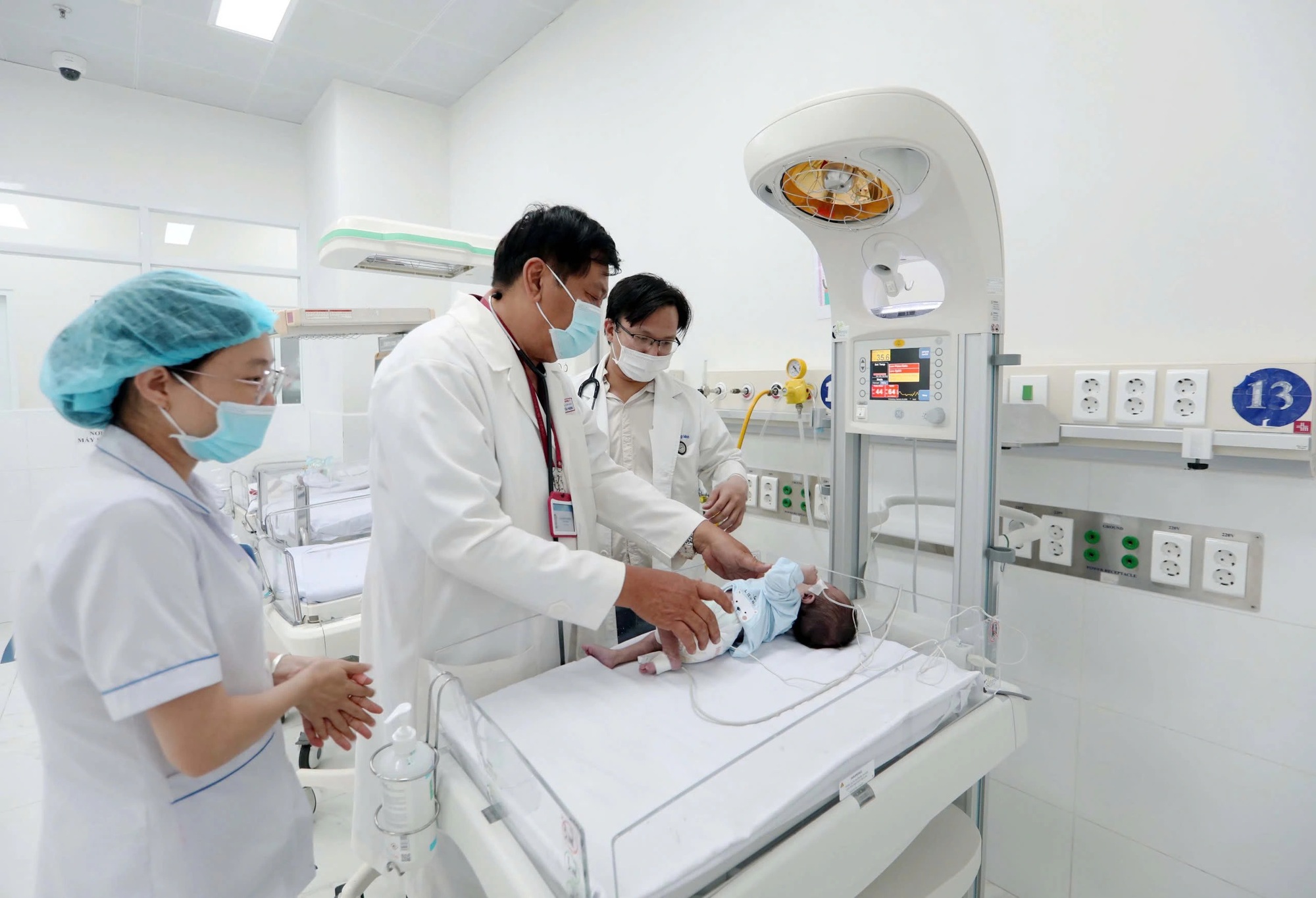
Many advanced techniques and high technologies are being implemented by the Vietnamese healthcare sector in the field of pediatrics.
PHOTO: NGOC DUONG
According to the head of Ho Chi Minh City's health sector, the city has clearly identified four key tasks that need to be implemented synchronously. These are: continuing to strengthen and improve the capacity for disease prevention and control; consolidating primary healthcare, developing community health, and effectively managing non-communicable diseases; developing a professional network of out-of-hospital emergency services; and promoting the development of specialized healthcare with the aim of making Ho Chi Minh City a healthcare center for the ASEAN region.
Furthermore, the healthcare sector focuses on strengthening cooperation with international organizations and learning from the experiences of developed countries to improve the quality of healthcare services. It encourages private and foreign investment in the healthcare sector, especially in research and development projects in medical technology. This includes prioritizing investment in the research and production of pharmaceuticals and medical equipment domestically to reduce dependence on imports.
We are aiming for the pharmaceutical industry to reach level 4, the level where the pharmaceutical industry produces innovative drugs. We have specific policies on science and technology, incentives for businesses developing high-tech drugs, including some high technologies and innovative drugs in the list of prioritized technologies, promoting investment, supporting export businesses, and aiming for $1 billion in drug exports by 2030.
Mr. Vu Tuan Cuong, Director of the Drug Administration Department ( Ministry of Health )
Key solutions
To accomplish the aforementioned key tasks, according to Associate Professor Dr. Tang Chi Thuong, Ho Chi Minh City has proposed several solutions. Firstly, investing in modern infrastructure. Specifically, improving and expanding the system of hospitals, clinics, and modern medical equipment to meet the increasing demand for medical examination and treatment. In particular, continuing to invest in specialized medical clusters according to Ho Chi Minh City's development plan, namely the existing central medical cluster and new clusters such as the Tan Kien cluster (Binh Chanh District) and the Thu Duc City cluster. Ho Chi Minh City clearly defines that it will invest not only in modern infrastructure for treatment facilities, but also in preventive facilities and high-tech disease screening centers.
The second solution is to train high-quality medical personnel. Ho Chi Minh City is constantly improving the professional skills of its doctors, nurses, and other healthcare professionals through training programs both domestically and internationally. Currently, the Department of Health is drafting a special policy to advise the Ho Chi Minh City People's Committee to submit to the City Council, aiming to attract young talents and future leaders in the healthcare sector. This includes a focus on resident doctors and nurses.
Thirdly, we need to promote the application of technology and build a smart healthcare system. This includes applying advanced technologies such as AI, IoT, and telemedicine to improve the efficiency of diagnosis and treatment. Integrating healthcare data on digital platforms will facilitate the management and monitoring of people's health and support healthcare decision-making. Implementing an electronic medical record system will manage patient information effectively, minimize errors, and save time. We will also continue to accelerate the integration of the Electronic Health Book on VNeID and the integration of electronic health records into Ho Chi Minh City's digital citizen app.

Dr. Dinh Tan Phuong, Head of the Emergency Department at Children's Hospital 1 (Ho Chi Minh City), examines a child patient.
PHOTO: NGOC DUONG
Furthermore, continue developing primary healthcare, promoting solutions to strengthen disease prevention and improve public health. Intensify campaigns to raise awareness about disease prevention, nutrition, healthy lifestyles in the community, and effectively manage non-communicable diseases. Build a system for monitoring and early warning of infectious diseases, especially in the context of climate change and globalization. Proactively plan to respond to the impacts of climate change and environmental pollution on public health. Prepare healthcare solutions suitable for an aging population, including long-term care and rehabilitation services.
In the coming period, the health sector will continue to implement annual health check-ups for the people of Ho Chi Minh City. Initially, priority will be given to the elderly, followed by pregnant women, newborns, and students. Besides early detection and intervention of health-related issues, through these health check-ups, the health sector will establish digital data on people's health, forming an important foundation for electronic health records.
A solid "three-legged stool"
"Specifically for hospitals, in light of new demands, the healthcare sector has identified the three crucial pillars that need to be strived for to create a solid foundation for development in the new era," Associate Professor and Doctor Tang Chi Thuong affirmed.
Specifically, the hospital continuously develops specialized techniques, strengthens the deployment of advanced applications with high technological content, especially AI, IoT, 3D printing, etc. The hospital strives to achieve international standards of quality and excellence in professional and technical expertise, which is an important basis for international health insurance companies to sign contracts for medical examination and treatment for foreigners. It effectively implements sustainable financial autonomy solutions, alongside promoting savings and combating waste in the operation of medical facilities.
This "three-legged stool" is also a crucial requirement for Ho Chi Minh City to promote medical tourism, a service that will be developed by various departments and agencies in the near future. The Ho Chi Minh City health sector is demonstrating a proactive, creative, and constantly innovative spirit to not only meet current healthcare needs but also contribute to the sustainable development of the city. "The combination of investing in modern infrastructure, training high-quality human resources, promoting the application of advanced techniques with high technological content, especially those integrating artificial intelligence, and strengthening international cooperation will be the key to the Ho Chi Minh City health sector reaching new heights," emphasized the Director of the Ho Chi Minh City Department of Health.
National health development strategy
At the national level, in the era of national development, the healthcare sector is committed to innovation and promoting digital transformation in healthcare with three main components: smart disease prevention, smart medical examination and treatment, and smart healthcare management.
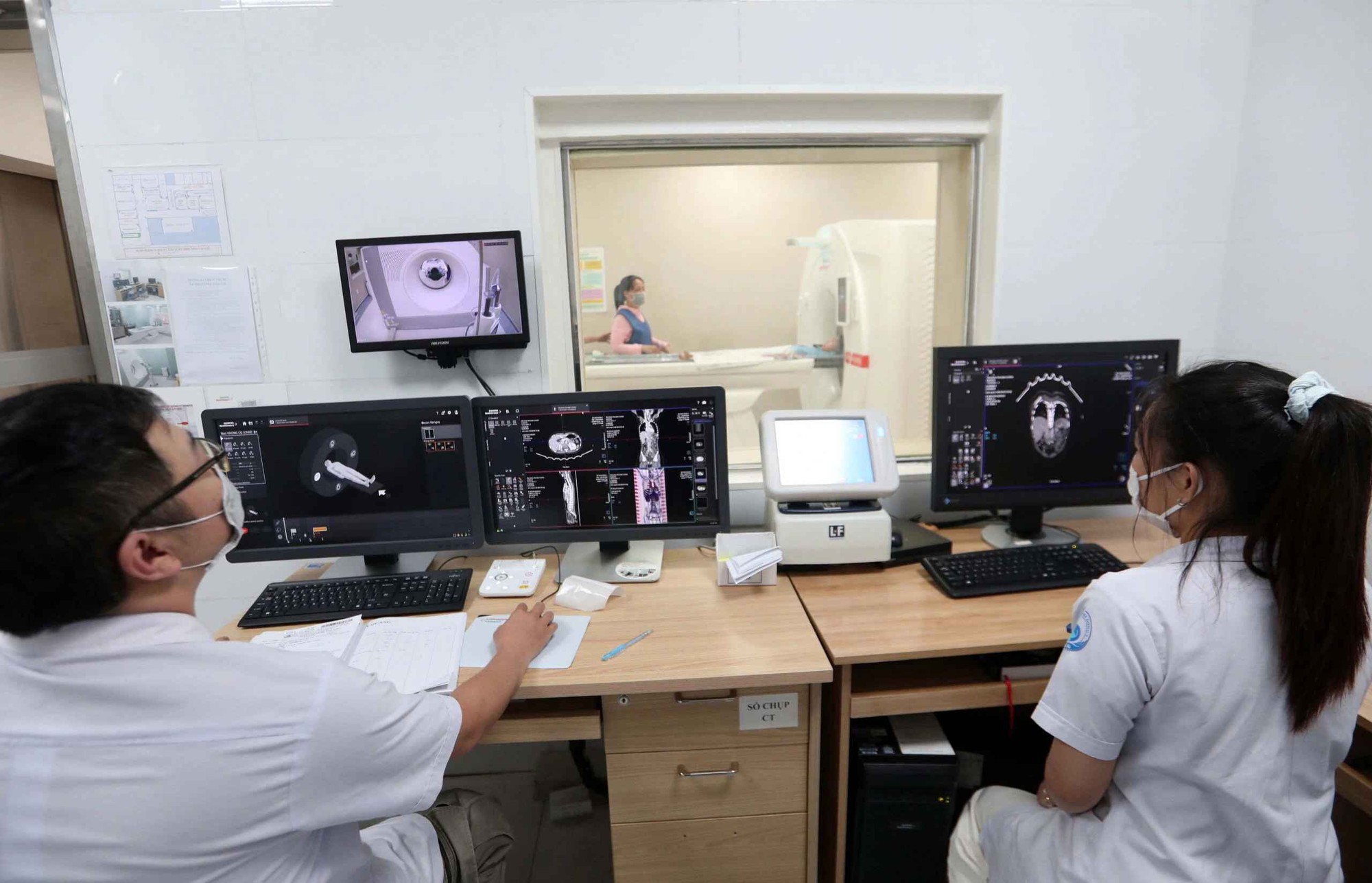
Modern techniques and technologies, on par with international standards, are being implemented in hospitals by the healthcare sector.
PHOTO: NGOC DUONG
Dr. Nguyen Ngo Quang, Director of the Department of Science and Technology and Training (Ministry of Health), stated that the Ministry of Health focuses on perfecting regulations to create a legal environment for implementing reforms in medical personnel training towards international integration. The goal is to strengthen the development of medical personnel to meet the requirements of the new situation, including quantity, quality, structure, distribution, efficiency of personnel utilization, and competitiveness.
Next is the breakthrough in scientific and technological development. In the period up to 2030, the focus will be on researching and applying advanced techniques, methods, and technologies in the healthcare field such as AI, personalized 3D printing, immune cells, stem cells, specialized medical devices, new drugs, new vaccines, and building biosafety level 4 facilities for epidemic prevention and control, as well as for chronic diseases and cancer...
Simultaneously, the Ministry of Health is promoting the digital transformation of healthcare, completing the construction, connection, and synchronous sharing of the national healthcare database and specialized healthcare databases, and effectively exploiting and utilizing digital resources and healthcare data. Priority is given to ensuring the progress of the tasks of Project 06; accelerating the implementation of electronic health records on VNeID, and linking laboratory test results... Gradually forming a smart healthcare system with three main components: smart disease prevention, smart medical examination and treatment, and smart healthcare management.
According to representatives from the Ministry of Health, healthcare innovation involves the development and implementation of new processes, products, programs, policies, or systems to improve health and equity in access to healthcare services. Innovation can include breakthrough technological solutions that drive scientific research and development to address the ever-increasing and evolving healthcare needs driven by societal development and disease patterns. The reality of the COVID-19 pandemic has made healthcare innovation more prevalent and involved more actors than ever before. Examples include genetic surveillance and data sharing for SARS-CoV-2, mRNA vaccines, telemedicine, and clinical management systems.
"Innovation in healthcare refers to the development and application of new ideas, technologies, processes, and solutions that improve quality and promote the application of scientific advancements in medicine, across all specialized fields from primary healthcare, disease prevention, diagnosis, treatment, drug production, vaccines, biological products, and medical equipment," Mr. Nguyen Ngo Quang informed.
Ensuring pharmaceutical security and mastering vaccine technology.
Mr. Nguyen Ngo Quang further shared that in the field of national-scale preventive medicine, vaccines are affirming their important role in proactively preventing epidemics. Vietnam has now mastered vaccine production technology, with 14 types of vaccines being produced domestically.
Vaccines; in the near future, VNVC will invest in more vaccine and biological product manufacturing plants. Notably, for many years, our clinical trial management system has been recognized by the World Health Organization (WHO). This demonstrates that we have mastered advanced technologies and techniques in preventing dangerous infectious diseases and emerging diseases.
With advanced techniques in disease diagnosis and treatment, we have gradually applied molecular biology, nuclear medicine, and cell therapy at only 1/2 to 1/3 the cost in other countries. Domestically, we are also researching and applying cell-based diagnostic and therapeutic technologies, mastering the technology for researching and producing protein- and enzyme-based drugs; discovering and applying biomarkers related to cancer and genetic diseases; and researching stem cell differentiation and monoclonal antibodies.
Providing further information on the development of the pharmaceutical industry and ensuring pharmaceutical security, the Director of the Drug Administration Department (Ministry of Health), Vu Tuan Cuong, stated that there are currently 238 manufacturing plants belonging to 205 units in the country that meet GMP standards. These include 162 plants producing modern medicines, 7 vaccine plants, 15 biological product plants, 8 plants producing raw materials for modern medicines, 92 plants producing traditional medicines, and 55 plants producing raw materials for traditional medicines. Eighteen facilities have drug production lines that meet EU-GMP standards or equivalent. Domestically produced drugs account for 70% of the total drug consumption.
"We are aiming for the pharmaceutical industry to reach level 4, the level where the pharmaceutical industry produces patented drugs. We have specific policies on science and technology, incentives for businesses developing high-tech drugs, including some high technologies and patented drugs in the list of incentives, promoting investment, supporting export businesses, and aiming for $1 billion in drug exports by 2030," said the Director of the Drug Administration Department.
We need a shift in thinking about the healthcare sector. Healthcare is not just about diagnosing and treating patients; it needs to be more about caring for the health of the people to reduce disease. We need to focus on researching disease prevention methods, improving health, and extending lifespan. At the same time, we need to strengthen the capacity for reproductive health, pediatrics, and geriatrics; enhance community health; and increase the number of people who visit healthcare facilities for check-ups annually or every six months.
The focus should be on removing difficulties, obstacles, and bottlenecks so that the healthcare sector can thrive, and so that we can have "a healthcare system that meets the needs of our people," as President Ho Chi Minh wished 70 years ago.
To enhance the application of digital technology in healthcare management and treatment, it is necessary to promote digital transformation in healthcare management; implement electronic medical records, synchronize health data between hospitals and medical facilities; and strengthen the application of AI and Big Data in disease diagnosis, treatment, and analysis of disease trends. Simultaneously, invest in developing software to support doctors in treatment decision-making, increasing the accuracy of disease diagnosis; enhance the application of AI in intelligent diagnosis; organ transplantation; develop stem cell technology; gene therapy; robotic surgery; and 3D printing technology to personalize medical devices for personalized medicine...
Excerpt from the speech by General Secretary To Lam at the working session with the Ministry of Health on the occasion of Vietnamese Doctors' Day, February 27.
Thanhnien.vn
Source: https://thanhnien.vn/nganh-y-te-vuon-minh-185250226224859713.htm








































































































Comment (0)