

Amidst the mountainous landscape of western Nghe An , as the harvest season draws to a close, laughter and chatter fill the open fields. There, the traditional folk game of "to mang"—shooting mang seeds with fingers and toes to hit a target—not only brings joy but also serves as a connecting thread for the community, preserving the cultural identity of the Thai people through generations.
The villagers cheered on the dirt "arena".
One afternoon in early May, as the sunlight softened behind the Pù Huột mountain range, we arrived in Bình Chuẩn commune (Nghệ An province), a valley surrounded on all sides by mountain ranges and the vast Pù Huống forest. Here, the Thái ethnic community in 7 villages still preserves many unique traditional cultural practices.
The atmosphere in the Muong Chon market, located at the beginning of Tong village, is very lively. Hundreds of people have gathered here, forming circles in multiple layers to intently watch the movements of those participating in the "to mang" game. The colorful brocade dresses stand out against the brown ground, creating a simple yet culturally rich scene.
Ms. Kha Thi Nguyen, a resident of Binh Chuan commune, said that for many days, people have been on holiday and haven't been going to the fields, so they have had plenty of time to organize the To Mang game, and many people from the surrounding villages have come to participate.
In the middle of the field, round, flat, brown, smooth-surfaced salt stones are neatly arranged along the starting line. About 10 meters ahead are small, hand-sized, scale-shaped pieces of wood, standing upright on a red line – the finish line for the salt stones.
After the village elder's shout of "battle begins!" rang out, the women, mothers, and sisters in their traditional attire gently knelt down, placed the salted seeds on their knees, and flicked them forcefully with their fingers. The seeds flew far, rolling quickly across the ground, creating a closer distance to the target. Some people hit pieces of wood with their seeds, causing the wood to shake and fall. Cheers and applause immediately echoed throughout the courtyard.
The atmosphere grew increasingly lively. Players took turns shooting, and spectators crowded around, clapping and cheering. The children watched intently as each shot was fired, occasionally jumping up and shouting with joy when a shot hit the target beautifully.
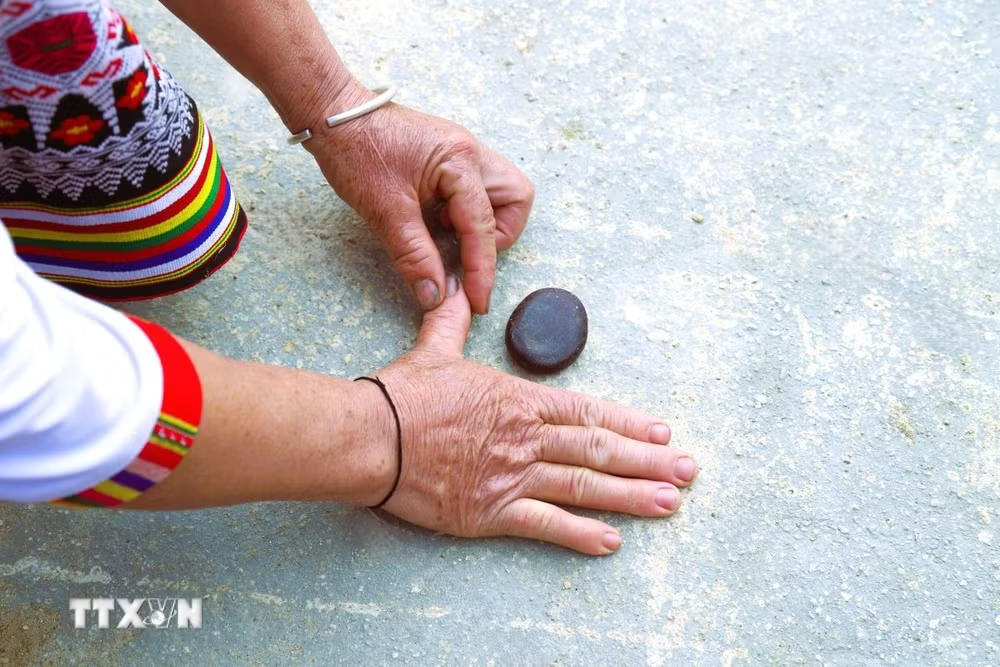
According to Mr. Ha Vinh Uoc, Vice Chairman of Binh Chuan commune, Nghe An province, "to mang" is a long-standing folk game of the Thai people, originating from their working environment. After hours working in the fields, villagers often gather to play to mang to relieve fatigue and motivate themselves to continue working diligently.
In ancient Thai, "tó" means to shoot or throw, while "mặng" is the name of a type of seed found in the fruit of a climbing plant. Many types of seeds from plants that can be "tó" (shot or thrown) can be found in the forest, but people only choose the "mặng" seed because it is round and flat, dark brown, with a smooth, glossy surface, and a diameter of about 3-5 cm. This makes it suitable for players to flick with their fingers or quickly spin and toss forward with their feet.
According to Ms. Lo Thi Luong from Na Co village, Binh Chuan commune, the game of "to mang" is suitable for all ages and genders. All you need is some "to mang" seeds and an open space to play. The more people participate, the more fun it is. But to add excitement, people often divide into teams to compete. This "open" approach keeps the game lively and creates a rare, bustling atmosphere.
Beyond being a form of entertainment and physical exercise, the game of Tó Mạng is also present in many important village events such as housewarming parties, weddings, village ceremonies, harvest festivals, and the Great Unity Day. In any setting, the game becomes a bridge, helping people unite and become closer to each other.
In Binh Chuan commune, the Thai people in the villages of Na Co, Xieng, Quan, Tong, Met, Que, and Dinh still regularly maintain this game. During periods of agricultural inactivity, when farming work is temporarily put aside, to mang becomes a familiar community activity.
13 steps to "rekindle" and keep the flame of community culture alive.
Not only is it appealing due to its lively and energetic atmosphere, but Tó Mạng is also captivating because of its unique rules and techniques. Traditionally, the game consists of 13 steps with distinctive names such as: ka đít, ka nặng, ka xông, mươi thìn, xùm, ka nay, pa lạt, phan tiền, xụt Xịt, tòn èn, kép nê, ki hua, and nhín. Each step corresponds to a posture and shooting technique, ranging from simple to complex.
Players can shoot salt pellets with their fingers while sitting, kneeling, standing, lying down, or placing the pellets on the ground, on their bent knees, or even using their feet to toss the pellets forward. The difficulty levels gradually increase, requiring players to be truly skillful, persistent, and to generate precise force.
Once divided into teams, each team must select skilled players to compete against each other, then draw lots to determine the order of play. During the competition, each member takes turns performing 13 prescribed steps. To win, in addition to individual skills, teams must also have smooth coordination and sound strategic planning. This is what makes it not just an individual game but also a highly collaborative activity.
The game is played in a flexible space; all it needs is a flat area of land, from a yard or a patch of land near the forest to an open space in the village. This simplicity helps the game remain a part of community life.
Mr. Ha Vinh Uoc, Vice Chairman of Binh Chuan commune, said that nowadays, with the strong development of new forms of entertainment, many folk games are gradually being forgotten. However, the game of "to mang" still retains its vitality thanks to its close connection with community life. In recent years, this game has been regularly included in cultural activities and festivals to encourage people, especially the younger generation, to participate. This contributes to preserving and promoting traditional values. The local government always encourages people to preserve folk games that are rich in the cultural identity of the Thai people, including the game of "to mang".
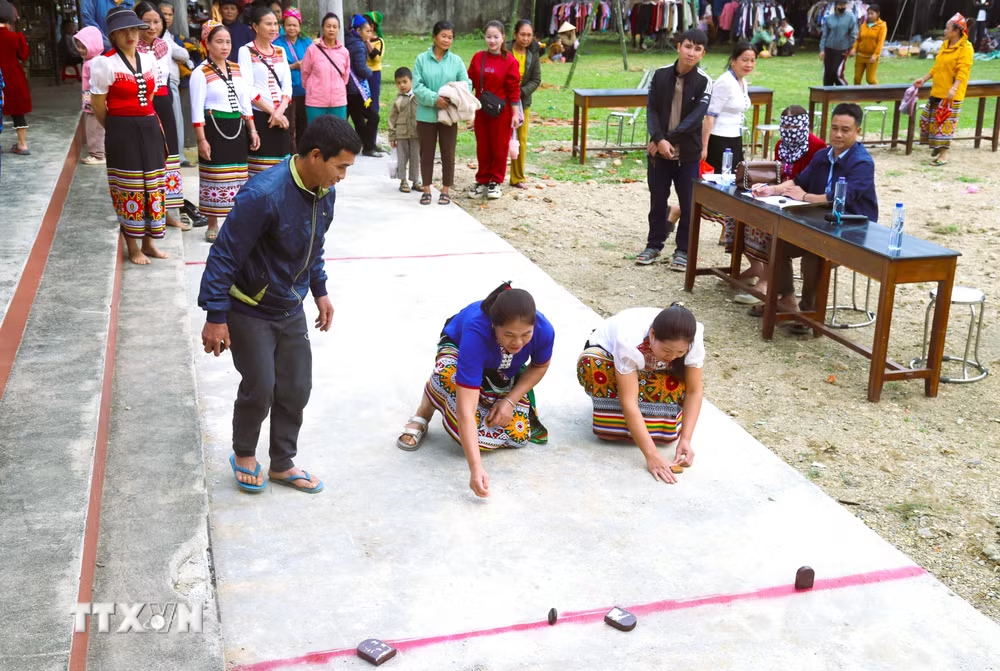
In reality, the appeal of the "tó mạng" game lies not in the rewards or the competition, but in the joy and community bonding it brings. When participating, people laugh, play, and cheer together, creating a warm and intimate atmosphere. In the late afternoon, as the sun sets behind the mountain peaks, the playground remains bustling. The final rounds of shooting conclude amidst laughter and a sense of nostalgia.
Tó Mạng is a folk game originating from labor and production, used to relieve fatigue and find inspiration after breaks. Over decades, from small grains of sand, a large cultural space has been created – a place that preserves memories, connects people, and passes on valuable values to future generations.
Source: https://www.vietnamplus.vn/nghe-an-dong-bao-dan-toc-thai-giu-lua-van-hoa-tu-tro-choi-dan-gian-to-mang-post1108294.vnp

















































































Comment (0)