

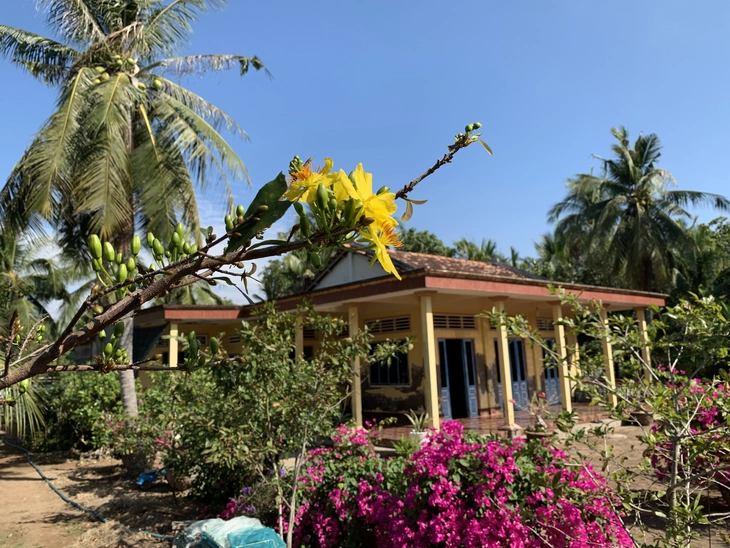
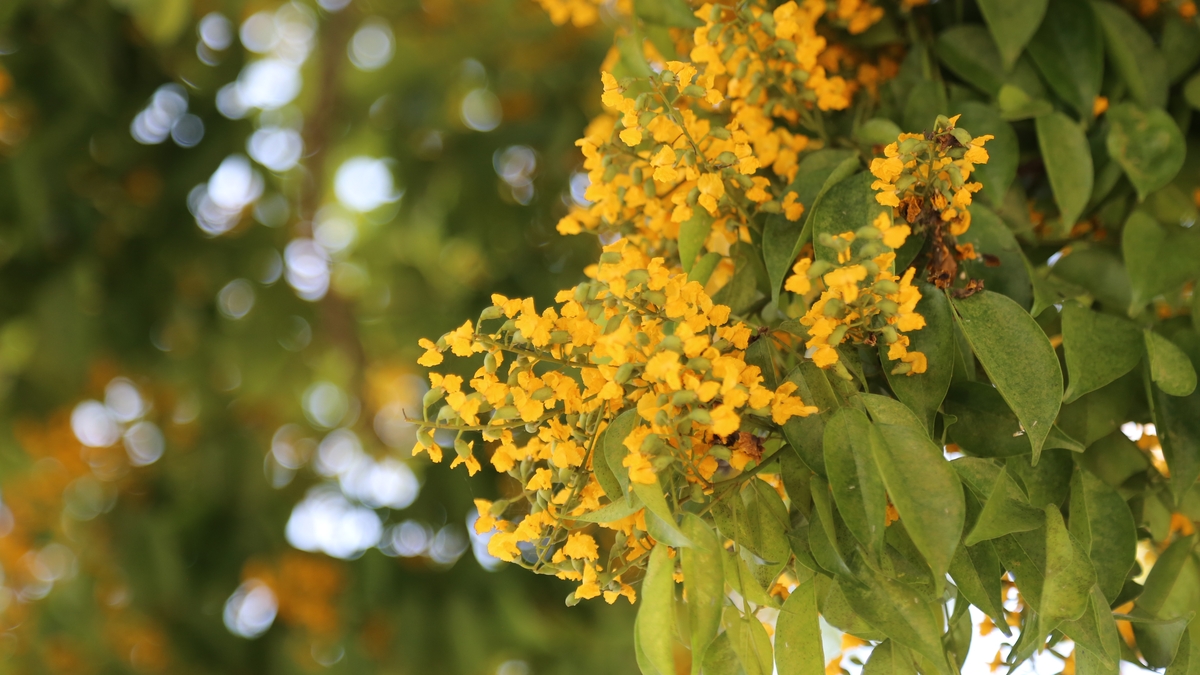
Flowers and foliage vie with each other to show off their colors, welcoming the new spring - Illustration photo: HOAI PHUONG
My house was built on top of a bomb crater that had been filled in after the war. My mother said that the crater was huge. All the garbage from the town where I lived for so many years piled up there, and it never seemed to fill it completely.
When laying the foundation, my father had to drive in so many bamboo stakes and load nearly twenty truckloads of rubble before he felt somewhat secure. All the effort and money my parents poured into that foundation, but in return, the house was tiny.
Because my mother wanted to be close to my maternal grandparents, my father didn't mind living with them as his in-laws and didn't mind the extra effort. This shows that even a thin thread of affection can be strong enough to anchor people to their own desires.
Even back then, it would have been much simpler to just ask the commune for a piece of land elsewhere to build a house. From another perspective, a home built on the "traces of war" is also a way for people to demonstrate their powerful resilience.
Every day, my father would take my mother for a ride on his rickety bicycle, wandering from one street vendor's stall to another. At first, it was a pot of grilled meat, and later, I joined them. My childhood was spent on the bicycle seat, on the wide, dusty streets, covered in exhaust fumes and road dust.
That tiny, pigeon-nest-like house was the culmination of my parents' years of selling goods door-to-door. It was so small that you could see every nook and cranny of the house, including the bedrooms, from the yard.
The exterior walls were rough, with a few hastily drawn horizontal and vertical lines. The floor was a smooth, polished cement, feeling cool and slippery to the touch. The main door was made of rough, unpolished wood. My father had temporarily tied a plank to the side door, just enough to provide shade from the sun and rain. Yet, it was the perfect refuge for a flock of sparrows.
The wooden plank has a round hole just big enough for the sparrows to crawl through. Every day, they busily carry straw to build their nests, chirping and bringing back food. On a spring morning, the golden sunlight gently spreads, and the mother bird spreads her wings to watch over her chicks learning to fly. Peace is not far away, right beside the eaves of the house.
That first night sleeping in that house, my mother tossed and turned, unable to sleep. Gone was the smell of dry straw mixed with clay plastered on the walls. Gone were the sounds of rats scavenging for food and digging burrows in the earthen floor. The warm scent of the lime-washed walls, the feeling of secure shelter, permeated her sleep, leaving her restless with longing. The small, charming house, like a dove's nest – the dream of her days selling goods on the streets – had now taken shape.
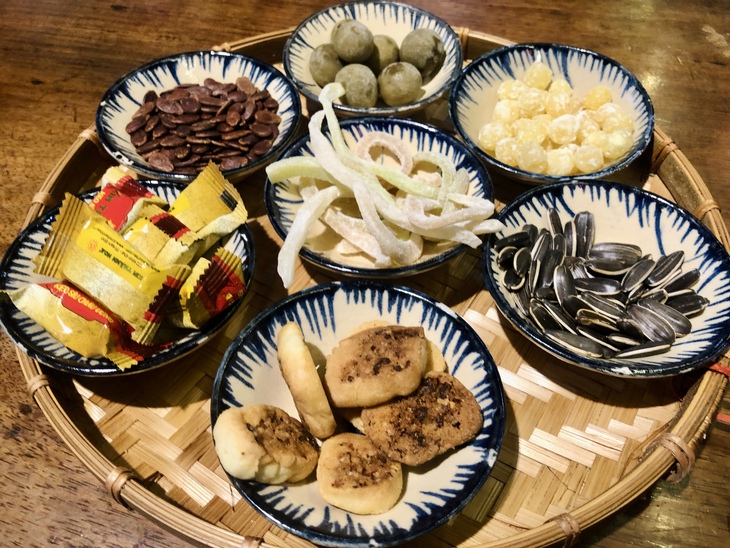
Familiar types of sweets and candies during Tet (Lunar New Year) - Illustration photo: HOAI PHUONG
In 1991, my hometown still had no electricity. A flickering oil lamp illuminated our simple meals, yet my parents felt they were the richest people in the world. My mother gave birth to another child in that new house. The house was filled with the sounds of rocking hammocks and the laughter and cries of young children.
My sisters and I grew up peacefully in that pigeon-nest house, surrounded by sparrows. We peacefully endured sunny days and rainy nights. Wrapped in blankets, listening to the rain falling on the porch, those years seemed as if life would never have storms…
My father passed away on the eve of Tet (Lunar New Year). It wasn't raining, yet a storm raged in my heart, and continues to this day. The dim light from the oil lamp on the altar casts a faint glow, illuminating the muffled sobs of my mother and the huddled figure of her infant child. The sounds of the night rain accompany this profound sadness.
Twenty years after our father passed away, under the shade of that dove-nest house, my mother toiled tirelessly to raise my sister and me. Then, one by one, our children were born. The house remained exactly as it was when we were children. The old, moss-covered house in the village had been replaced by a multi-story villa. The small, charming house nestled beside the old sapodilla tree.
This afternoon, returning to my mother's side, to my old home, I feel a sense of peace and tranquility, like in my childhood. I don't need to be anyone else, I don't need to do anything, I just need to be my parents' child. Ultimately, a person has countless places to go, but only one place to return to: home. We, like sparrows, once longed to spread our wings and fly high in the vast sky. Today, we yearn for that feeling of peace, to return home.
Childhood is over; we can't stay little forever. But I know Mom is always waiting for us under the dove-nest-shaped eaves of our house.
We invite readers to participate in the writing contest.
A warm spring day
As a special treat for the Lunar New Year, Tuoi Tre newspaper, in partnership with INSEE Cement Company, continues to invite readers to participate in the "Springtime Home" writing contest to share and introduce your home – your warm and cozy haven, its features, and unforgettable memories.
The house where your grandparents, parents, and you were born and raised; the house you built yourself; the house where you celebrated your first Tet (Lunar New Year) with your small family... all can be submitted to the competition to introduce to readers nationwide.
The article "A Warm Home in Spring" must not have previously entered any writing competition or been published in any media or social networks. The author is responsible for copyright, the organizing committee has the right to edit, and the author will receive royalties if the article is selected for publication in Tuoi Tre publications.
The competition will take place from December 1, 2025 to January 15, 2026, and all Vietnamese people, regardless of age or profession, are welcome to participate.
The article "A Warm Home on a Spring Day " in Vietnamese should be a maximum of 1,000 words. Including photos and videos is encouraged (photos and videos taken from social media without copyright will not be accepted). Entries will only be accepted via email; postal mail will not be accepted to avoid loss.
Entries should be sent to the email address maiamngayxuan@tuoitre.com.vn.
Authors must provide their address, phone number, email address, bank account number, and citizen identification number so that the organizers can contact them and send royalties or prizes.
Staff and employees of Tuoi Tre newspaper and their family members may participate in the "Warm Home in Spring" writing contest, but they will not be considered for prizes. The organizing committee's decision is final.
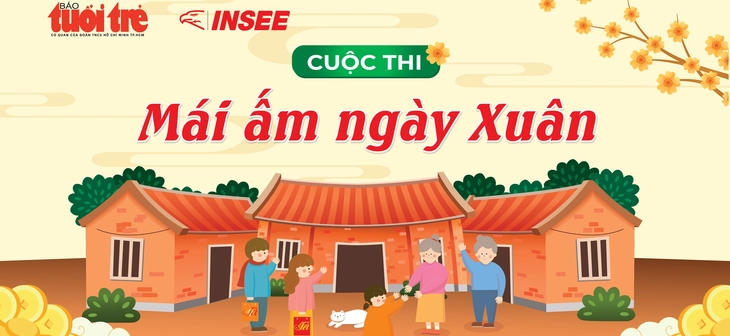
The Springtime Shelter Award Ceremony and the Launch of the Youth Spring Special Edition
The judging panel, comprising renowned journalists and cultural figures along with representatives from Tuoi Tre newspaper, will review and award prizes based on the preliminary entries.
The awards ceremony and launch of the Tuoi Tre Spring special issue are scheduled to be held at Nguyen Van Binh Book Street, Ho Chi Minh City, at the end of January 2026.
Prize:
1st prize: 10 million VND + certificate, Tuoi Tre Spring issue;
1 second prize: 7 million VND + certificate, Tuoi Tre Spring issue;
1 third prize: 5 million VND + certificate, Tuoi Tre Spring issue;
5 consolation prizes: 2 million VND each + certificate, Tuoi Tre Spring issue.
10 Readers' Choice Awards: 1 million VND each + certificate, Tuoi Tre Spring Edition.
The voting points are calculated based on interaction with the post, where 1 star = 15 points, 1 heart = 3 points, and 1 like = 2 points.
Source: https://tuoitre.vn/ngoi-nha-hinh-to-chim-cau-20251231195147683.htm
![[Image] Bridges and roads connecting the eastern part of Ho Chi Minh City](https://vphoto.vietnam.vn/thumb/1200x675/vietnam/resource/IMAGE/2026/04/16/1776328595108_ndo_br_bh-vt5-jpg.webp)













































![[Infographic] Details of the Hanoi-Quang Ninh High-Speed Railway Project](https://vphoto.vietnam.vn/thumb/402x226/vietnam/resource/IMAGE/2026/04/16/1776338188424_anh-man-hinh-2026-04-16-luc-18-16-10.png)
![[Photo] National Assembly Chairman Tran Thanh Man meets with the Speaker of the Georgian Parliament](https://vphoto.vietnam.vn/thumb/402x226/vietnam/resource/IMAGE/2026/04/16/1776338494029_anh-man-hinh-2026-04-16-luc-18-21-21.png)
















Comment (0)