

 |
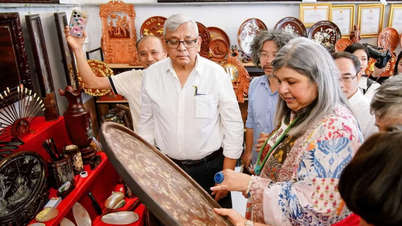
| Foreign tourists enjoy tea in Thai Nguyen . |
Holding a cup of shimmering green tea, I see a wisp of smoke drifting, carrying the aroma of harvested rice from the village fields. My lips slowly sip, savoring the mild bitterness on my tongue, then the warmth of the water gradually permeates, nurturing and awakening a lingering sweetness in my throat. In the warm aroma of the tea, spring is not only present in the colors of the sky and the shape of the mountains, but also permeates the way of life and the affection of the people of this land, enduring and faithful like the subtly bitter yet sweet taste of Thai tea.
The quiet pleasure of drinking tea has been a part of human life for hundreds of years, enduring as a beautiful, subtle, and profound habit, gradually becoming a unique culinary culture rich in humanistic depth. At the same time, we realize that tea is not just for enjoyment, but also a thread of memory, a cultural symbol connected to each region and each nation.
For example, China has the Classic of Tea, embodying Eastern philosophy; Japan has the solemn and tranquil Tea Ceremony; and Sri Lanka is famous for its Ceylon tea, whose flavor has spread across the globe.
And so, as time flows, carrying the cultural beauty of those lands, Vietnamese tea quietly affirms its unique identity with its mild astringency, deep sweet aftertaste, and rich flavor, reflecting the very character of the people and the land of the country. The world has countless books on tea. In Vietnam, there are also numerous books on tea, including those on the techniques of growing, caring for, and processing tea, and those discussing the culture of tea appreciation. Especially when friends gather for heartfelt conversations, a pot of Thai Nguyen tea is often offered to keep them company. This is because Thai Nguyen tea has a distinctive aroma and flavor that makes many visitors to Thai Nguyen, after tasting it once, feel a longing like that of a lover who cannot be near their beloved.
 |
| People in Na Pháng hamlet, Yên Trạch commune, are harvesting tea. |
Thanks to its suitable soil for tea cultivation, Thai Nguyen tea products are more special than those from other tea-growing regions in the country. But what is certain is that besides the good soil and clean water that have made Thai Nguyen tea famous, there is also the diligence and dedication of the tea growers. Furthermore, Thai Nguyen tea embodies and accumulates a passion and a conscientious, responsible approach to business practices of the tea farmers.
About a hundred years ago, the concept of tea culture began to take shape in Thai Nguyen province. The beginning can be traced back to Mr. Doi Nam and a number of people from Tan Cuong who, carrying their belongings and packed lunches, crossed the forest to Phu Tho to obtain tea seeds to plant on the alluvial plains along the Cong River. They then established a processing factory, producing Canh Hac tea, which they sold to people in Hanoi and Hai Phong, and exported to France.
The story of tea and its enduring legacy stretches across time, deeply ingrained in people's souls, becoming an indispensable part of life. It is the essence of tea culture. Life is fleeting; a hundred years pass in the blink of an eye, and what started as a small tea plantation has now become vast, sprawling tea-growing regions.
Thai Nguyen province is proud to have the largest tea growing area in the country, with nearly 24,000 hectares, of which nearly 23,000 hectares are for commercial production, yielding a total of over 270,000 tons of fresh tea leaves per year. Notably, the province has nearly 200 OCOP tea products ranging from 3 to 5 stars.
For centuries, tea plants have remained closely intertwined with human life. Each day, raising a cup of tea allows one to savor the rich flavor on the lips and the aroma lingering in the throat. Every morning, when dew still glistens on the tea buds, picking the leaves to brew fresh tea, or drying them to make dried tea, each brewed offering a romantic and invigorating experience.
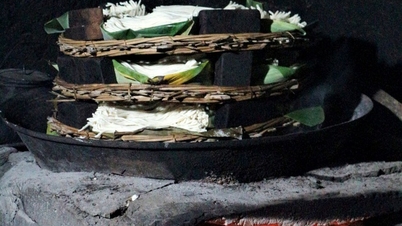
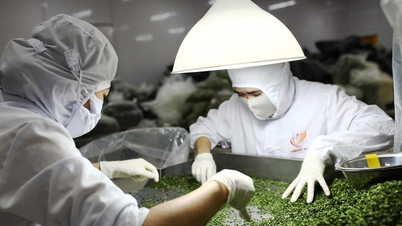
To put it properly, in the style of tea-growing people, to achieve that vibrant green color, the astringent and sweet aftertaste, and the enchanting aroma of nature that captivates poets and scholars, tea growers must invest a great deal of effort, sweat, and care in fertilizing and watering the tea leaves before harvest. Then, they sit by the stove, roasting the tea leaves over a charcoal fire, separating the water by hand. Only when the tea leaves turn into "móc câu" tea (later mistakenly called "móc câu" tea), with their round, smooth petals, can they finally offer it to consumers.
 |
| Thai Nguyen currently has nearly 200 tea products that have achieved OCOP certification, ranging from 3 to 5 stars. |
The "tea culture" has been established, preserved, and passed down from generation to generation by the people of Thai Nguyen tea-growing region. Therefore, the tea culture is deeply ingrained in the subconscious and thinking of each individual, constantly reminding them to preserve it and consider it the foundation that sustains the livelihoods of the tea-growing people.
Especially in today's market economy, profit is important, but it's not everything for the people in the tea-growing region. Because the "tea philosophy" is ingrained in their blood and deeply permeates their thinking, it doesn't allow the people of Thai Nguyen tea region to easily produce low-quality tea products and then package and sell them to consumers.
In the art of tea ceremony, it's not simply a matter of wives brewing tea for their husbands, children brewing tea for their fathers, or younger people brewing tea for older people. Rather, a cup of tea is considered an effective means of bringing people closer, fostering friendliness, empathy, and sharing love.
And in every cup of tea—whether small or large—there is a glimpse of beautiful nature. Moreover, the aroma and taste of tea convey to the tea drinker a message about the exquisite cultural beauty and history of a land and its people.
Beside a cup of spring tea, the worries of daily life are eased, offering moments of tranquility for oneself. Suddenly, the heart feels calm as a new year unfolds, adorned with vibrant peach and apricot blossoms. A new year, a new journey in life—what should one do, and what should one avoid doing that would cause a guilty conscience? That is the tea philosophy of the people of Thai Nguyen tea region.
Source: https://baothainguyen.vn/van-hoa/202602/huong-tra-trong-nep-song-449564d/














































































Comment (0)