

In folk songs, the image of the horse is associated with romantic love, representing fidelity, unwavering devotion, and trust: "The horse runs far away and disappears from sight / The one I love will return even after a hundred years if they remain faithful."
It also represents the lonely waiting and the heartbreaking separation: " Leave your horse and carriage here / So I can weave silk for the days you are away."
The horse now becomes a symbol of farewell, of longing and anticipation. The horse carries the person far away, while the person remaining sends silent love into the horse's hooves. In that space, love is not boisterous but enduring and faithful, just like the nature of the horse.
Furthermore, folklore also uses the image of the horse to metaphorically reproach those near and far when love is unfulfilled : "If you are far away, borrow my horse to go/As long as the horse carries you, distance doesn't matter/I wish to be close but cannot/Who caused this separation between Vietnam and Qin?"
Or, "Five white horses cross the river / Five tiled houses, lamps inside and out / Whose lamp is it that never goes out because it loves someone? / I love you, and my tears fall."
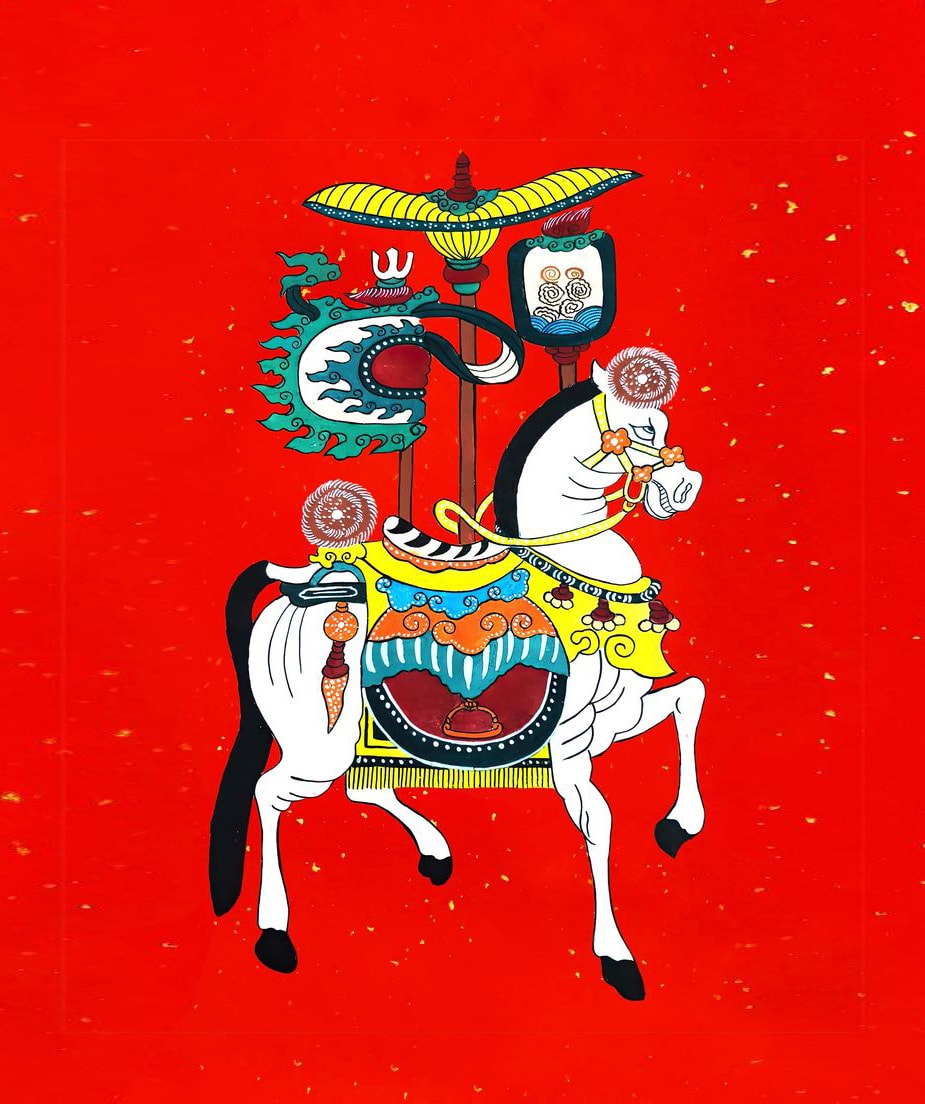
In medieval literature, the horse was associated with manly ambition and lofty ideals. The image of a horse galloping across the vast expanse of the land is frequently depicted, carrying the aspiration to dedicate its life to the country. The author of "Chinh Phu Ngam" (Lament of the Warrior's Wife) once wrote verses expressing the patriotic aspirations of a young man: "A man's ambition spans a thousand miles on horseback / He can move Mount Thai Son as lightly as a feather."
A horsehide wrapped around a corpse—a tragic image that shows the horse is not just a means of transportation, but a symbol of noble sacrifice. On horseback, the young man in times of turmoil carried both his life and his ideals for the nation.
Nguyen Du's *Truyen Kieu*—a masterpiece of Vietnamese literature—repeatedly mentions the image of the horse to express the emotions of parting: "One mounts the horse, the other bids farewell / The autumn maple forest has dyed the borderlands with color."
To the point of loneliness and sadness: "The room is utterly silent / The tracks of the horse-drawn carriage are now faintly covered in green moss."
In her masterpiece poem "Recalling the Past of Thang Long Citadel," Mrs. Huyen Thanh Quan could not hide her sorrow at seeing the prosperity of a bygone era fading away: "The tracks of carriages and horses, the souls of autumn grasses / The old foundations of the castle, the shadows of the setting sun."
In modern literature, the poet Chế Lan Viên once wrote heart-wrenching lines in his poem "Letter During the Flood Season": "Remembering to wait for news from home / Now receiving a letter blurred by the stream's water / I dare not be angry at the flood / I pity the poor horse suffering on the long journey."
Holding the letter from home in my hands filled me with overwhelming joy, but before I could read it, the words blurred by the rising floodwaters. I felt sorry for the horse that had to endure such hardship and danger to fulfill its duty of "delivering the letter."
Source: https://congluan.vn/ngua-trong-tho-ca-viet-nam-10329521.html






























































Comment (0)