

 |
| The village gate is formed from the canopies of two ancient banyan trees in Phuong Do village. |
According to ancient legends, the first person to lay the foundation for Phuong Do village was a general from Thanh Hoa who served the Le dynasty. After peace was restored, he mobilized 13 clans to settle and cultivate the new land, creating a prosperous and bustling village. Over time, many cultural and religious values of the village have been formed and preserved to this day.
When mentioning Phuong Do, people immediately think of its unique village gate, not a brick or wooden gate, but one formed by two sturdy ancient banyan trees, their branches intertwining to create a cool, green arch. The trunks of these banyan trees are so large that several people couldn't encircle them, their roots clinging firmly to the entire path leading into the village. Although one of the banyan trees has rotted and broken over time, the archway is still preserved by the villagers as a part of their memory, a landmark of their homeland. They plant new trees to continue the old banyan tree's shade, thus continuing the village's pride.
Deep inside the village, Phuong Do communal house stands majestically and anciently. Built during the Late Le Dynasty, around 1511-1512, it is dedicated to the village's tutelary deity, Cao Son Quy Minh Dai Vuong Duong Tu Minh.
Mr. Dong Van Vua, Deputy Head of the Standing Committee of the Phuong Do Temple and Pagoda Relic Management Board, said: "The temple still preserves many valuable artifacts such as one royal decree and two large calligraphic inscriptions dedicated to Duong Tu Minh during the reign of Emperor Khai Dinh; an incense altar from the late Le Dynasty and early Nguyen Dynasty; an ancient ceramic incense burner, two bronze candlesticks from the Le Dynasty… We strive to preserve the original architecture and ancient space so that people have a place for communal activities and to preserve traditional culture."
Besides religious structures, Phuong Do is also famous for its old houses, nearly a hundred years old. These three- and five-bay houses, built with wooden beams of ironwood and mahogany, are still carefully preserved. Inside, the jars, cabinets, and altars are all hand-carved and have withstood the test of time.
Mr. Duong Nghia Can, a resident of Phuong Do village, said: "Many houses in the village still retain their original wooden floors, truss systems, and household items from our ancestors' time. We consider these to be precious assets to pass on to our children and grandchildren."
Besides preserving its ancient architecture, the people of Phuong Do also maintain a simple, orderly way of life. The village has a set of 39 regulations governing rituals, order, village security, education, filial piety, and solidarity. As a result, the village atmosphere is always peaceful and harmonious.
 |
| The Phuong Do temple and pagoda complex has been preserved and maintained to this day. |
Besides a rich spiritual life, the material life of the people of Phuong Do village is based on carpentry – a traditional craft that has existed for generations. The fine art wood products from this village are considered exquisite, durable, and beautiful, and are favored by customers in many localities. In 2010, the village was recognized as a traditional craft village of the province.
In Phuong Do, the sounds of sawing and chiseling resonate regularly every day, creating a dynamic rhythm of life that is still in harmony with the peaceful, ancient charm of the countryside.
Mr. Duong Dinh Hiep, Head of the Management Board of Phuong Do Fine Arts Woodworking Village, said: Currently, the village has 58 households with more than 230 workers. Many families earn hundreds of millions to billions of dong each year. Woodworking not only helps people get rich but also becomes a source of pride for Phuong Do.
Today, Phuong Do village both preserves its traditional values and adapts to the rhythm of modern life. The people are engaged in business and building modern lives, but in every aspect of their lives, in the way they preserve the village gates, communal houses, and temples, they still cherish the memories of their homeland. Amidst constant change, this village by the Cau River retains its cultural essence, providing a place for every person far from home to remember and cherish.
Source: https://baothainguyen.vn/van-hoa/202602/phuong-do-giu-nep-xua-3db77ca/
![[Image] Current status of the land area of over 5.5 hectares that Ho Chi Minh City is considering reclaiming.](https://vphoto.vietnam.vn/thumb/1200x675/vietnam/resource/IMAGE/2026/04/15/1776245690095_1-3102-8409-jpg.webp)
![[Photo] General Secretary and President To Lam and his wife, along with General Secretary and President Xi Jinping and his wife, attending a tea party.](https://vphoto.vietnam.vn/thumb/1200x675/vietnam/resource/IMAGE/2026/04/15/1776245678527_vna-potal-tong-bi-thu-chu-tich-nuoc-to-lam-va-phu-nhan-cung-tong-bi-thu-chu-tich-nuoc-tap-can-binh-va-phu-nhan-du-tiec-tra-8702812-9829-jpg.webp)
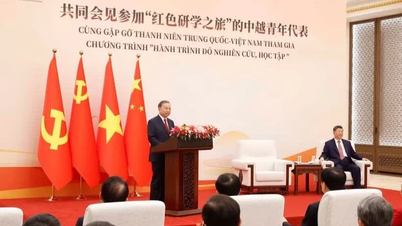
![[Photo] General Secretary and President To Lam and General Secretary and President Xi Jinping meet with youth from both countries.](https://vphoto.vietnam.vn/thumb/1200x675/vietnam/resource/IMAGE/2026/04/15/1776245687540_vna-potal-tong-bi-thu-chu-tich-nuoc-to-lam-va-tong-bi-thu-chu-tich-nuoc-tap-can-binh-gap-go-thanh-nien-hai-nuoc-8702371-jpg.webp)
![[Photo] Capturing each moment at the "People We Meet" photography exhibition.](https://vphoto.vietnam.vn/thumb/1200x675/vietnam/resource/IMAGE/2026/04/15/1776245695648_1-8944-jpg.webp)
![[Image] Overview of the Tam Trinh-Giai Phong connecting road section after land clearance is completed.](https://vphoto.vietnam.vn/thumb/1200x675/vietnam/resource/IMAGE/2026/04/15/1776245679644_ndo_br_dji-0195-jpg.webp)
![[Photo] National Assembly Chairman Tran Thanh Man concludes official visit to Italy, departs for IPU-152](https://vphoto.vietnam.vn/thumb/1200x675/vietnam/resource/IMAGE/2026/04/15/1776253436109_vna-potal-chu-tich-quoc-hoi-ket-thuc-tham-chinh-thuc-italy-len-duong-du-ipu-152-tai-tho-nhi-ky-8702876-7969-jpg.webp)






















































Comment (0)