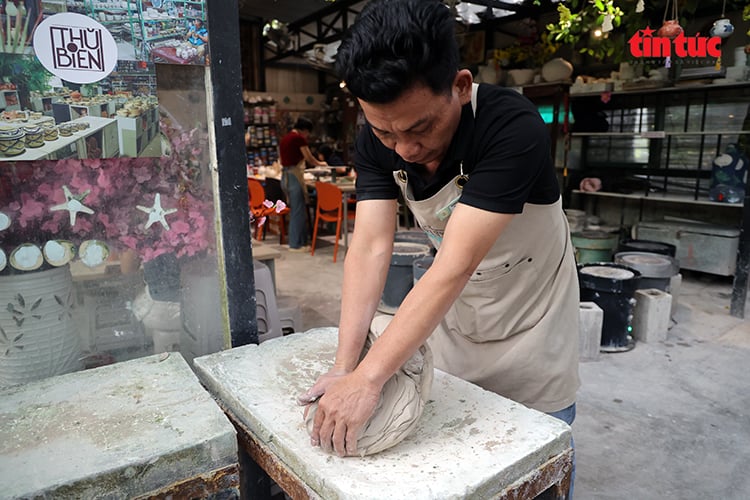
The process of kneading the clay with water before putting it into the mold is particularly important, helping to remove air bubbles, increase plasticity, and ensure the clay is easy to shape, minimizing cracking during firing.
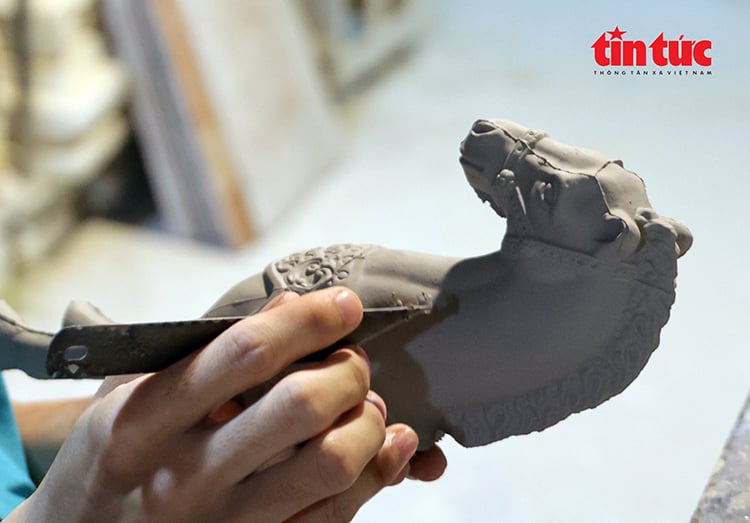
After casting, the craftsman will carefully sculpt and shape the horse's head and body to clearly express its "spirit"—a crucial element that determines the aesthetic value of the ceramic product.
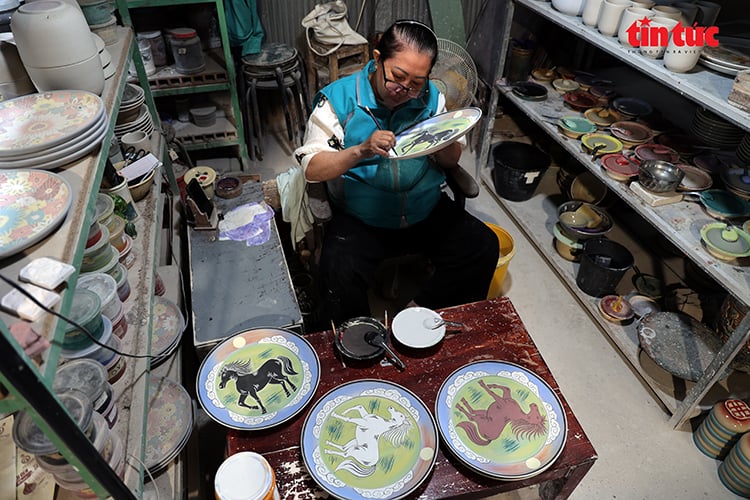
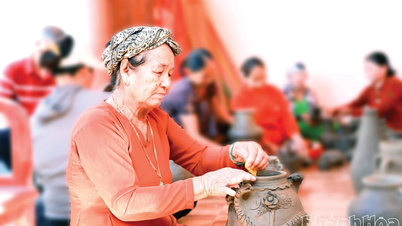
Artisan Tran Thi Yen (60 years old), who has been involved in pottery for over 40 years, personally uses a brush to paint horse-shaped patterns and motifs onto each product. This process requires skill, meticulousness, and a refined sense of aesthetics from the artisan. According to Ms. Yen, to convey the "soul" of the horse, every detail is important, but the face is the most difficult part and also determines the overall expression of the artwork. After completing the painting, the product is further processed using colored glaze painting techniques, dipping or brushing with glaze before firing, creating unique pottery pieces.
From the skillful hands of the Lai Thieu pottery artisans, the image of the horse, symbolizing strength, perseverance, and aspiration, gradually comes to life through each block of clay, layer of glaze, and kiln flame. Each horse shape, each glaze color, tells a story, reflecting generations of craftsmanship and aesthetic sensibilities refined over time.

After painting, the artisan applies glaze to the product before firing it in the kiln.
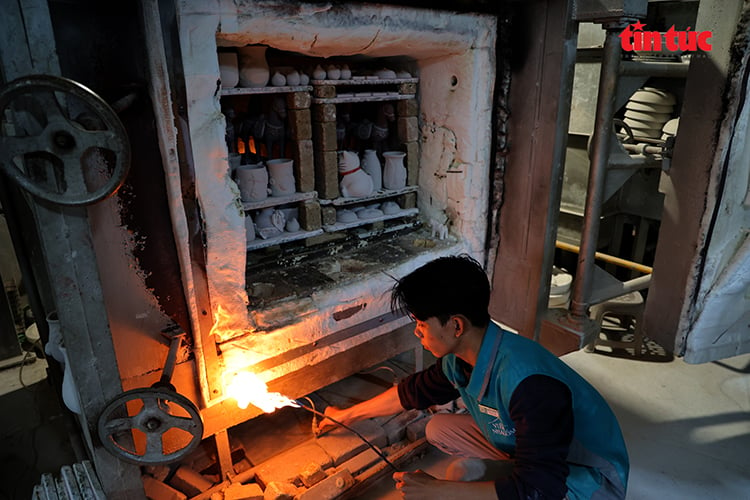
The horse-shaped ceramic products, along with many other product lines, are placed in a kiln at high temperatures, up to 1,300°C. The firing process lasts approximately 24 hours, during which time the temperature inside the kiln must be carefully controlled to ensure the products meet quality standards and do not burn or crack.
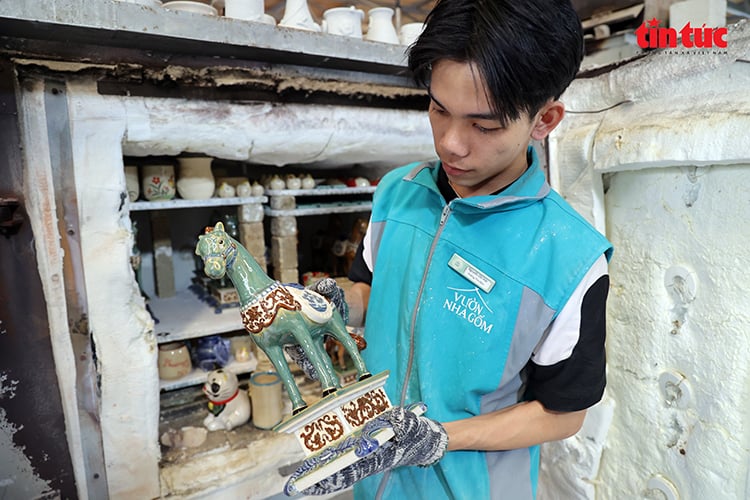
The craftsman checks the glaze color and finish of the horse-shaped ceramic product after it has undergone a 24-hour firing process.
More than just decorative items or New Year's gifts, each horse-shaped ceramic product is the culmination of the craftsmanship, dedication, and belief that the ceramic artisans of Binh Duong (now part of Ho Chi Minh City) have poured into a prosperous and successful new year.
Amidst the bustling work atmosphere, Khang Minh's Pottery Garden stands out as a space preserving and disseminating the essence of handcrafted pottery. Spanning approximately 1,800 square meters, the facility currently displays and preserves nearly 1,200 types of pottery products. Among them, the horse motif holds a special place, both in terms of quantity and artistic value.

The "Ngo Nam" collection, launched for the Lunar New Year of the Horse 2026, boasts unique designs not currently available on the market. According to artisan Khang Minh, "Ngo Nam" tells the story of growth through three main product lines: Poetic Horse, Song Horse, and Dance Horse. Each design corresponds to a stage of development, carrying a distinct message about life and humanity.
“At this point, Vuon Nha Gom is quite confident that it is one of the ceramic manufacturers with the largest number of horse-themed products in Vietnam, with more than 15 different horse designs, a total of over 20,000 products and more than 5,000 collections. In particular, the 'Ngo Nam' collection, launched for the Lunar New Year of the Horse 2026, is unique and not currently available on the market, meeting the demand for decoration and gifts for Tet, conveying good wishes for the new year,” shared Mr. Khang Minh.


Mr. Khang Minh, owner of Vuon Nha Gom pottery workshop, holds in his hands an exquisitely crafted horse-shaped pottery product for the Lunar New Year of the Horse 2026.
In the days leading up to Tet (Lunar New Year), the Pottery Garden welcomes a large number of domestic and international tourists who come to visit, experience, and learn more about Lai Thieu pottery. For many, this is not just a shopping destination but also a part of a journey to discover traditional Vietnamese handicraft culture amidst modern life.


Horse-themed ceramic products at the Garden House Ceramics facility.
The Pottery Garden was previously included in the list of suggested tourist destinations for visitors to Binh Duong (formerly) by the tourism industry. It also became a familiar meeting place for schools, cultural research groups, and many families, both to learn about pottery and to enjoy relaxing weekend moments in a space steeped in the atmosphere of a traditional craft village.
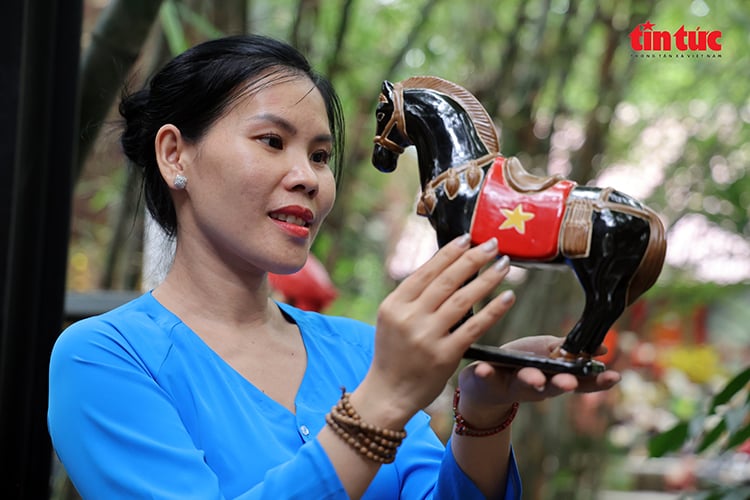
Visitors can explore and learn about horse-shaped pottery at the Garden Pottery Workshop.
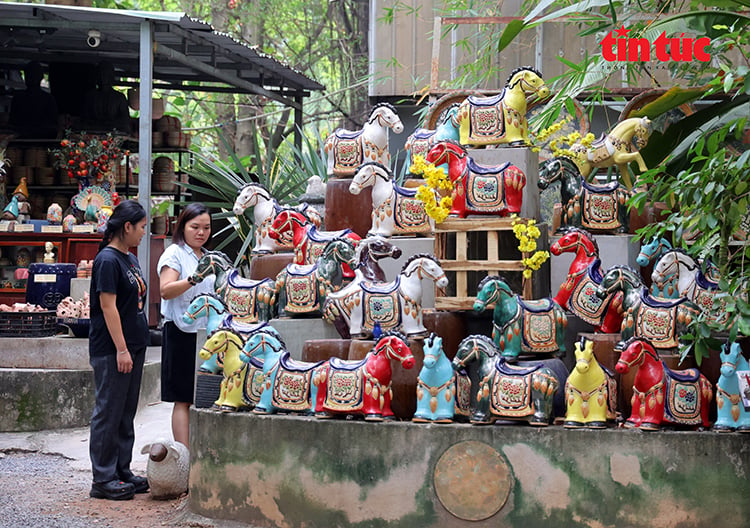
A corner of the traditional Lai Thieu pottery village (Ho Chi Minh City).
Source: https://baotintuc.vn/anh/lang-nghe-gom-do-lua-voi-ngua-20260218212446549.htm



![[Photo] Standing Committee member of the Party Central Committee Tran Cam Tu working with the Central Inspection Committee](https://vphoto.vietnam.vn/thumb/1200x675/vietnam/resource/IMAGE/2026/05/28/1779969579668_ndo_br_bnd-2495-jpg.webp)




































































Comment (0)