


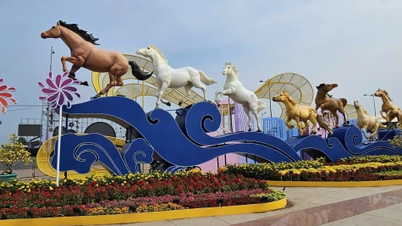
Images of horses from the Tale of Kieu are depicted on a mural street in Ha Tinh , the hometown of the great poet Nguyen Du. |

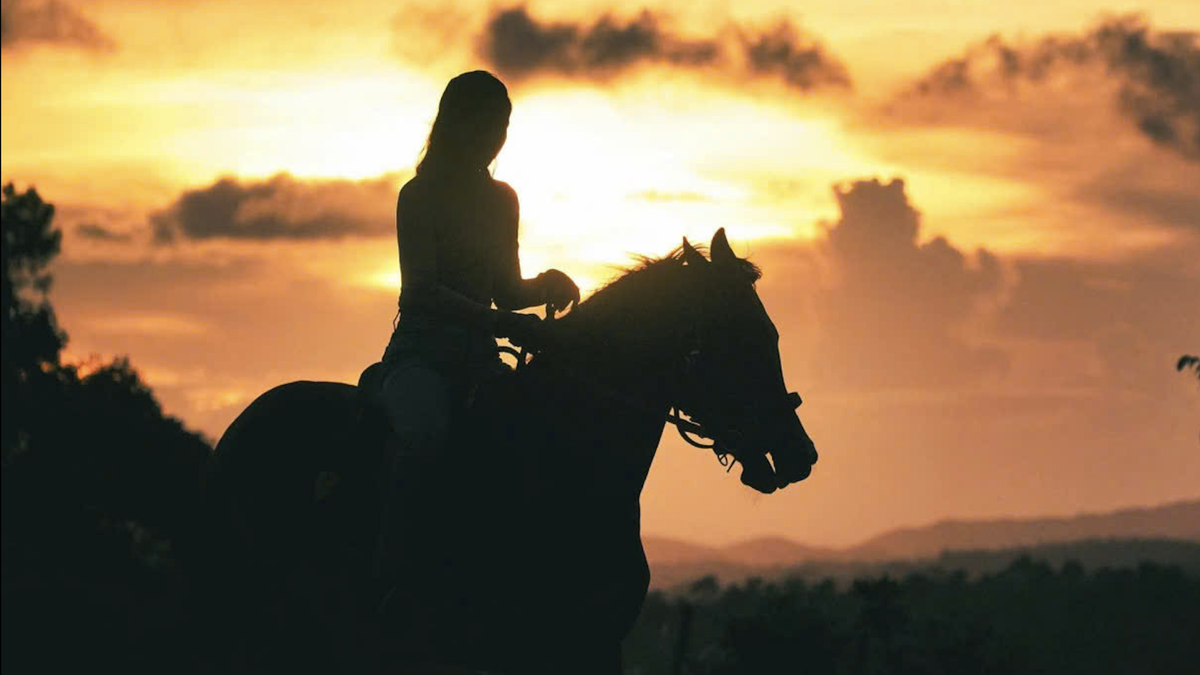
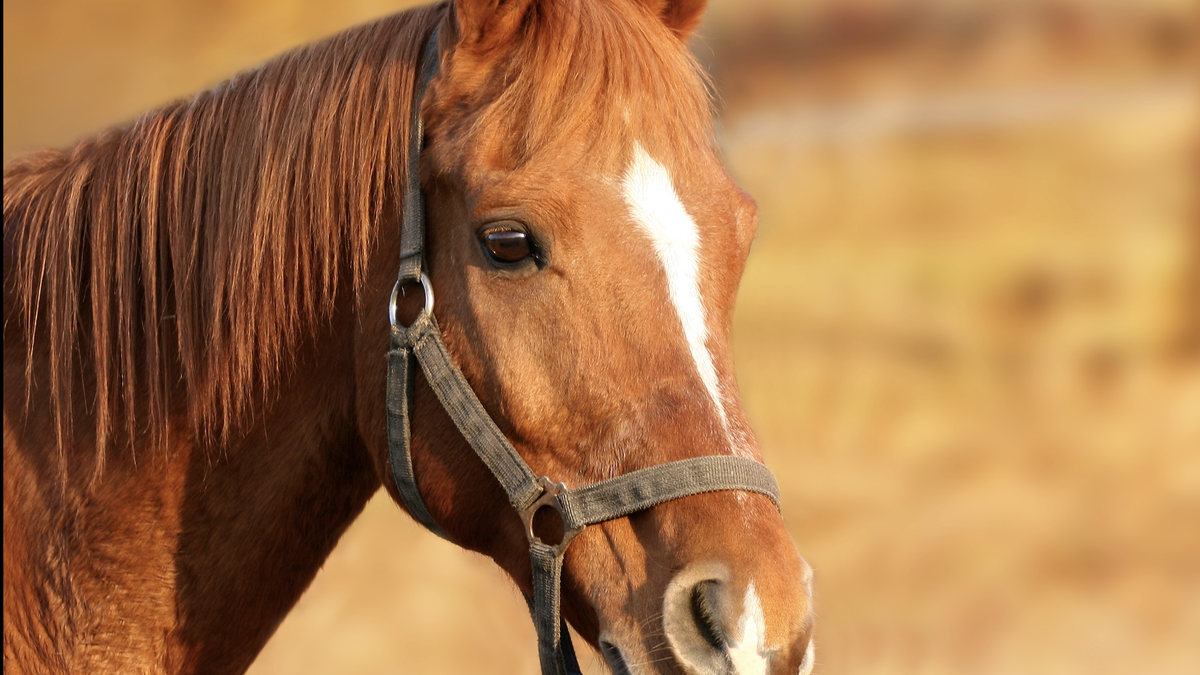
Statistics show that horses appear 13 times in the 12 verses of The Tale of Kieu, notably twice in verse 1118: "A procession of horses, one in front and one behind." Furthermore, Nguyen Du uses substitute words like "horse" and "saddle" to evoke the image of horses without directly naming them: "The horse's hooves were uneven, the wheels were bumpy," "Before the saddle, he had already been nagging and pleading," "Sinh had already arrived at the red tower and dismounted" ... These details show that the horse is present in the work as a familiar element of social life, and at the same time, a tool to subtly express the characters' emotions.
The journey of horses and carriages in The Tale of Kieu begins with the bustling scene of the Thanh Minh festival: "Horses and carriages like water, clothes packed tightly together." But immediately after this hustle and bustle is the lonely tomb of Dam Tien with "The tracks of the horse-drawn carriage are covered in faint green moss" - a striking contrast that foreshadows Thuy Kieu's tragic fate. It is also during this spring outing that Kim Trong appears elegantly on horseback, with a leisurely gait: "Loosely releasing the reins, he strides along the icy path." When they part, Nguyen Du uses only a single six-line stanza to depict the sweet lingering affection of their first love: "The guest has mounted his horse, but the other still follows." From the leisurely gait of the horse to the act of "mounting and dismounting," everything is closely linked to the emotional journey of this talented young man and beautiful woman.
After those fleeting moments of happiness, Kieu's life plunged into a sea of suffering. From the moment Kieu sold herself to redeem her father, the image of the horse became associated with pain, humiliation, and a precarious fate: "The horse's hooves stumbled, the wheels bumped." Ma Giam Sinh's horse and carriage took her to the brothel, initiating 15 years of torment. In that scene, the carriage wheels seemed to grind against her fate, while the horse's hooves swayed with each gust of the wind of a harsh life.
The second horse associated with Kieu's life is the horse of So Khanh – the boastful man who "has a horse that chases the wind. " With just three words , "breaking the reins," Nguyen Du portrays the treachery and betrayal, while simultaneously conveying Kieu's utter bewilderment at being abandoned in the dead of night. Here, the horse is not only a means of escape but also a symbol of brokenness and betrayal.
In contrast, Thuc Sinh's horse possessed a more humane and lyrical quality. When bidding farewell to Kieu and returning to his hometown, the horse's hooves became the rhythm of parting:
"Some mounted horses, others divided their robes."
The autumn maple forest has taken on the colors of the borderlands.
When Hoan Thu paved the way for Thuy Kieu's return home, Nguyen Du used the image of horse hooves to describe Thuc Sinh's blossoming hope:
"Receiving such kind words is like having one's weight lifted off the ground."
"The horse's hooves gallop straight across the mountains and rivers of a foreign land."
The inspiration from horses leads to inspiration from space, causing the scenery and mood to blend together in a poetic painting.
Ultimately, the most important horse associated with the character Thúy Kiều is Từ Hải's horse – a symbol of heroic spirit. Thanh Tâm Tài Nhân describes Từ Hải with "thousands of horses and thousands of soldiers." Nguyễn Du, however, uses a concise image: "With sword and saddle, he sets off on his journey."
The horse here is not as rough as in the original novel, but possesses the pristine beauty of spirit and the dream of achieving great things. When returning victorious to welcome Kieu, Tu Hai appears majestic on horseback: "Tu Hai personally rode out to greet Kieu at the outer gate." And then, after completing his mission, that horse quietly disappears, like a poetic spirit, only appearing in moments when Kieu's life turns a new page.
With numerous appearances of horses and horse-drawn carriages in The Tale of Kieu, each linked to a significant turning point in the plot and the characters' emotions, Nguyen Du transformed the horse into an artistic language: sometimes expressing subtle emotions, other times portraying character traits, and at other times opening up the cultural space of an era. Thanks to this, the horse in The Tale of Kieu is not merely a realistic image, but also a symbol of destiny – a destiny that is both beautiful, sad, and tragic, much like Thuy Kieu's own life.
Ngoc Mai
Source: https://baotuyenquang.com.vn/van-hoa/202602/ngua-trong-truyen-kieu-14d2869/









![[Photo] A large number of people offer incense and visit the Ho Chi Minh Memorial Church.](https://vphoto.vietnam.vn/thumb/1200x675/vietnam/resource/IMAGE/2026/02/21/1771668099014_ndo_br_12-resize-7721-jpg.webp)


































Comment (0)