

In the context of a global labor market, particularly in the US, facing numerous challenges ranging from slowing hiring to the rise of artificial intelligence (AI), Aneesh Raman, Director of Economic Opportunities at LinkedIn, shared practical insights and advice to help job seekers, especially young people, not only overcome challenges but also seize opportunities to build meaningful careers.
LinkedIn is a business-oriented social network that connects individuals and businesses for job searching. It's a professional platform for employment, a place for candidates to showcase their resumes and work experience, and a place for businesses to find suitable candidates.
According to Aneesh Raman, identifying personal strengths, continuous learning, and building a "personal story" are key factors. This is especially important for young people entering the job market.
An analysis of 35 years of employment data from the New York branch of the U.S. Federal Reserve (Fed) paints a worrying picture. In March 2025, the unemployment rate for recent college graduates, aged 22 to 27, in the U.S. reached 5.8%, significantly higher than the overall unemployment rate for the workforce aged 16-65, which was 4%. This is the largest disparity ever recorded.
However, it's not just recent graduates who are struggling. Data from the U.S. Bureau of Labor Statistics (BLS) shows that, except for a brief downturn due to the COVID-19 pandemic, U.S. businesses are currently hiring at almost the lowest levels since 2013.
Although layoff rates remain historically low, the job market has clearly become much tougher than it was a few years ago for those seeking employment.
In light of these challenges, Aneesh Raman emphasized: "The most important, difficult, and also exciting task that new workers should begin is identifying their 'personal story.' These are the unique skills you possess, honed through life experiences and learning."
The second step, according to Aneesh Raman, is "learning every day," and that starts with AI. Aneesh Raman argues that making learning, especially about AI, a daily habit will greatly benefit one's career. He encourages people to think about building a career toward a job where they can excel at it, based on their unique core skills and knowledge.
When asked whether the adoption of AI would make it harder for young people to find jobs, Aneesh Raman said it was both "the best time and the worst time" to enter the labor market.
Companies are facing uncertainty in adopting AI, and tend to focus on the basic tasks of new employees as an area where AI can help increase productivity.
However, Aneesh Raman also pointed out positive signs. More and more people will be switching jobs within the same company, where they have the opportunity to learn, develop, and take on interesting tasks faster than in the old work model.
Aneesh Raman believes that jobs will change for everyone, regardless of quarterly or annual economic conditions. He emphasizes that soft skills and interpersonal skills are increasingly becoming core elements in recruitment and promotion, even for software engineers.
To prepare young workers for roles that AI may struggle to replace, Aneesh Raman argues that the most important thing is for work-related systems to be "human-centered." He suggests that businesses and educators urgently need to help workers become familiar with and effectively utilize AI tools.
Raman believes that the most important thing for any young worker is to both acknowledge the difficulties of the present moment and overcome their fears to truly begin building careers that previous generations could not have imagined. The ability of AI to help young workers learn, develop, build products and businesses is an unprecedented advantage.
Source: https://www.vietnamplus.vn/nguoi-lao-dong-can-thich-ung-voi-thi-truong-viec-lam-dang-thay-doi-do-ai-post1043215.vnp


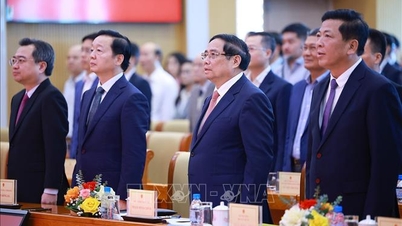
![[Photo] Prime Minister Pham Minh Chinh presides over a meeting on private sector economic development.](/_next/image?url=https%3A%2F%2Fvphoto.vietnam.vn%2Fthumb%2F1200x675%2Fvietnam%2Fresource%2FIMAGE%2F2025%2F12%2F20%2F1766237501876_thiet-ke-chua-co-ten-40-png.webp&w=3840&q=75)














































































Comment (0)