


Implementing the "Investment in the construction of at least 1 million social housing units for low-income earners and industrial zone workers in the period 2021 - 2030" project, many more worker housing projects will be implemented in the future, but the demand for this housing remains high and unmet.

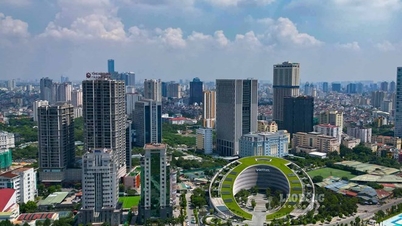
Hanoi has the highest number of apartment buildings in the country, with 1,135 commercial and social housing apartment buildings. (Illustrative photo: Tuan Anh/TTXVN)
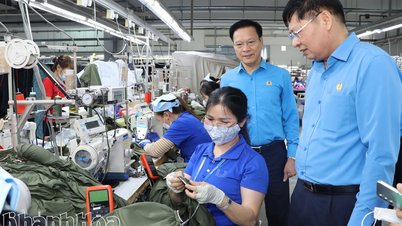
According to a survey by the Vietnam General Confederation of Labor , 60% of workers currently rent accommodation outside industrial zones, and monthly rent costs account for up to 30% of their total income.
Ms. Nguyen Hong Van, Deputy Director of Consulting and Valuation Services (Savills Hanoi), commented that, in reality, the supply of housing for workers is still very limited and cannot meet the existing demand. According to records, Vietnam has approximately 4.5 million workers in industrial zones, half of whom need housing, equivalent to a housing demand of 12.5 million square meters.
"However, the existing supply only meets nearly 30% of the actual needs of workers. Due to this shortage, many boarding houses near industrial zones have been built by local people for rent. Many of these boarding houses are old, dilapidated, and densely populated, posing many health and safety risks," Ms. Van analyzed.
Although the demand for worker housing is very high, the supply has not yet fully met the demand. For example, in Hai Phong – the leading industrial development hub in the North – there are currently 14 industrial parks and 26 industrial clusters in operation with over 200,000 workers; of which, about 50,000 are migrant workers.
This locality has planned to develop 15 more industrial zones on 6,000 hectares of land, which are expected to require a workforce of up to 300,000 people and housing for workers totaling 1.5 million square meters.
Workers' housing in Hai Phong is mainly built in the form of rental dormitories. Ms. Van said that, based on a survey, workers' housing privately invested in Thuy Nguyen district - the area with VSIP Hai Phong Industrial Park and Nam Cau Kien Industrial Park - has an average gross rental price of 3.2 USD to 4.2 USD/m2/month.
Additionally, two typical worker housing projects currently in operation are 278 units built by LG Display and 330 units in Duong Kinh district developed by Dinh Vang Company. The occupancy rate for worker housing in this area consistently reaches a high level of approximately 95%.
Mr. Tran Tuan Anh, Deputy Head of the Hanoi Industrial and Export Processing Zones Management Board, stated that regarding land allocation, most industrial zones (primarily older ones) currently lack planned land for the construction of housing for workers. Planning, construction, development, and management of worker housing projects face numerous challenges, as these projects are primarily infrastructure projects and lack clear responsibilities related to social welfare and public works.
Furthermore, funding for the housing development program for workers is limited, difficult to access, and insufficient to meet demand. Current preferential policies regarding capital are inadequate to encourage businesses, organizations, and individuals to invest in worker housing construction. Meanwhile, projects have a long payback period of 20-30 years. Therefore, attracting various economic sectors to participate in the investment and development of worker housing remains challenging.
According to Ms. Nguyen Hong Van, previously there was no clear legal framework or definition of worker housing. However, Decree 33 on some solutions to remove obstacles and promote the safe, healthy, and sustainable development of the real estate market, passed in early 2023, has made important commitments regarding worker housing and social housing. The development of these two types of housing has now been included in the general planning of localities and the whole country.
In addition, the State has provided many policies to encourage investment and development, as well as support packages to help workers access housing products. According to the law, for some industrial zones with specific regulations, at least 2% of the total land area of the industrial zone must be allocated for worker housing. Land use fees are being proposed to be waived for land used for worker housing development.
In addition, other financial mechanisms have been proposed for developers, including exemptions or reductions in value-added tax and corporate income tax. Furthermore, construction costs may be deductible when calculating corporate income tax. Developers can also access preferential loans from the Social Policy Bank and other credit institutions operating in Vietnam.
Workers can also borrow capital from the government's 15 trillion VND credit support package. According to Resolution 33, workers who need to buy or rent affordable housing can be supported with a loan interest rate of 2% per year for two years, 2022-2023.
Workers' housing refers to housing built for workers, mostly those working in nearby factories or within industrial zones. This type of housing addresses housing needs in certain areas while providing safe and convenient living conditions for workers. However, the supply of housing for workers in industrial zones and export processing zones remains quite limited and does not meet demand.
According to regulations, worker housing differs from social housing in several ways, mainly in terms of location and legal aspects. Social housing can be developed in many places, whereas worker housing serves only a specific group and is therefore concentrated in industrial zones or areas surrounding industrial zones.
Buyers of social housing will receive a permanent or 50-year land use right certificate and can only transfer it to eligible buyers of this type of housing after at least 5 years from the date of termination of the social housing purchase or lease-purchase contract.
As for worker housing, the majority is designed as rental apartments and developed by state-owned or private enterprises. Three entities are permitted to provide worker housing: industrial park infrastructure development companies, manufacturing companies within industrial parks, and real estate companies. In the northern provinces, currently 70% of worker housing is developed by manufacturing companies within industrial parks.
Workers' housing consists of low-rise buildings with a maximum height of 5 stories and no elevators, with ground-level parking. Some supporting amenities include a community area, canteen, mini-supermarket, green spaces, and playgrounds.
Accommodation is also arranged in two types, catering to single individuals and families. The average room size for single individuals is approximately 30-35 m2, accommodating up to 6 people. Family-style rooms have an average size of 25 m2, suitable for a family of 4.
According to regulations, the minimum area standard for worker housing in industrial zones is 5 m2/person, accommodating a maximum of 8 people. Each room is equipped with basic furnishings including 1 bedroom, 1 bathroom, with or without a kitchen...
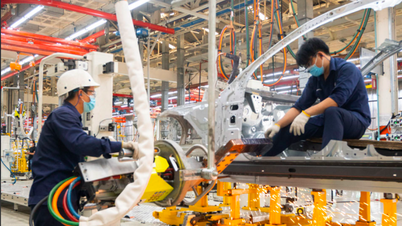
Although more worker housing projects are expected to be implemented in the near future, the demand for housing in this segment remains high and unmet. According to Savills' Q1 2023 price index, the manufacturing sector provided an additional 482,000 workers compared to the same period last year, reflecting the strong demand for labor right from the first quarter of the year.
"Therefore, private businesses can benefit from investing in this segment due to high market demand. With continuous industrial development, stable FDI inflows, a large manufacturing workforce combined with investment incentive policies, worker housing could be an attractive niche development segment in the future," Ms. Van commented.
According to VNA
Source
![[Photo] Prime Minister Pham Minh Chinh receives the Chinese Ambassador to Vietnam](https://vphoto.vietnam.vn/thumb/1200x675/vietnam/resource/IMAGE/2026/04/05/1775397481797_ndo_br_dsc-5512-jpg.webp)

























































































Comment (0)