

The earliest form of the character 牙(ya) is the bronze script of the Western Zhou dynasty, originally meaning "tooth, molar."牙also refers to "ivory" or things resembling teeth; or the flag of an ancient general. In compound words,牙refers to the workplace of an official ( ya môn , ya sở ); an intermediary or broker ( ya tử ); a middleman ( ya nhân ); a matchmaker ( ya quái ); or a deputy ( ya tướng : deputy general); or an assistant: sai nha (a low-ranking official who is ordered by an official to do menial tasks)...
The character Sĩ (士) first appeared on bronze steles during the Western Zhou dynasty. Its original meaning was a prison warden (during the Five Emperors period); later, its meaning expanded to refer to an unmarried young man, a male, or the lowest rank of nobility in the pre-Qin period, below the title of Grand Minister ( Zizhi Tongjian ).
The term "Sĩ" also means scholar ( Bạch Hổ Thông, Tước ); a person with education, an expert, or someone working in a specific field; an official in charge of justice ( Chu Lễ, Đại Tư Đồ ); a soldier ( Tả truyện ). "Sĩ" is also an informal term, praising someone with good knowledge, skills, and qualities; or a way for lords and officials to address the emperor ( Lễ Ký ). In ancient times, " Sĩ" was one of the four social classes (along with farmers, artisans, and merchants )...
According to the Baidu encyclopedia, in ancient times, the term "ya shi " (牙士) referred to the bodyguards of military commanders, originating from the Yaqi - the bodyguards of the military governors from the late Tang Dynasty to the Five Dynasties period.

Today, dentists are doctors of oral and maxillofacial surgery, but the Chinese do not use this term; instead, they use the terms "dentist" (dentist) and "biomedical dentistry " (roughly translated as "dentist").
Next is "ya xi" (牙齿). The character " ya" (牙) has the same meaning as above; while "xi" (齿) is a character that first appeared in Oracle Bone Script, originally meaning human teeth, or referring to elephant tusks, the age of livestock, horses, and humans...
In classical Vietnamese literature, we sometimes find Sino-Vietnamese compound words related to the word "xỉ," for example, " cứ xỉ " (teeth as sharp as a saw); "thiết xỉ" (grinding teeth - an adjective signifying resentment); or idioms like "bạch xỉ thanh mi" (white teeth and green eyebrows, referring to youth); " bồng đầu lịch xỉ" (disheveled hair and sparse teeth, describing the appearance of an old person); " đầu đồng xỉ hoát" (bald head and gap teeth, the appearance of an old and frail person); "xỉ đức câu tăng" (both age and morality increase, a flattering way of praising the increase in both age and morality)...
Today, "dental teeth" means teeth or human teeth, often used in formal contexts and in medicine.
According to the Chinese Dictionary of Famous Objects (2000) by Sun Shu'an, "nha xỉ" corresponds to the following terms: nha (animal teeth in the Da Chu hexagram - I Ching) or male teeth; hộ môn : entrance; cốt dư (remaining bone); ngọc thi (jade spoon, jade spoon according to Taoism); bạch thạch (white stone, elephant teeth); xỉ (ancient term): teeth, the book Mozi has the saying: "When the lips are gone, the teeth will be cold "...
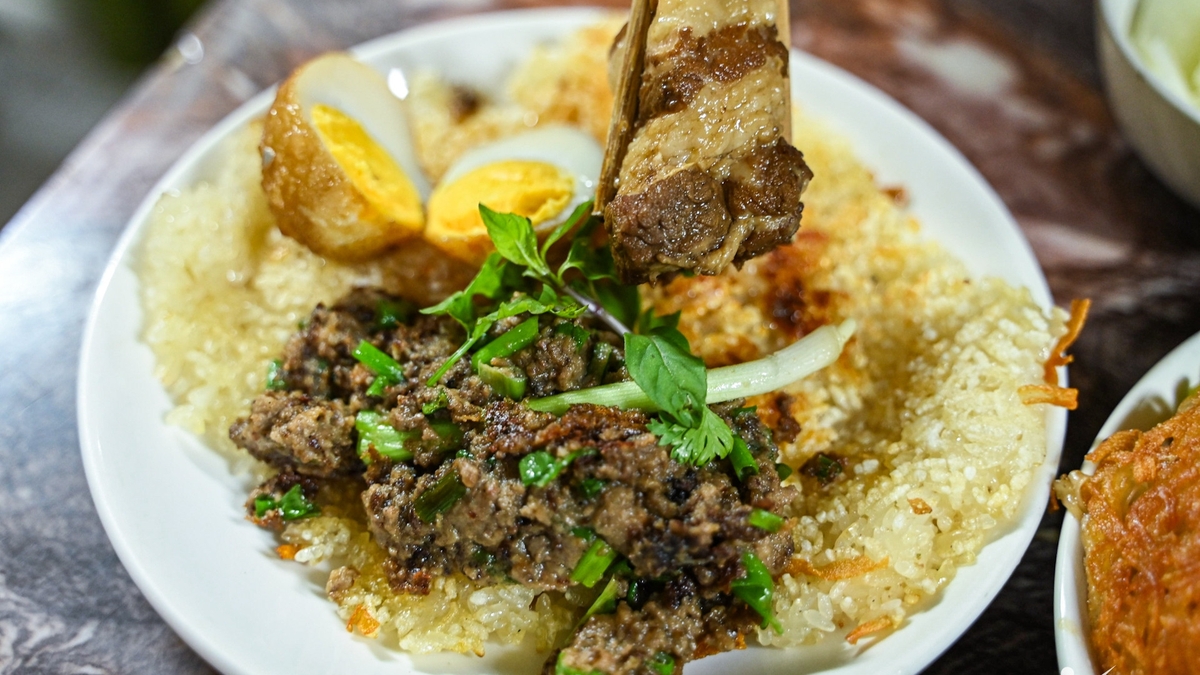
In Vietnamese, although both "dentist" and "dental teeth" are related to teeth, they are not synonymous. "Dentist" refers to a dentist or oral surgeon; " dental teeth " refers to human teeth. Note: "Missing teeth " (缺牙齿) also has nothing to do with teeth; it's a super spicy, crunchy, chewy snack made from sweet potatoes and originating from China. They resemble missing teeth, like sawteeth, and are currently trending on social media.
Source: https://thanhnien.vn/nha-si-nha-xi-185260417220959862.htm





















































![[Video] Sunset at Lap An Lagoon – Where the sun sets over the fishing nets](https://vphoto.vietnam.vn/thumb/1200x675/vietnam/resource/IMAGE/2026/05/31/1780192137701_beach-landscape-sea-water-nature-grass-745871-pxhere-com.jpeg)



































Comment (0)