

The character席 (ji) first appeared in oracle bone script during the Shang Dynasty, with an ancient shape resembling a woven mat. This word once appeared in Jean Louis Taberd's Dictionarium latino-anamiticum (1838), corresponding to the word mat; storea (Latin), more broadly, cloud mat ( storea minea ); flower mat ( storea ornata ).
The mat (or straw mat ) is a common household item, originating from the Qing Dynasty (China). In Wei Song's encyclopedia "Yi Shi Ji Shui ," there is a story about "Shen Nong making straw mats" ( Shen Nong Zuo Xi Jin).
In Vietnamese texts written in Chinese characters, the character " tịch" means: mat Quite common, it is a flat material woven from strips of bamboo, reed, or grass, usually rectangular in shape. Common types of mats in the past included grass mats (sedge mats, rush mats, rush mats); bamboo mats (bamboo mats, reed mats); rattan mats; and rush mats (synonymous with grass mats )...
In ancient times, people often sat on mats to chat or discuss business, a practice known as "tich di" (seated place). However, not just any place could be chosen; there were specific rules depending on status, position, and age. Therefore, "tich " also means "seat"; "nhap tich " means "to take a seat"; " xuat tich " means "to leave a seat" (today, "xuat tich " means "to attend"); and "khuyet tich" means "absent" or "not participating".
"Tịch" can also mean a position, such as "hình tịch" (the person in charge of criminal cases in a government agency); "thủ tịch" means principal, top, highest level ( thủ tịch pháp quan : the top judge).
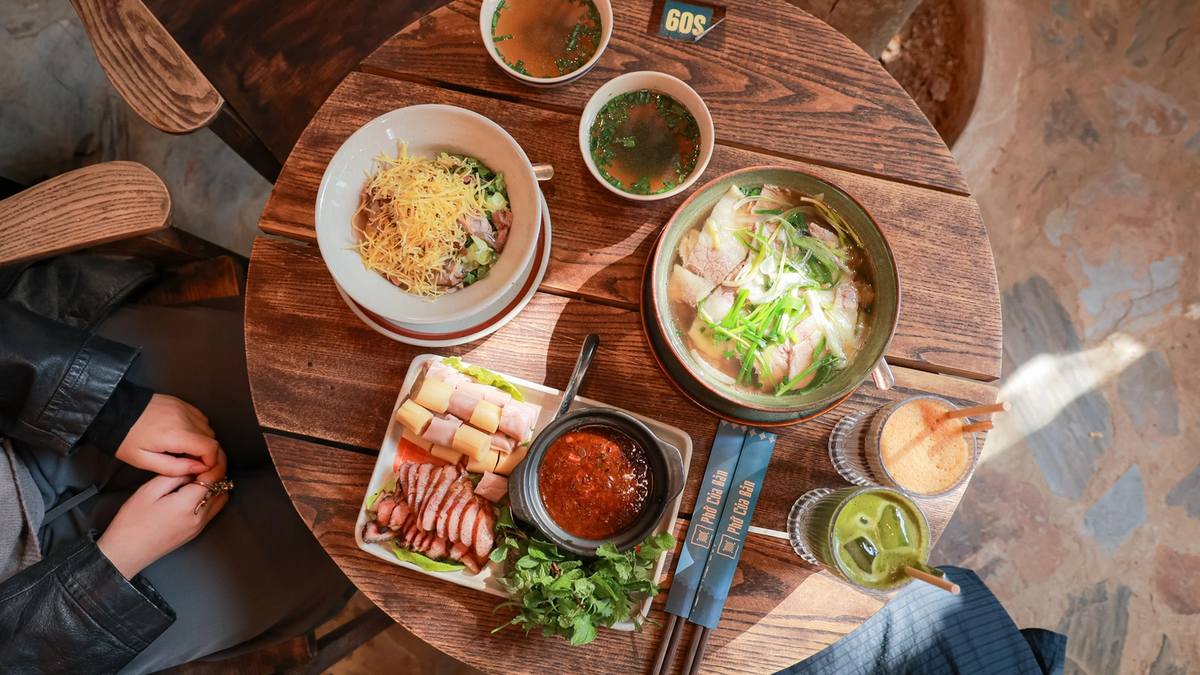
"Tịch" can refer to a table full of food, a feast ( as in *Water Margin* ); "yến tịch" (a type of banquet). A large feast held on important occasions, festivals, or celebrations, featuring a wide variety of dishes and a large quantity of food, is often referred to as a "banquet."
Thus, from its original meaning of an object made of bamboo or reed, the word " tịch" has acquired many new meanings over time.
Please note that there are approximately 17 or more Sino-Vietnamese words written as "tịch" . These words have Chinese characters for their spelling. They are different and have different meanings. Besides the character席(xi) here, there is also the character藉(xi) which also means "decoration," but it has nothing to do with banquets or feasts...
The character藉 (xi) was first seen in the Seal Script of the Shuowen Jiezi (Explanation of Characters), originally referring to a mat used to display offerings during ancient sacrificial ceremonies or court audiences (when officials paid homage to the emperor). Later, this character came to mean "to cherish," "to care for," or to refer to disorder, commotion, trampling, bullying, or to "comfort," "to soothe"...
In the Nôm script system, there are at least two characters for "tịch" borrowed from Chinese.
The first character is "tịch" (夕), formed using a loanword (borrowing both the form and meaning of the Chinese character). This character means "afternoon, evening" as in Chinese. For example, " tịch dương" (the shadow of the setting sun): " The old castle's foundation is bathed in the twilight shadow " (Bà Huyện Thanh Quan).
The second character is tich (席), a phonetic structure (borrowing sound, not meaning), for example, "tich tich ting tang," used to refer to sounds that imitate the sound of a musical instrument. In Huình Tịnh Paulus Của's work *Câu hát góp* (1897), there is a line: " The instrument plays tich tich ting tang, who will take the princess up to the cave and back?" (p. 24).
Source: https://thanhnien.vn/lat-leo-chu-nghia-chu-tich-tu-cai-chieu-lat-leo-thanh-ban-tiec-18525121922210498.htm











































































Comment (0)