

August 15, 2023 1:05 PM
As a branch of the Gie Trieng ethnic group in the northern Central Highlands, the Trieng people, who have lived for generations near the border in Ngoc Hoi district, are proud of their rich and diverse traditional culture. In addition to gongs and drums, they also possess unique traditional musical instruments made from rattan, bamboo, and wood.
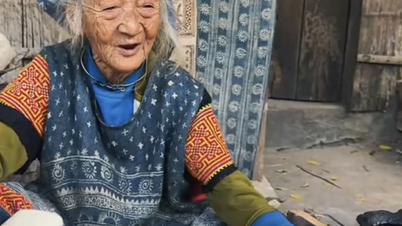
In Dak Rang village, Dak Duc commune, Ngoc Hoi district, village elder Brol Ve has the honor of being the "conductor" of a traditional folk orchestra with a special appeal. Having become familiar with flutes and stringed instruments at the age of 13-14, now, in his 70s, he has crafted and played nearly 20 different types of instruments. From the efforts of this dedicated village elder, the love for traditional musical instruments has spread throughout the community. Successive generations continue the passion for the resonant sounds of flutes and stringed instruments.
Many years ago, a preliminary study of the traditional musical instruments of the Trieng people in Dak Rang was presented, based on the initial research of the late musician Pham Cao Dat - a former official of the Department of Culture, Sports and Tourism of the province. According to this study, the Trieng people possess a rich, diverse, and unique repertoire of folk music (including vocal and instrumental music). Regarding instrumental music, besides the main instruments like gongs and drums, there is also a system of traditional folk instruments.
|
%20hòa%20tấu%20nhạc%20cụ%20dân%20tộc%20Triêng.JPG)
According to the original classification, wind-sounding musical instruments included flutes, mainly talen, talun, and talét. The talen is a four-hole flute, played vertically. The talun has three holes but is longer than the talen and produces a lower pitch. The talét has only one hole in the middle of the tube, and its sound is produced by combining blowing with tapping and lightly covering the end of the tube with the palm of the hand.
The Gor is crafted from a very small reed tube (only 1-1.5 cm in diameter) but up to 1 meter long, with a vibrating membrane made of chicken wire that produces a distinctive tone.
The khen be consists of seven pairs of pipes joined together with beeswax. According to elder Brôl Vẻ, the khen takes its inspiration from the "doar" - a beloved multi-tonal traditional musical instrument of the Triêng people. The doar body consists of six small bamboo pipes of varying lengths, joined together and attached to a dried gourd shell, both to amplify the sound and to give it shape.
In the form of horns for blowing, there are kayol and kakit. Kayol is made from the horn of a mountain goat, 12-15cm long. The larger end of the horn is sealed with beeswax, while the pointed end is beveled to create an opening about 0.5cm in diameter. The sound is produced inside the curve of the horn. Kayol has a clear sound and only requires a light breath. Kakit is made from buffalo horn, and the breath is heavy and deep. Kakit is used as a gong to call and gather villagers whenever there is an event. Kadon is blown to signal to the villagers when a wild boar is trapped.
Among the musical instruments of the Trieng people, the dinh tut is a notable instrument, consisting of six tubes played simultaneously by six people, creating a beautiful and unique sound.
|
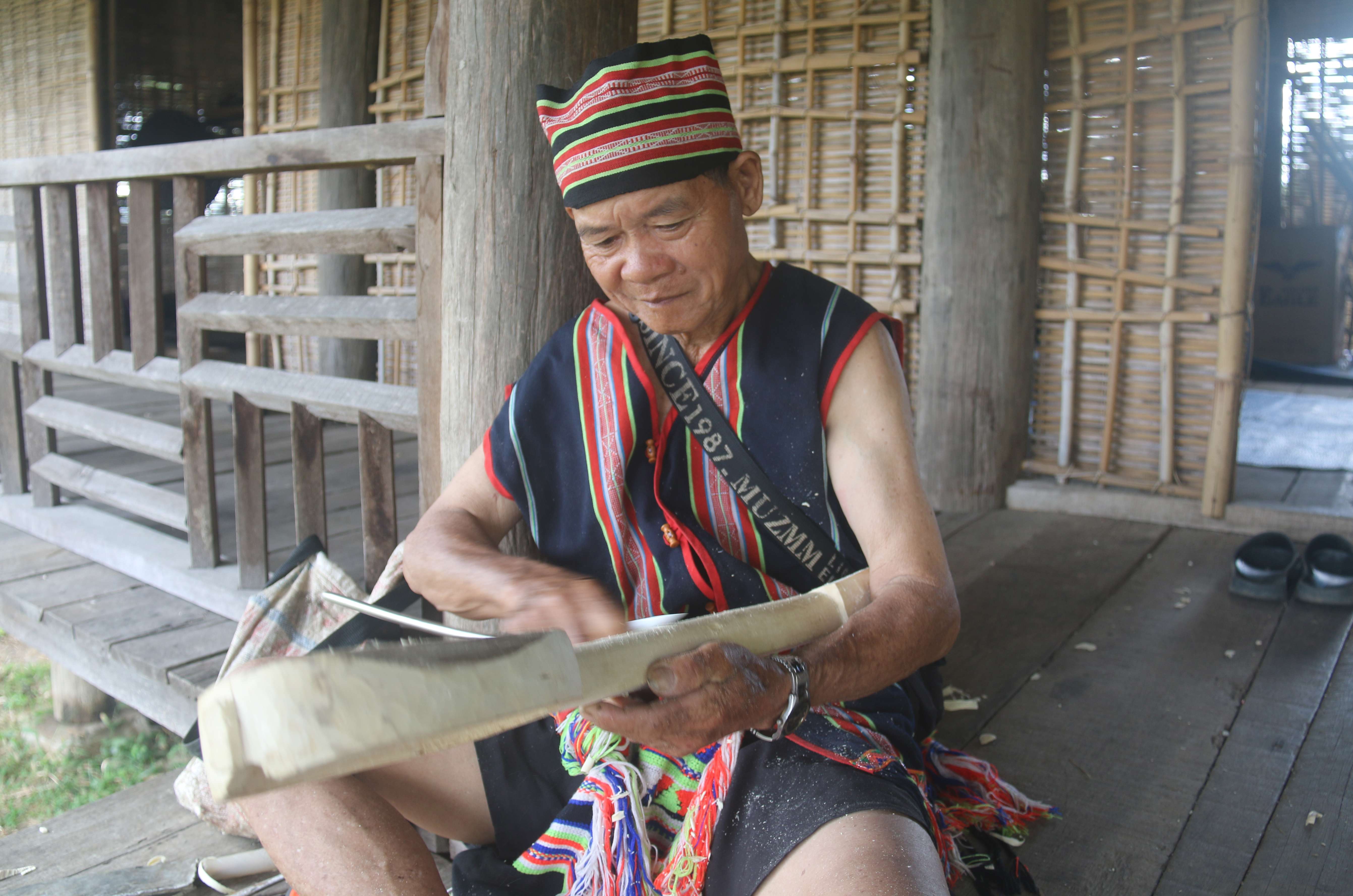
Brôl Thị is one of the first young men in Đăk Răng village to be taught by elder Brôl Vẻ how to use and craft the m'bin – the most popular instrument of the Triêng people. To date, he has created more than 10 instruments himself. Some of them are displayed at the village's exhibition house, showcasing its characteristic products. The m'bin is small in shape (like the mandolin or the ta lư of the Vân Kiều people...), made of milkwood, but according to Brôl Thị, without patience and diligence, it cannot be carved into shape. The uniqueness of the m'bin is that with only two strings attached to small frets, it can produce a gentle sound. Related to the m'bin is the pui, similar to the goong of the Ba Na ethnic group.
Regarding the stringed instruments, the Trieng people's oong eng includes the oong eng ot and oong eng nham, which are similar in structure, differing only in the way they are held. The oong eng produces a very soft sound, only a buzzing like a mosquito, and is crafted according to the principles of the kơní instrument (of the Gia Rai ethnic group) but in a more rudimentary form. Besides a wooden stick and rattan string, the bow of the oong eng is a small, flexible piece of bamboo that is rubbed against the strings.
According to estimates, homemade musical instruments made from bamboo, rattan, and wood account for two-thirds of the total number of musical instruments currently used in the community of Dak Rang village. The characteristic folk music of the Trieng people is gentle and serene, like a soft conversation in a confined space, expressing deep emotions and the peaceful life of the Trieng people.
With his exceptional musical sensibility and years of experience with traditional musical instruments, village elder Brôl Vẻ says that each instrument—the stringed instrument, the flute, the mouth organ—seems to tell a story, a destiny, a life connected to the daily activities and lives of the people in the small village. From ancient times, while the bin was commonly played in both daily life and festivals, the doar was often accompanied by others to be played when going to the fields. The mouth organ was played exclusively during celebrations and major festivals. The Oong eng ót is a love song of a young man missing his lover, or of a distant relative missing friends and the village... In particular, the ensemble of these instruments is remarkably effective when accompanying folk songs, contributing to a unique and captivating harmony. Along with gongs and drums, these traditional musical instruments have accompanied the village's artisans to festivals and cultural events organized by various levels of government and local authorities.
Today's young people's efforts to continue the legacy of the previous generation of artisans contribute to spreading the long-standing cultural beauty of the community.
Thanh Nhu
Source link













![[Photo] New recruits happily exercise their right to vote at their unit.](https://vphoto.vietnam.vn/thumb/1200x675/vietnam/resource/IMAGE/2026/03/14/1773473286544_stug0337-6388-jpg.webp)

















































Comment (0)