

Institutions have not kept pace with the scale of development.
Resolution 31 has laid an important foundation for Ho Chi Minh City's recovery and development after the Covid-19 pandemic, further affirming its role as a major center for economy , finance, trade, science and technology, and innovation in the country. Based on this resolution, many specific mechanisms and policies have been concretized. Infrastructure projects, urban renovation, digital transformation, development of an international financial center, and regional linkages are being gradually promoted.
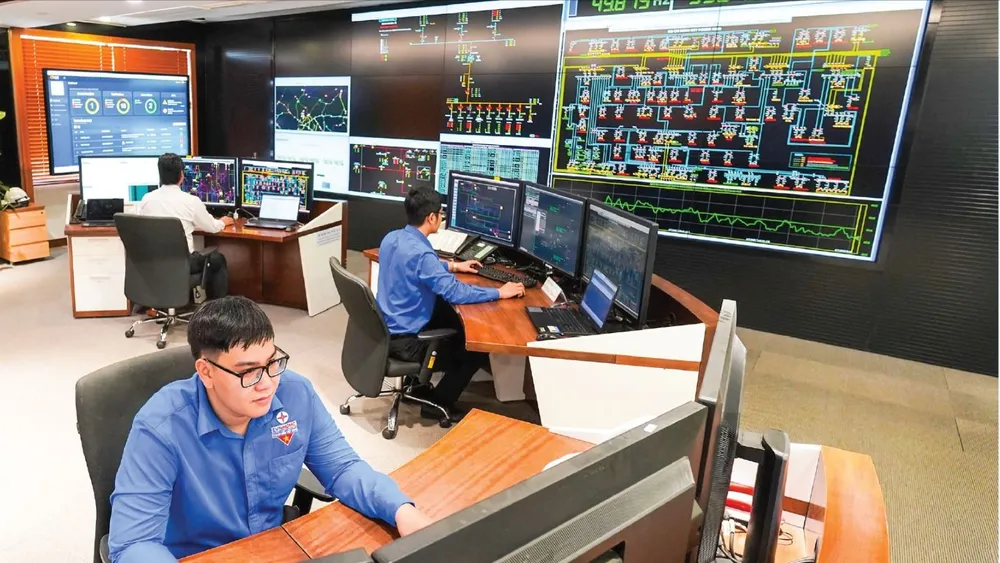
However, after three years of implementation, the development reality of Ho Chi Minh City has changed rapidly compared to the time when Resolution 31 was issued. The reorganization of provincial-level administrative units and the operation of a two-tiered local government model have necessitated a new development structure for Ho Chi Minh City. A central urban area in the traditional sense is gradually shifting towards a multi-polar, multi-centered "megacity" model, linked to high-tech industries, seaports, logistics, finance, services, marine economy, science and technology, and innovation.
This shift in development structure has further exposed institutional barriers. According to Mr. Nguyen Tuan Anh (a public administration expert), after three years of implementing Resolution 31, several bottlenecks in institutions, decentralization, resources, planning, infrastructure, land, transportation, flooding, environment, and implementation capacity have become more apparent. In particular, the current institutional framework has not kept pace with the scale and speed of development of a "megacity" with over 15 million inhabitants. Some mechanisms remain pilot programs with short durations and narrow scopes. For a special urban area, if policies remain heavily reliant on a "request-and-grant" system, decentralization is not thorough, and authority is not accompanied by responsibility and resources, Ho Chi Minh City will struggle to quickly address issues arising from practical situations.
Results of 3 years of implementing Resolution 31
- GRDP for the period 2023-2025: Average annual growth of 5.8%
- Economic size in 2025: 2.97 trillion VND (approximately 120 billion USD)
- Contributes approximately 23% of the country's GDP.
- GRDP per capita: 8,700-8,800 USD
Another bottleneck, according to some experts, is the inadequate decentralization and delegation of power commensurate with the city's role and workload. Ho Chi Minh City has been assigned many very ambitious goals, but in key areas such as planning, investment, land, finance and budget, organizational structure, salaries, science and technology, and public services, approvals still have to be sought through multiple layers. This increases policy delays, prolongs processing times, reduces administrative efficiency, and fails to fully utilize social resources.
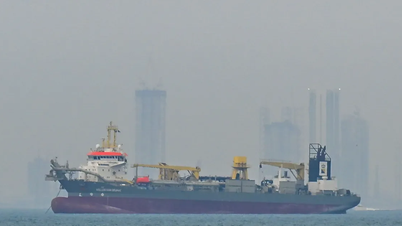
Mr. Phan Hoang Vu, General Director of SSIT International Container Services Joint Venture Company Limited, believes that the new development orientation for Ho Chi Minh City should be designed with a more groundbreaking mindset than before, shifting from a "request-and-allocation of budget" mechanism to a mechanism of proactively mobilizing and leading market resources. Ho Chi Minh City should not only be a domestic economic center but also become a regional "super city," linked to an expanding development space towards the sea, with the maritime economy and logistics playing a pivotal role. As the development space changes, the way resources are mobilized must also change accordingly.
Orientation towards multi-centered urban development
Ho Chi Minh City also faces a bigger bottleneck in its development model and transportation infrastructure. Dr. Pham Thai Son, a lecturer at the Vietnamese-German University, analyzed that the old growth model, heavily reliant on cheap labor, land expansion, and increased traditional investment, is gradually reaching its limits. In the context of increasingly strong international competition, digital transformation, green transformation, and climate change, Ho Chi Minh City must shift to a growth model based on science and technology, innovation, the digital economy, the green economy, the circular economy, the marine economy, high-tech industries, and labor productivity.
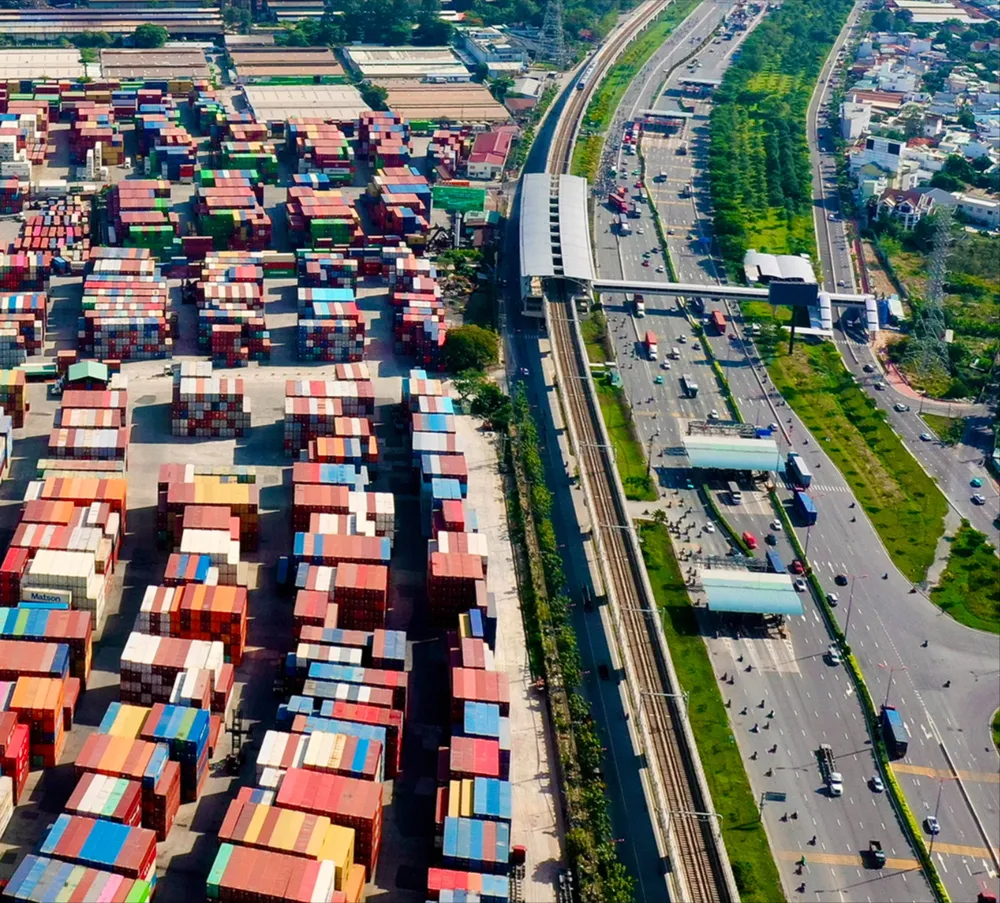
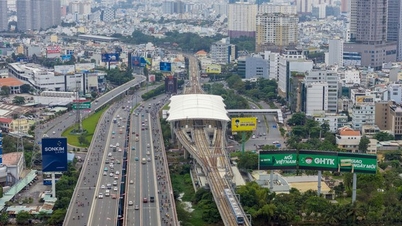
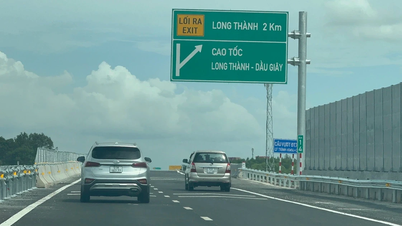
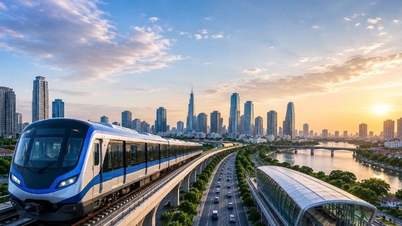
For many years, Ho Chi Minh City has faced immense pressure from traffic congestion, flooding, environmental pollution, lack of green spaces, insufficient social housing, overcrowded hospitals and schools, and disparities in quality of life between different areas. As development space expands, continuing to plan on a project-by-project, area-by-area, and term-by-term basis will make it difficult for the city to create a synchronized and stable development structure. Therefore, planning in the new phase must be forward-looking, with a long-term vision, stable but not rigid in the face of development changes. According to Dr. Pham Thai Son, urban planning should be placed within a long-term development mindset and adapted to climate change. Therefore, the new resolution should establish a direction for multi-centered urban development, increasing regional connectivity, prioritizing public transportation, developing green spaces, and creating ecological cities.
From a logistics business perspective, Mr. Phan Hoang Vu suggested that Ho Chi Minh City should have greater financial autonomy, especially the right to retain and reinvest revenue from land, seaports, logistics, and coastal areas. Regarding the coastal space, it should be considered a "new strategic development fund," allowing for the formation of integrated coastal economic zones encompassing ports, logistics, industry, and urban areas, along with specific mechanisms to attract port investors and develop transshipment services to reduce internal competition and expand international logistics. Ho Chi Minh City needs a sufficiently strong institutional framework to proactively mobilize, allocate, and lead resources, especially in the context of expanding into the sea and participating more deeply in the global logistics chain.
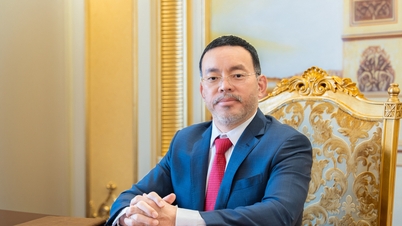
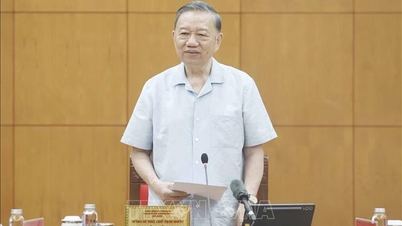
Vice Chairman of the Ho Chi Minh City People's Committee Nguyen Manh Cuong:
The city needs a new strategic direction.
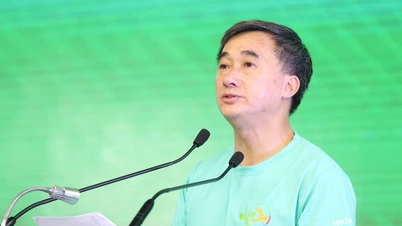
In the process of implementing Resolution 31, the city is continuing to carry out the tasks set out. However, in the context of administrative unit restructuring, the city needs suitable conditions to maximize its potential and advantages, and maintain its leading role as the engine of socio-economic development. The new resolution will create a legal framework for the city to maintain its leading role and be the engine of socio-economic development for the whole country.
The city is facing and resolving many major challenges arising from intense competition, especially international competition and geopolitical impacts. The city also needs a new strategic direction to meet the requirements of shifting its growth model, digital transformation, green transformation, and improving the quality of development based on science, technology, and innovation. Although the city's GRDP growth rate is trending towards stable growth (8.03% in 2025 and 8.27% in Q1 2026) – the highest in the past 10 years – it has not yet achieved the expected double-digit growth target. Therefore, the issuance of a new resolution replacing Resolution 31, along with the development of a Special Urban Law for Ho Chi Minh City, will create a stronger mechanism and impetus for the entire political system to continue focusing and achieving the desired growth targets in the new development phase.
Source: https://www.sggp.org.vn/nhan-dien-diem-nghen-and-rao-can-the-che-post853502.html

































































Comment (0)