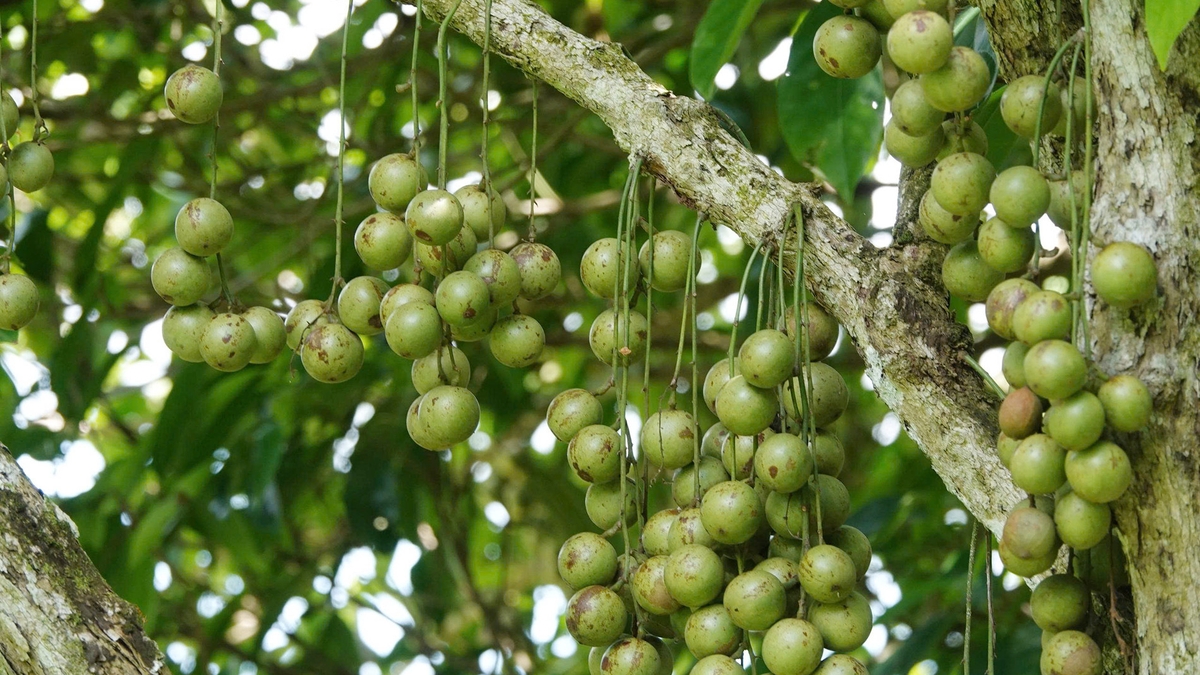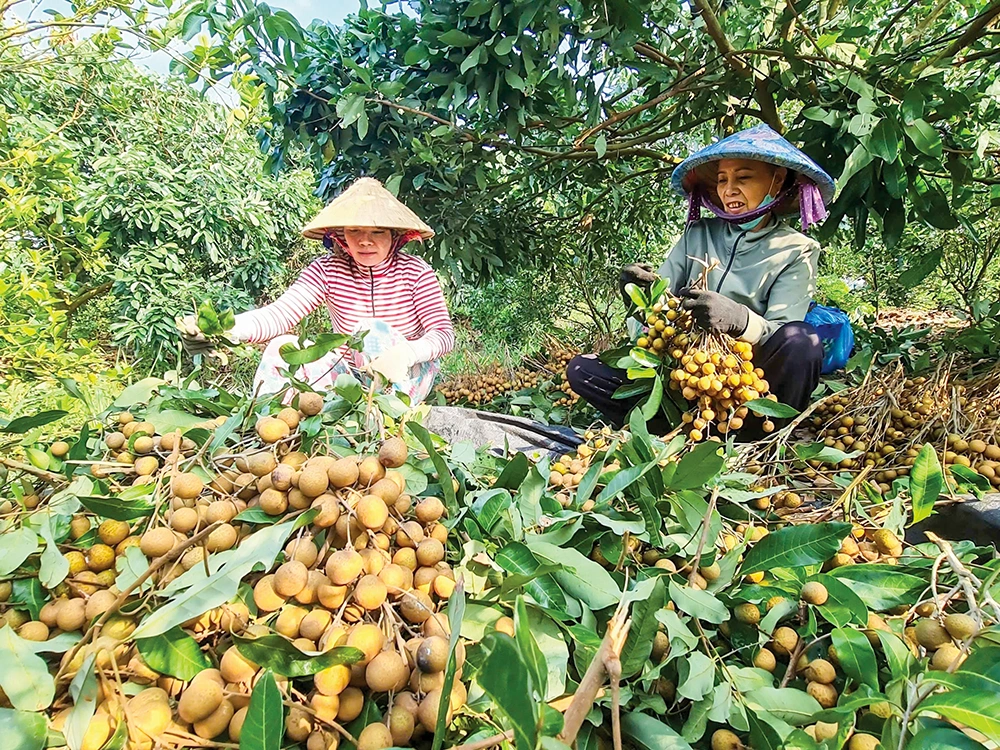
In recent days, traders have been buying Ido longan from orchards in Tan Hoa commune at prices ranging from 15,000 to 20,000 VND per kilogram.
In recent days, many orchards in Tan Hoa commune, Can Tho city, have been harvesting Ido longan and selling it to traders for only 15,000-20,000 VND/kg, a decrease of 10,000-12,000 VND/kg compared to the same period last year.
Mr. Phan Thanh Mong, residing in Nhon Thuan 1A hamlet, Tan Hoa commune, recently harvested 3 acres of longan trees, yielding over 5 tons of fruit, which he sold at 19,000 VND/kg. He stated: “The yield this season was quite good, but the low price meant that farmers didn't make much profit. Normally, longan trees only bear fruit once a year, so if the selling price isn't high, farmers will face difficulties.”
According to orchard owners, favorable weather this year has helped the longan trees achieve high yields, with an average harvest of 15-20 tons per hectare. However, the joy of a bumper crop cannot outweigh the worry as longan prices continue to fall.

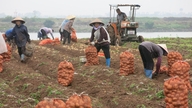

Mr. Ho Van Phan, residing in Nhon Thuan 1A hamlet, Tan Hoa commune, has over 1.5 acres of 4-year-old longan trees. He recently harvested nearly 3 tons of fruit, selling it at 15,000 VND/kg. This season, his family only earned a profit of about 20 million VND. Mr. Phan stated: “This season, the prices of fertilizers and pesticides were high, and the time from treating the leaves to induce flowering to harvesting the fruit takes 5-6 months, resulting in high costs. After harvesting, we have to fertilize, fertilize the roots, and nourish the trees for the next season, so this profit is only enough to reinvest in the new crop.”
According to Mr. Phan, at the beginning of the season or when there is a shortage, the price of Ido longan purchased by traders at the orchard ranges from 25,000-30,000 VND/kg, but during the peak season, the price drops to only 15,000-20,000 VND/kg. At this price, after deducting investment costs such as fertilizers, pesticides, and labor, farmers hardly make any profit, or the profit margin is very low.
According to lychee traders, the reason for the bumper harvest but low prices is the oversupply of lychees in the market, competing with other fruits like durian, rambutan, and lychee, which are also in their peak harvest season. In addition, the current method of selling Ido lychees relies mainly on the system of traders and small vendors at the market. After harvesting, the lychees are sold fresh and raw, with a short shelf life, leading to pressure to sell quickly to avoid spoilage.
According to the Department of Agriculture and Environment of Can Tho City, there are approximately 5,853 hectares of longan orchards in the city, mostly planted spontaneously by local people. In previous years, seeing the high price of Ido longan, many farmers cut down other fruit trees to switch to planting this variety without carefully considering the actual market demand. As the planted area increased, the harvest volume at the same time exceeded the domestic market's consumption capacity, making a price drop inevitable.
To address the problem of bumper harvests leading to price drops, the city's Department of Agriculture recommends that farmers apply techniques to induce off-season flowering and staggered harvesting of longan. Instead of concentrating harvesting during the main season from around May to September (lunar calendar), they should proactively adjust the cultivation schedule so that the longan bears fruit from February to April. Avoiding the main harvest season helps off-season longan avoid fierce competition, and the selling price is usually double that of during the main season.
Alongside efforts to stagger the fruiting season, farmers need to shift their production mindset from quantity to quality. They should actively participate in cooperatives to establish concentrated growing areas and strictly apply safe production processes according to VietGAP, Global GAP, and food safety standards. This will not only enhance the value of longan fruit but also pave the way for Ido longan to enter supermarket chains and expand its export opportunities to foreign markets. Furthermore, strengthening the value chain linkages between farmers, businesses, and scientists will stabilize output, ensuring profitability for farmers and fostering longan cultivation in the long term.



Text and photos: HOAI THANH
Source: https://baocantho.com.vn/nhan-ido-duoc-mua-mat-gia-a207447.html