

 |
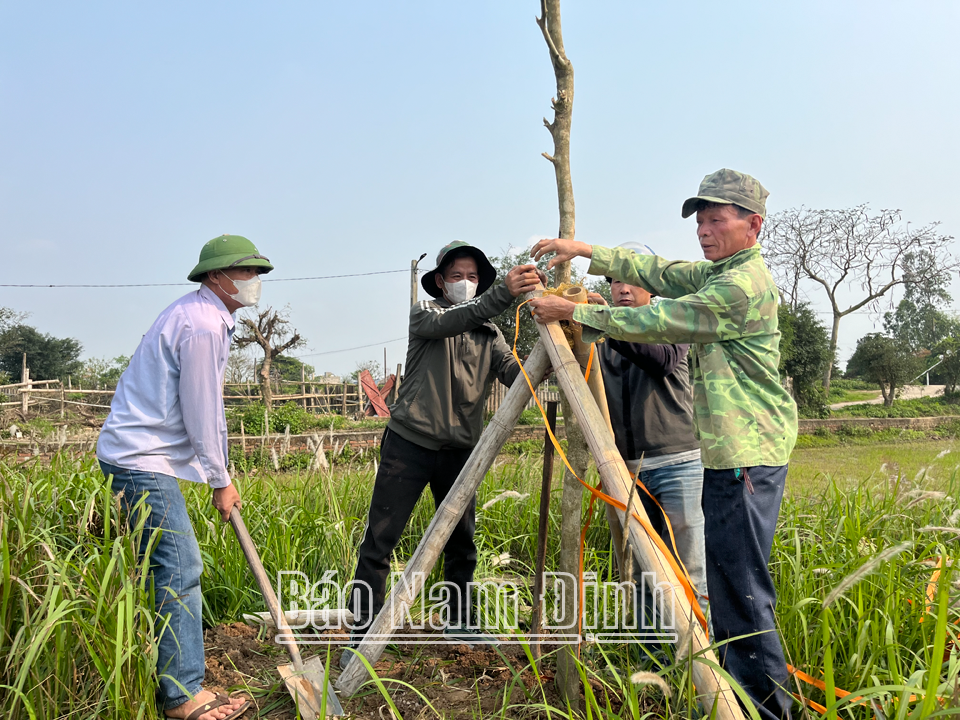
| Planting trees to create green spaces in Thanh Loi commune (Vu Ban district). |
According to the 2025 plan for scattered tree planting, the Provincial People's Committee has assigned districts and cities to develop and implement plans to plant more than 1 million trees of various types. The planting areas are specifically planned, including: urban areas, densely populated residential areas, where people are allowed to plant trees along streets, parks, flower gardens, squares, office grounds, schools, hospitals, religious buildings, cultural centers, and other public areas. In rural areas, priority is given to planting in household gardens, traffic corridors, riverbanks, canals, cultural and historical centers, religious sites, industrial zones, waste treatment areas, and unused land, especially combining tree planting with integrated farming models and organic farming. Following recommendations from the Department of Agriculture and Environment, localities in the province should prioritize planting native tree species and multi-purpose trees that have both economic value and create green spaces, contributing to improving the landscape and environment. Some typical species recommended include: Bodhi tree, red sandalwood, camphor tree, crape myrtle, bauhinia, Taiwanese Terminalia, flamboyant tree, longan, lychee, teak, casuarina, sấu tree, xoan tree, lim xet tree, black acacia, black star tree, lat hoa tree, pine, acacia, eucalyptus… These are easy-to-grow tree species, suitable for the local climate and soil conditions, easy to care for, and have good growth and development potential.
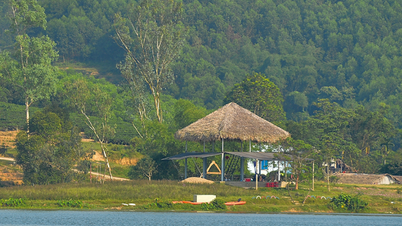
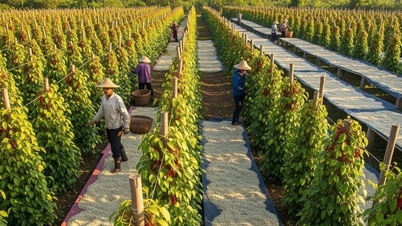
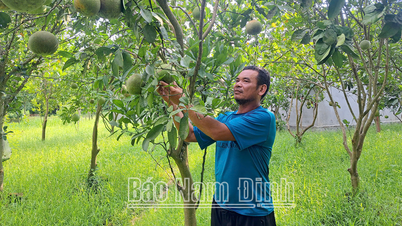
Comrade Tran Duc Viet, Deputy Director of the Department of Agriculture and Environment, stated: According to the National Criteria for Building New Rural Areas and Advanced New Rural Areas, the green space indicator plays a crucial role in improving the landscape, living environment, and creating a green, clean, and beautiful space for the community. Specifically, in Decisions No. 318/QD-TTg and 320/QD-TTg dated March 8, 2022, of the Prime Minister, the criteria for the percentage of land allocated to green spaces and environmental landscapes are clearly defined to aim for sustainable development and friendliness to nature. Following the direction of the Provincial People's Committee, local authorities have launched a tree planting movement; guiding people to choose tree species with economic value. Many households have utilized their garden land to plant fruit trees and valuable timber trees such as longan, lychee, red sandalwood, and teak, not only contributing to greening barren land but also providing stable income. Furthermore, planting trees in historical sites, tourist areas, temples, etc., contributes to the development of ecotourism and cultural tourism, creating scenic highlights and enhancing local identity. Rural areas with high green density and open spaces are becoming models in the construction of advanced and exemplary new rural areas. Mr. Nguyen Van Vien, from Trung Phu village, Thanh Loi commune (Vu Ban district), said: “Responding to the tree planting campaign launched by the commune People's Committee at the beginning of 2025, we encouraged people to buy crape myrtle, eucalyptus, and mango tree seedlings from the Provincial Seed Center to plant in several locations along roadsides, vacant land, the village center, church grounds, etc., creating landscapes and green spaces, contributing to fulfilling the environmental criteria in building exemplary new rural villages.”
Along with promoting the tree planting movement, the planting of coastal protective forests – protecting the environment and responding to climate change – is also a focus of the Department of Agriculture and Environment and coastal localities. According to the plan, the entire province aims to plant 70 hectares of coastal protective and special-use forests to restore mangrove ecosystems, protect sea dikes, and create a green belt to block wind and prevent erosion. Coastal alluvial areas will be planned for reforestation according to approved projects. This is a strategic solution to respond to sea level rise, storms, and floods, and protect the livelihoods of coastal people. According to the Forest Protection Sub-Department (Department of Agriculture and Environment), in the first quarter of 2025, the entire province planted nearly 485,000 scattered trees of various types; among them, the units with the highest results were Hai Hau district with 120,000 trees and Nam Truc district with 100,000 trees, achieving 100% of the plan.
Despite achieving many successes, tree planting and reforestation efforts still face several challenges, such as: a shortage of land in some urban and densely populated areas; a lack of consensus and limited awareness among some people regarding the importance of trees; difficulties in caring for and protecting trees after planting; and a lack of long-term investment capital for tree planting programs, especially in rural areas. To continue effectively implementing the tree planting and reforestation plan, a coordinated effort from all sectors, levels, and the people is needed. Therefore, the Provincial People's Committee requests the Department of Agriculture and Environment, as the lead agency, to coordinate with relevant units such as the Provincial Military Command, the People's Committees of cities and districts to organize reforestation programs, continue launching and implementing reforestation projects, strengthen inspection and supervision, and compile results for reporting as required. The People's Committees of districts and cities should proactively promote propaganda and mobilize people to actively participate in tree planting, mobilizing social resources and support from businesses and non-governmental organizations to plant, care for, and protect green trees in the long term. The Provincial Military Command plays an important role in coordinating the organization of launching ceremonies, supporting the preparation of seedlings, locations, and personnel for tree planting during major events. In addition, mass organizations such as the Fatherland Front, the Farmers' Association, and the Youth Union should also actively participate and inspire the green tree planting movement to become a regular and continuous activity linked to the responsibility and benefits of each citizen. All levels and sectors, especially the local governments, need to continue strengthening environmental education and awareness campaigns, integrating them into community activities. They should mobilize diverse resources, especially from businesses, through social responsibility programs. Model projects combining green tree planting with organic agriculture and ecotourism should be developed. Applying digital technology in monitoring, supervising, and managing green spaces.
Expanding the model of planting trees according to the criteria of the New Rural Development program, and increasing the area of forest planting, is not just about planting more trees, but also about a shift in thinking towards sustainable development, aiming for a green, clean, beautiful living space in harmony with nature. With the determination of the entire political system and the positive response of the people, localities in the province are gradually transforming rural areas into livable lands – where every row of trees and shade becomes a symbol of sustainable development and the aspiration to green the living space.
Text and photos: Van Dai
Source: https://baonamdinh.vn/kinh-te/202504/nhan-rong-phong-trao-trong-cay-xanhgop-phan-nang-cao-chat-luong-cuoc-song-f6b58ab/
![[Photo] Prime Minister Pham Minh Chinh presides over a meeting on private sector economic development.](/_next/image?url=https%3A%2F%2Fvphoto.vietnam.vn%2Fthumb%2F1200x675%2Fvietnam%2Fresource%2FIMAGE%2F2025%2F12%2F20%2F1766237501876_thiet-ke-chua-co-ten-40-png.webp&w=3840&q=75)































































Comment (0)