

With its ambitious agenda, the 32nd Arab League Summit is a significant milestone that could impact the region and the world in many ways.
Alongside positive signs at several hotspots in the region, the Arab League entered its 32nd summit on May 19th in Saudi Arabia to find ways to resolve current tensions and conflicts within and outside the region. The appearance of Ukrainian President Volodymyr Zelensky also surprised many, creating a unique "phenomenon" at this summit.
Given these recent developments, the question arises: what changes will occur in the region after the Arab League summit?
Begin the reconstruction of Syria.
Syria returned to the Arab League for the first time in 12 years, at a time when the country was still grappling with a political crisis and beginning to address the humanitarian crisis following the devastating earthquake in early 2023. The active diplomatic efforts of President Bashar al-Assad, along with the proactive involvement of influential countries such as Saudi Arabia and the United Arab Emirates (UAE), helped Syria receive a relatively warm welcome at this summit.
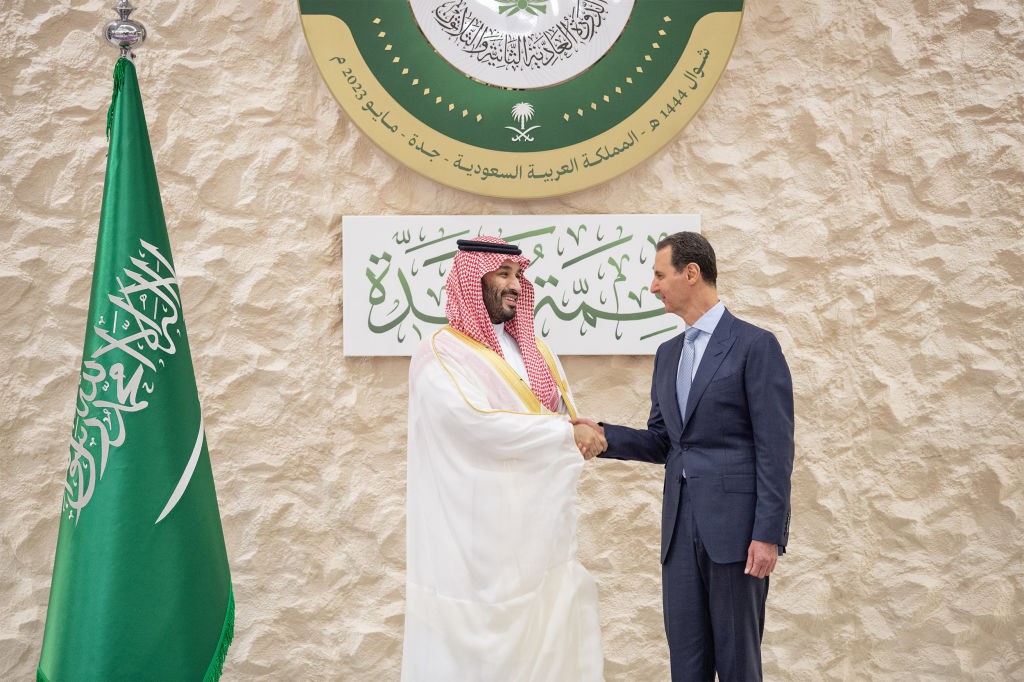 |
| Saudi Arabian Crown Prince and Syrian President Bashar al-Assad (Source: Reuters) |
Regarding the Syrian issue, the Arab League advocates for increased efforts to help the country emerge from the crisis and end the suffering of the people in affected areas. However, Al-Jazeera believes this process will not begin in the short term, as US sanctions will remain an obstacle. In a commentary, the newspaper argues that the US Caesar Act is currently the biggest obstacle preventing Arab nations from investing in Syria.
Experts believe that this issue needs to be resolved through concrete actions by President Bashar al-Assad's government. Once the political crisis in Syria is resolved, there will be more positive signals from the Washington administration to lift sanctions. Saudi Arabia and the UAE also believe that the time will come when they can invest in Syria, expanding their networks to increase their geopolitical influence over the country.
Russia's position on the Russia-Ukraine conflict
Besides Syria's reappearance, Ukraine's participation is also a surprising sign at this year's Arab League summit. Amidst the ongoing Russia-Ukraine conflict, which remains a pressing global issue, the Arab League has chosen a neutral stance, maintaining a certain degree of relationship with the Moscow government.
This is a result of Saudi Arabia's recent foreign policy. Crown Prince Mohammed bin Salman is striving to mediate in a similar spirit to how China mediated between Saudi Arabia and Iran. The Arab League summit is seen as a good opportunity for Saudi Arabia to play this role.
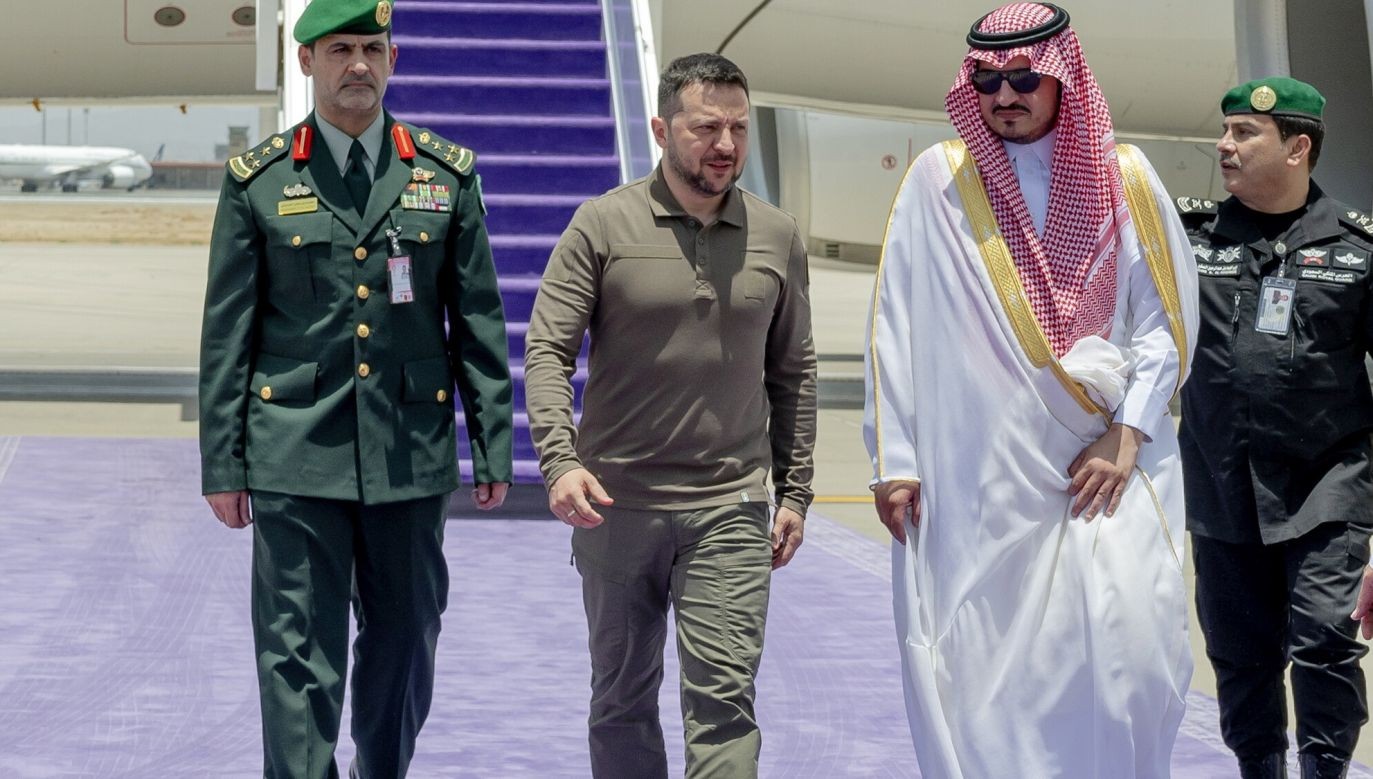 |
| Ukrainian President Volodymyr Zelensky made his first visit to Saudi Arabia. (Source: Reuters) |
However, bringing together two countries in conflict like Russia and Ukraine is far more difficult than mediating between Saudi Arabia and Iran – two countries both seeking valuable opportunities to strengthen regional engagement. Therefore, President Zelensky's presence at this summit benefits the Arab League less and the Ukrainian president more.
Currently, Kyiv is in the process of calling for the international community's support in the reconstruction effort. Prior to this, the Ukrainian Foreign Minister visited Kuwait to mark the 30th anniversary of diplomatic relations between the two countries, primarily focusing on humanitarian assistance.
New economic development
Several countries in the region, such as Egypt, Saudi Arabia, and the UAE, have begun researching and exploring ways to develop new economic models suitable for the global situation and future trends. Oil-based economies are no longer in their heyday, and this is the most opportune time for the Arab region in general, and the Gulf region in particular, to think about green and circular economies.
The Green Middle East Initiative, proposed in 2021 to help countries in the region develop large-scale programs and plans to support their economies, is now in its second year.
However, specific activities have not yet been implemented due to the effects of the global economic crisis, which has only recently emerged from the pandemic. In particular, in some countries like Lebanon, inflation has caused prices to rise sharply, significantly impacting macroeconomic development and people's lives.
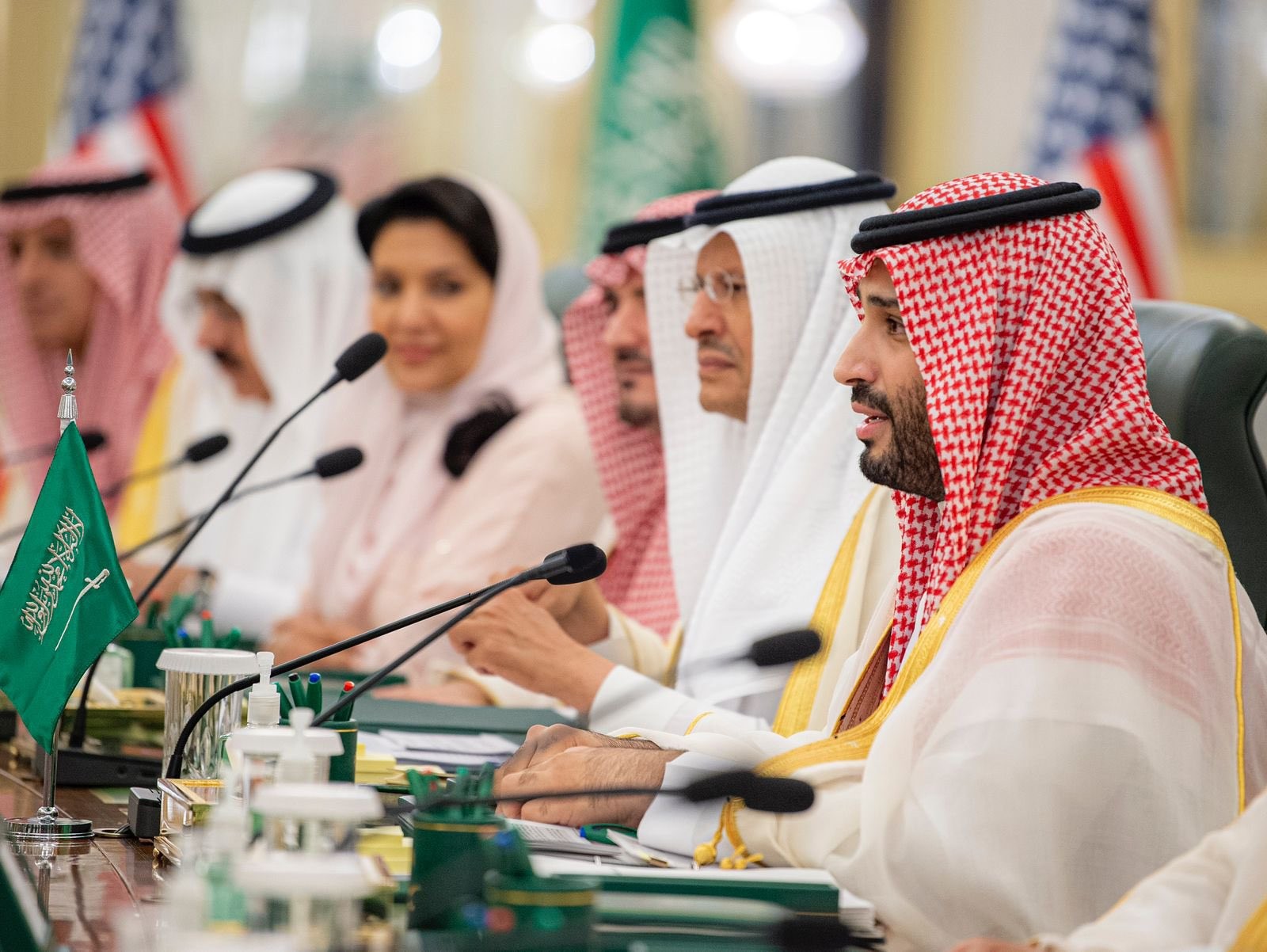 |
| Saudi Arabian Crown Prince Mohammed bin Salman speaks at a meeting of the Green Middle East Initiative. (Source: Saudi News Agency) |
WIONews researcher Rajeev Argawal believes the Arab League summit is a good opportunity for these countries to receive more support in developing new and more environmentally friendly economic models. Several important projects are likely to be announced and implemented after this summit.
With the upcoming COP28 conference being held in the UAE, this also presents a good opportunity for countries to discuss, in multilateral sessions and individual contacts, the issues that may be discussed at that important event.
More observers, increased visibility.
Within the Arab region, several countries have not yet become members of the Arab League, including two highly influential nations: Iran and Türkiye. These two countries, in terms of status, are considered larger, more prominent, and more powerful, and therefore cannot be ignored in the process of Arab League integration.
Therefore, one idea that might emerge after this conference is to begin a step-by-step process of bringing Iran and Türkiye into the League as observers or dialogue partners. This would help mitigate the security threat from Iran and Turkey themselves.
In fact, while Iran remains open to the possibility of restarting its nuclear program, Turkish military activities on the Syrian border also raise concerns for the League. Currently, the League's observer nations include only Brazil, Eritrea, India, and Venezuela.
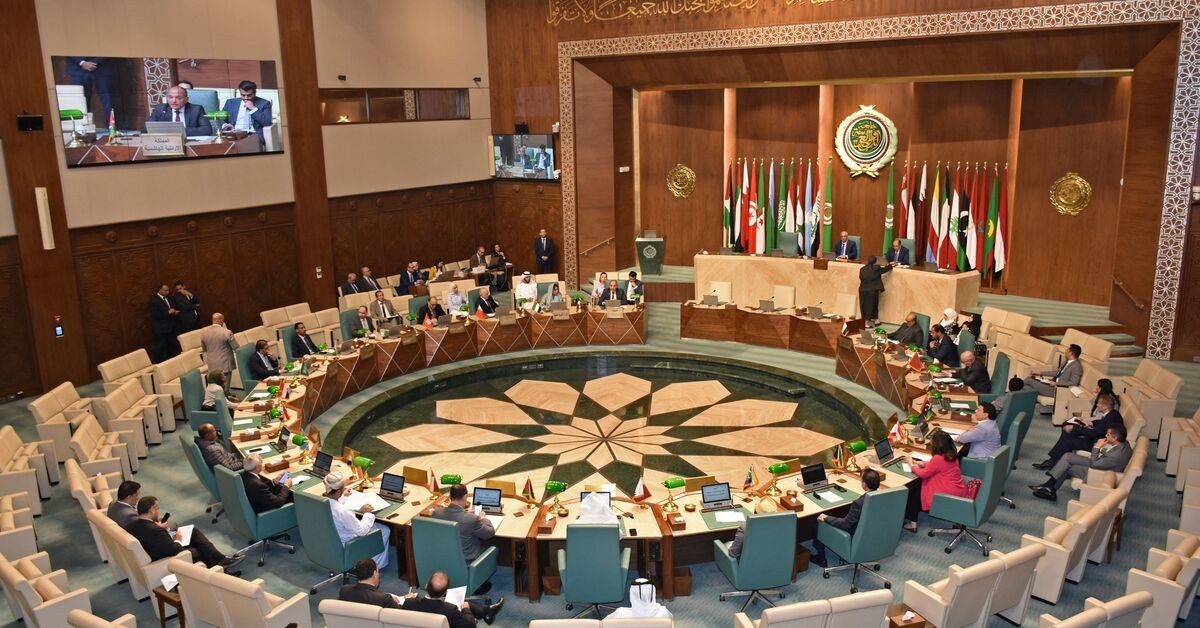 |
| The 2023 Arab League Summit took place in a positive atmosphere. (Source: AFP) |
Taking place concurrently with other G7 and Central Asian regional summits, the Arab League demonstrated that it is in no way inferior in its role on the international stage.
In fact, while major powers have been grappling with geopolitical conflicts in recent times, League members have proactively sought regional solutions to resolve conflicts and ensure security and stability in the region. A specific example is Saudi Arabia's role in providing aid after fighting broke out in Sudan, evacuating citizens from many countries to safety and repatriating them to their home countries, including many Arab nations and other parts of the world.
Source





![[Image] Shipbuilders exposed to steel and record-breaking heat.](https://vphoto.vietnam.vn/thumb/1200x675/vietnam/resource/IMAGE/2026/06/04/1780545781745_ndo_br_img-5402-4683-jpg.webp)







































![[Video] Sunset at Lap An Lagoon – Where the sun sets over the fishing nets](https://vphoto.vietnam.vn/thumb/1200x675/vietnam/resource/IMAGE/2026/05/31/1780192137701_beach-landscape-sea-water-nature-grass-745871-pxhere-com.jpeg)






![[Photo] General Secretary and President To Lam attends the 14th Congress of the Vietnam Trade Union](https://vphoto.vietnam.vn/thumb/402x226/vietnam/resource/IMAGE/2026/06/04/1780543339765_anh-man-hinh-2026-06-04-luc-10-22-07.png)



















Comment (0)