

Key policy movements
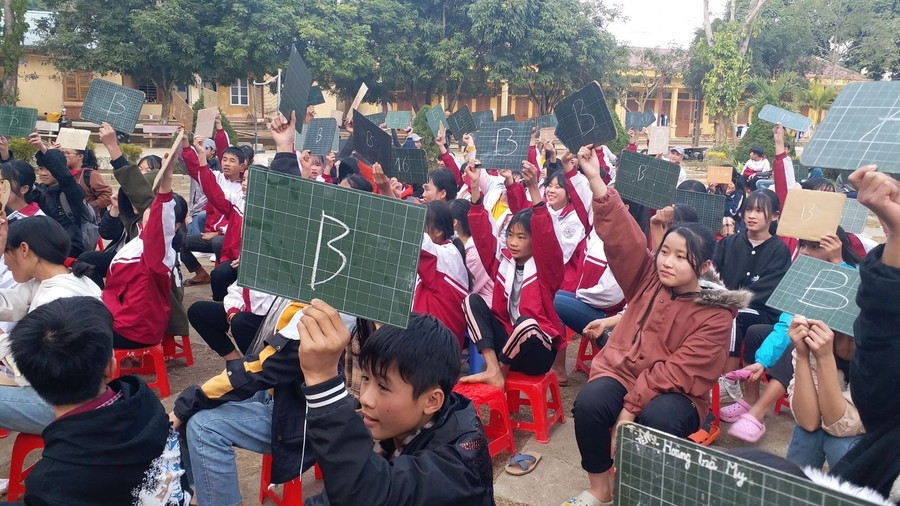
In the final days of 2025, the grounds of Nang Kha Ethnic Boarding Primary and Secondary School (Na Hang, Tuyen Quang ) became more bustling than usual. In the familiar rhythm of a highland school, teacher La Thi May entered the classroom with a more relaxed attitude. Gone were the days of frantically completing thick stacks of paperwork; her work and that of her colleagues had undergone positive changes.
Ms. May shared that in the past, teachers had to spend a lot of time on paperwork such as: observing classes, monitoring students' health, and managing youth group activities. The large volume of administrative documents not only created additional pressure but also encroached on the time allocated for professional work, lesson preparation, and student care. "Many times, teachers felt more tired from paperwork than from classroom time," she recalled.
Currently, despite the busy teaching schedule, streamlining paperwork and promoting the application of technology in management have significantly reduced the administrative burden for teachers. As a result, Ms. May has more time to pay attention to each student, especially the ethnic minority students who are studying and living in the school's boarding program.
What further encouraged the teacher in the mountainous region was the continued guarantee of benefits and policies for teachers. "It's even more gratifying that teachers still receive seniority allowances, and salary policies and benefits are fully implemented, creating motivation for us to feel secure and committed to the profession," Ms. May confided.
The small story at Nang Kha Ethnic Boarding Primary and Secondary School partly reflects the positive changes in policies regarding teachers in 2025. This is considered a pivotal year in the process of perfecting the legal framework for the teaching profession, aiming to reduce administrative pressure, improve living standards, and create conditions for teachers to focus on their core task of teaching and educating students.

Less burden, more confidence.
Having been a civil servant for two years, Ms. Nguyen Thi Hien, a teacher at Hung Dao Primary School (Dai Son commune, Hai Phong city), earns nearly 5.3 million VND per month, including salary and allowances. From July 1st, 2025, when the new salary policy is implemented, her income will increase to approximately 7 million VND per month, bringing significant joy to herself and many colleagues.
Sharing her journey into the profession, Ms. Hien said that she started teaching under contract in 2018 and was officially hired into the permanent staff in early 2023. Throughout her five years as a contract teacher, her income only fluctuated around 4 million VND per month. With two young children, every household expense had to be carefully planned and managed.
“There were times when the low salary made me worry about my daily life. However, my love for the profession and my desire to be with my students helped me persevere through that difficult period,” Ms. Hien confided. According to the young teacher, the salary increase from July 1, 2025, is a welcome change. The new income level will not only improve living standards but also create a sense of security and stability, allowing teachers to focus on their professional work.
“The significant salary increase makes me and many colleagues feel recognized, giving us more motivation to improve the quality of teaching and stay committed to the profession,” Ms. Hien shared, recognizing the positive impact of the salary reform policy on the teaching staff. In the context of the education sector striving for innovation and quality improvement, gradually improving teachers' income not only contributes to ensuring a decent standard of living but also creates a foundation for the teaching staff to confidently dedicate themselves to their work, meeting the increasingly high demands of nurturing future generations.
Sharing the joy with teachers nationwide, Ms. Do Ngoc Han – a teacher at Thanh Tan Kindergarten (Ben Tre ward, Vinh Long province) expressed her excitement at the news that teachers' salaries will be ranked at the highest level in the administrative and public service salary scale system according to the Law on Teachers, effective from January 1, 2026.
According to Ms. Han, for preschool teachers, the joy is further amplified by the new policy that continues to maintain the preferential professional allowance at a minimum of 70%. This is a practical recognition of the unique nature of preschool teachers' work – a workforce operating in a high-pressure, high-intensity environment, requiring great dedication and responsibility in caring for and educating young children.
Ms. Han believes that adjusting the basic salary and improving the salary policy for teachers in the current period is appropriate to the socio-economic development conditions of the country, while also meeting the legitimate aspirations of the teaching staff. "This policy not only contributes to improving living standards and alleviating daily worries, but also creates motivation for teachers to work with peace of mind and remain committed to the profession in the long term," Ms. Han shared.
According to the preschool teacher, when living standards improve, teachers will have more resources to invest in their professional development and enhance the quality of childcare and education. This is also an important foundation for the education sector to build a stable and dedicated teaching staff, meeting the requirements of fundamental and comprehensive educational reform in the coming period.
After decades, the issue of teachers' salaries has been legalized, instilling confidence in millions of educators. Minister of Education and Training Nguyen Kim Son stated that, to implement the Law on Teachers (effective January 1, 2026), the Ministry is developing a Decree stipulating salary policies and allowances for teachers. According to the draft Decree, teachers are expected to receive an additional special salary coefficient alongside their current salary and allowance benefits.
In addition to salaries and allowances, teachers also benefit from support, attraction, and recognition policies. These policies, along with regulations on professional standards, teacher appointments, recruitment, employment, honoring, and rewarding teachers, will be comprehensive solutions to help teachers feel secure in their work, focus on their professional activities, and create motivation for them to continuously improve their skills and develop their careers.
A significant "breakthrough" for teachers.
Although 2025 may not be a year of significant "breakthroughs" in teachers' income, Associate Professor Dr. Tran Xuan Nhi – former Deputy Minister of Education and Training – observes that the year shows positive and fundamental signs. The continued implementation of salary reforms based on job positions and professional titles, along with the priority of placing teachers at higher salary levels within the administrative and public service salary scale system, has further strengthened the confidence of the teaching staff.
In particular, for teachers in ethnic minority areas, border regions, and islands, preferential professional allowances and special allowances remain an important "support system." Associate Professor Dr. Tran Xuan Nhi observes that allowances do not make teachers rich, but they are a source of encouragement and "fuel" to help teachers stay committed to their schools and classes. Maintaining the stability of these policies contributes to retaining teachers in areas facing many difficulties and shortages.
Teacher shortages are a pressing issue in 2025, especially at the preschool and primary school levels. However, unlike previous years, there have been noticeable improvements. The addition of staff, along with flexible recruitment and contracting solutions, has helped many localities alleviate some of the pressure of teacher shortages.
According to Ms. Nguyen Thi Nguyet, Director of the Department of Education and Training of Ha Tinh province, compared to two years ago, the situation of teaching multiple subjects and taking on additional responsibilities has decreased. Although not completely resolved, this is an important step forward. For teachers, having more colleagues not only reduces their workload but also creates a healthier professional environment.
The Department of Education and Training has advised the Provincial People's Committee to use a secondment policy instead of rotation. The Department has also coordinated with the Department of Interior Affairs to advise the Provincial People's Committee to agree on assigning the Education sector to directly recruit teachers. The Department of Education and Training is currently reviewing the implementation of this task.
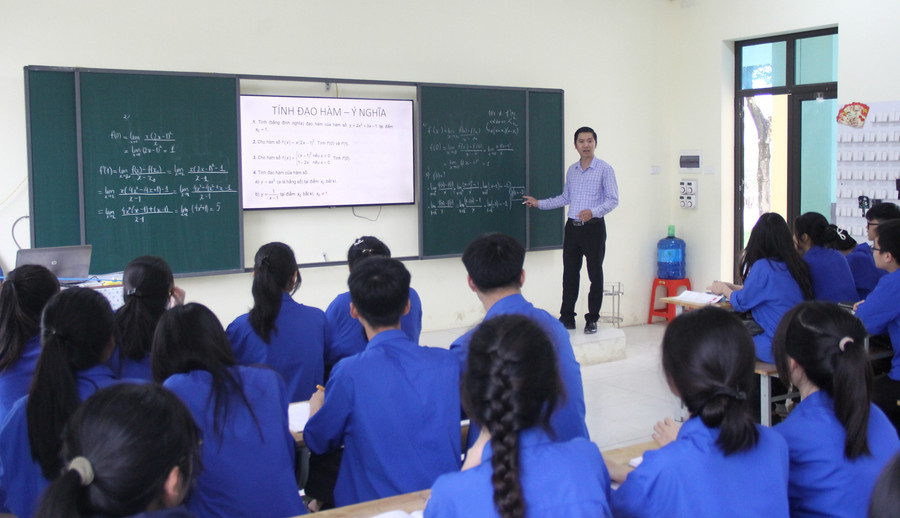
In the context of the continued synchronized implementation of the 2018 General Education Program, Ms. Chau Quynh Dao – a member of the 15th National Assembly – acknowledged the intensified efforts in teacher training. Beyond simply updating the curriculum and textbooks, increasing emphasis is being placed on digital transformation, the application of information technology, and artificial intelligence in teaching.
Through her interactions with constituents, Ms. Chau Quynh Dao observed that many teachers have participated in well-structured training courses, with financial and time support, helping them to be more confident in the face of innovation demands. "Previously, the idea of AI seemed distant. Now, at least teachers know how to use the supporting tools and are no longer so unfamiliar with them," Ms. Chau Quynh Dao noted.
According to the National Assembly representative from An Giang province, the issuance of Resolution No. 71-NQ/TW on "Breakthroughs in Education and Training Development" (Resolution 71) by the Politburo in 2025 marked a significant milestone, affirming the Party's strategic vision in making education a key driving force for national development. The most noteworthy aspect of the Resolution is its perspective that human beings are the center, the creative subjects, and also the goal of development.
Instead of focusing solely on scale and quantity, the Resolution places the highest priority on quality, on the formation of a generation of citizens who are creative, critical thinkers, internationally integrated, yet still preserve their national cultural identity.
Resolution 71 affirms the need for fundamental reform in the governance of the education and training system, linking accountability with autonomy, and strengthening decentralization to localities and educational institutions. This paves the way for a dynamic, transparent, flexible education system tailored to the specific characteristics of each region. One of the outstanding highlights is the policy of prioritizing training, professional development, and appropriate remuneration to build a high-quality teaching staff.
Only when teachers' livelihoods are truly secured and their qualifications are improved can the noble task of "nurturing human resources" be successful. This is a strategic step to fundamentally address the current teacher shortage and training inadequacies. Furthermore, Resolution 71 emphasizes the need to shift from a knowledge-transmission education system to one that develops comprehensive competencies.
This means promoting curriculum innovation towards streamlining, practicality, and enhancing digital skills, life skills, and foreign language proficiency. Education will not only be about "learning to know" but also about "learning to do, learning to live together, and learning to be oneself."
Positive impact and effects
2025 will also be a year in which issues related to school safety and the protection of teachers' honor and dignity continue to be raised. Ms. Ha Anh Phuong, a National Assembly representative from Phu Tho province, shared that several incidents of teachers being insulted and pressured by parents have caused public concern.
In light of this reality, emphasizing the responsibility of schools and local authorities in protecting teachers has yielded positive results. While negative incidents have not been completely eliminated, many teachers believe they feel a greater sense of support from the education sector and society. "The important thing is that teachers no longer feel alone when incidents occur," Ms. Phuong stressed.
Overall, Ms. Ho Thi Minh – a National Assembly representative from Quang Tri province – noted that policies for teachers in 2025 are gradually "reaching" the practical realities of teaching. From reducing paperwork, supplementing teachers, maintaining allowances, to strengthening training and protecting teachers, all are contributing to improving the working environment in schools.
Policies cannot change everything immediately, but if they are implemented correctly and consistently, teachers will feel the impact.” This is also the common expectation of the teaching staff – those who stand on the podium every day, waiting for policies to not just remain on paper, but to continue to deeply penetrate into their professional lives.
The year 2025 concludes with positive developments in policies for teachers. As policies become more practical, implemented comprehensively, and with clear roadmaps, the confidence of the teaching staff will be strengthened. And it is from this confidence that the teaching profession will have the motivation to continue innovating and meeting the development requirements of the country in the new era.
According to National Assembly representative Chau Quynh Dao, although there are still many challenges, the policy foundations strengthened in 2025 are an important basis for teachers to work with peace of mind, dedicate themselves to the cause of nurturing future generations, and contribute to the successful implementation of the goal of fundamental and comprehensive reform of education and training.
Source: https://giaoducthoidai.vn/nhung-chinh-sach-cham-vao-buc-giang-post762668.html















































































Comment (0)