

SGGP
To support the "psychological and emotional stability and healthy development" of young people, the South Korean government has just approved a policy to provide nearly $500 USD/month (650,000 won) in support to teenagers aged 9-24 who are living in isolation or reclusive lifestyles.
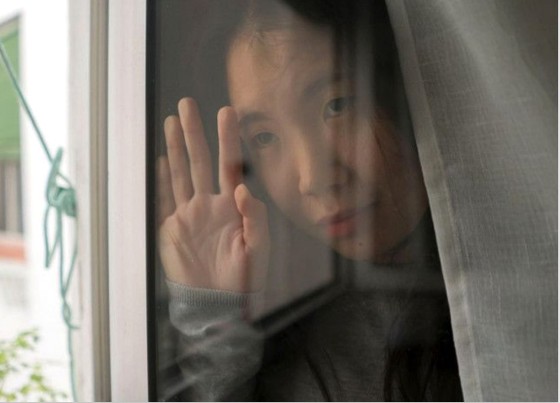 |
| A "lonely young recluse" in South Korea |
These teenagers live in households with incomes lower than the average monthly income of a four-person household in South Korea, which is approximately 5.4 million won (US$4,165). According to the South Korean Ministry of Gender Equality and Family, this monthly subsidy aims to encourage youth integration into the community and is also a way for South Korea to address its shrinking working-age population, coupled with an alarmingly low birth rate and strict immigration policies.
In recent years, reclusive lifestyles and high youth unemployment rates, especially after the Covid-19 pandemic, have become alarming issues in South Korea. "Reclusive young people" are defined as those living in a "confined space, disconnected from the outside world for a certain period of time, and experiencing significant difficulties in normal life."
According to the Korea Institute for Health and Social Affairs, approximately 3% of South Koreans aged 19-39 are considered lonely or reclusive, roughly 350,000 people nationwide, with 40% beginning their isolation in adolescence. A range of factors such as financial hardship, social anxiety, stress, family problems, or health challenges contribute to this phenomenon.
Reclusive youths may experience physical developmental delays due to unhealthy lifestyles and unbalanced nutrition, and may also face mental health challenges such as depression stemming from a loss of social role and slow adaptation. The South Korean government recognizes this and is willing to pay for their "social reintegration."
In addition to welfare support, the South Korean government also instructs local governments to strengthen early warning systems and promote social safety nets for youth; and to cooperate more closely with youth welfare facilities such as shelters or treatment centers for those who do not want to leave home and do not interact with others.
Not only in South Korea, but many young people in Japan are also facing a similar situation. According to a survey by the Japanese government, nearly 1.5 million working-age people in the country are living as hikikomori (withdrawing from society, spending all or almost all of their time at home). The Guardian, citing data from the Japanese Cabinet Office, reported that according to a November 2022 survey, an estimated 2% of the country's population aged 15-62 are choosing to live as hikikomori.
The Covid-19 pandemic not only affected the economy , but also impacted the life perspectives of young people in China.
The Beijing Daily reports that the fast-paced and turbulent life of today's society has created more challenges and anxieties for young people who are uncertain about their careers, marriage, and the pressure of caring for elderly parents. In this situation, many choose to cling to safe, stable jobs. But some also want to pause and reflect on what they truly want in life. They temporarily withdraw from the competitive job market to reconsider their path. Visiting temples is gradually becoming a trend for young people who don't want to become monks but want to find solace in Buddhism to alleviate the pressures of work and modern life.
Source
![[Photo] General Secretary To Lam receives President of the European Council Antonio Costa](/_next/image?url=https%3A%2F%2Fvphoto.vietnam.vn%2Fthumb%2F1200x675%2Fvietnam%2Fresource%2FIMAGE%2F2026%2F01%2F29%2F1769697816651_a1-bnd-5216-9741-jpg.webp&w=3840&q=75)


![OCOP during Tet season: [Part 3] Ultra-thin rice paper takes off.](/_next/image?url=https%3A%2F%2Fvphoto.vietnam.vn%2Fthumb%2F402x226%2Fvietnam%2Fresource%2FIMAGE%2F2026%2F01%2F28%2F1769562783429_004-194121_651-081010.jpeg&w=3840&q=75)


![OCOP during Tet season: [Part 2] Hoa Thanh incense village glows red.](/_next/image?url=https%3A%2F%2Fvphoto.vietnam.vn%2Fthumb%2F402x226%2Fvietnam%2Fresource%2FIMAGE%2F2026%2F01%2F27%2F1769480573807_505139049_683408031333867_2820052735775418136_n-180643_808-092229.jpeg&w=3840&q=75)


Comment (0)