

Forest, breathe!
"Forest, breathe!" - a message to preserve local culture and foster a sense of connection between humans and nature. The project originated from a young person from Quang Nam province.
In early August, the village of Toom Sara (Phu Tuc hamlet, Hoa Vang commune) was bustling with forest enthusiasts. "Dimensions of the Forest"—the title of an essay by writer Nguyen Ngoc—was borrowed to name the community-based educational tourism program organized by Toom Sara Village and the A Song art group.
The initiative was launched with the aim of creating a space for connection between artists, researchers, local communities, and young people. Thought-provoking questions were raised about ecology, monoculture forest models, and indigenous culture.
Huynh Tan Phap, the owner of Toom Sara, is a seasoned Quang Nam native with extensive experience in mountain culture in Da Nang city for many years. In particular, Phap has a deep passion for Co Tu culture. When venturing into community tourism, he prioritizes preserving the authentic culture of the highlands.
Earlier this year, Huynh Tan Phap and his colleagues introduced a new project, almost his greatest passion: "Forest, breathe!". Beyond simply planting trees and reforestation, Phap and his colleagues are striving to fulfill a deeper mission: preserving indigenous culture and fostering a deeper connection between humans and nature.
They chose to start from the fundamental values of the mountains and forests, with the Co Tu people. There, the forest is not a resource to be exploited, but the dwelling place of spirits - of the Mountain God, the Water God, the Tree God.
Spanning over 75 hectares, "Forest, Breathe!" aims to regenerate native forests using tree species familiar to the mountain people, such as Shorea spp. These trees are not just plants, but symbols, a part of the indigenous knowledge that the Co Tu people have passed down through generations. For them, the forest is not simply green, but the soul of their people.
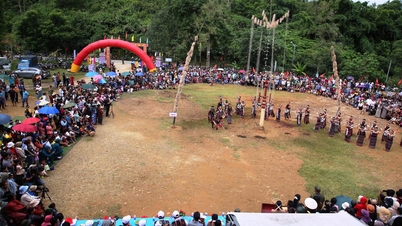
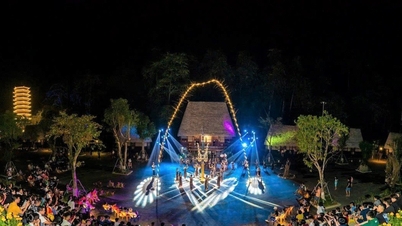
Since its inception, the project has chosen the approach of "awakening culture to plant forests," so that people everywhere can understand the mindset of the mountain dwellers. The "Sara Music Fest - The Breath of the Forest" concert, the Phuoih Ca Coong festival (a thanksgiving ceremony to the Mountain and Forest gods of the Co Tu people), and the wood carving camp all aim towards this goal.
Every aspect of indigenous culture, whether within a small community or extending far beyond the familiar mountain landscape, embodies a larger philosophy: that everything in the forest possesses a soul. No one understands the forest better than the people who live with it.
The Co Tu people know how to choose land, which trees retain water, and which trees provide shelter from the wind. They once had customary laws prohibiting the cutting down of sacred trees and forbidding hunting during the breeding season. This knowledge, when respected and reconnected, becomes the foundation for sustainable development.
And the saplings sown are not only for the forest to breathe, but also for the culture and people of the mountainous region to be revived in their own breath.
Awakening the Co Tu villages
A Lăng Như, a Katu man from the Hòa Bắc mountain region, has spent nearly 10 years awakening the potential of the mountains and forests and rekindling cultural pride in the Tà Lang - Giàn Bí village. He is affectionately known by the locals as "the guardian of the village's flame."
As he recounted, when he started building his homestay in the middle of the forest, many villagers shook their heads: "Nhu is crazy! City dwellers live in hotels, eat well, dress well, who would come to this poor place to visit?" But he remained steadfast.
The stilt house is built in the traditional style, made from bamboo, wood, and stone, adorned with Co Tu brocade fabrics and rustic items reflecting the life of the mountain people.
"When guests arrive, ask those who have chickens or pigs to bring them over; those who don't can contribute their labor. We work together, and we share the rewards," he encouraged the villagers.
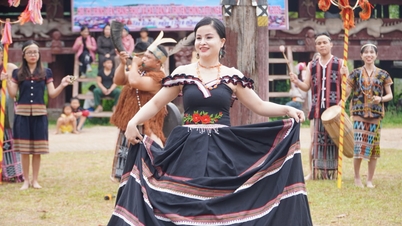
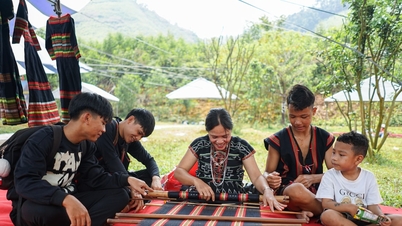
Then, when the first group of visitors arrived, he invited the women to weave brocade and the young men to play gongs and sing. Initially hesitant, the villagers became enthusiastic, especially when they received payment for their work.
"Going into the forest all day earns you two hundred and fifty, but going to A Lang to sing and dance for an hour earns you two hundred!" - that half-joking, half-serious remark ignited new hope. From then on, the whole village began to work together with Nhu.
Starting from a small initial model, after 6 years, he has expanded the community-based ecotourism area to nearly 3,000m², forming seven vocational groups: brocade weaving, basket weaving, trekking, cuisine , gong playing, tour guiding, and performing arts. Each activity is imbued with the spirit of the Co Tu people: simple, hospitable, and in harmony with nature.
In April 2025, the Ta Lang - Gian Bi Community Ecotourism Cooperative, officially represented by A Lang Nhu, was established, bringing together 90 members, including 17 core members. The cooperative operates systematically, linking forest conservation, agricultural development, and tourism with the motto: keeping the village clean, the streams clear, and the forests green.
In addition to developing tourism and preserving local culture, since 2022, A Lang Nhu has expanded its "keeping the village flame alive" journey to education, collaborating with universities in Da Nang to organize field trips for students.
Many universities in Da Nang city have brought students to the village to study, eat, live, and work alongside the locals, learning about customs, beliefs, and traditional crafts under the direct guidance of him and the village elders, creating a unique community-based educational tourism model.
Besides welcoming students to the village, they are also invited by schools to exchange and share cultural stories and authentic experiences in seminars and workshops. He confided: "I'm not a teacher; I just want to tell young people about my ethnic group, so they understand and appreciate what is gradually disappearing."
What makes Nhu happiest is seeing many students choose Hoa Bac as the research topic for their graduation theses; they also write articles, film videos, and share images of Co Tu culture on social media. "Thanks to this, the culture of our ethnic group is no longer confined to the mountains, but is known and appreciated more," he said.
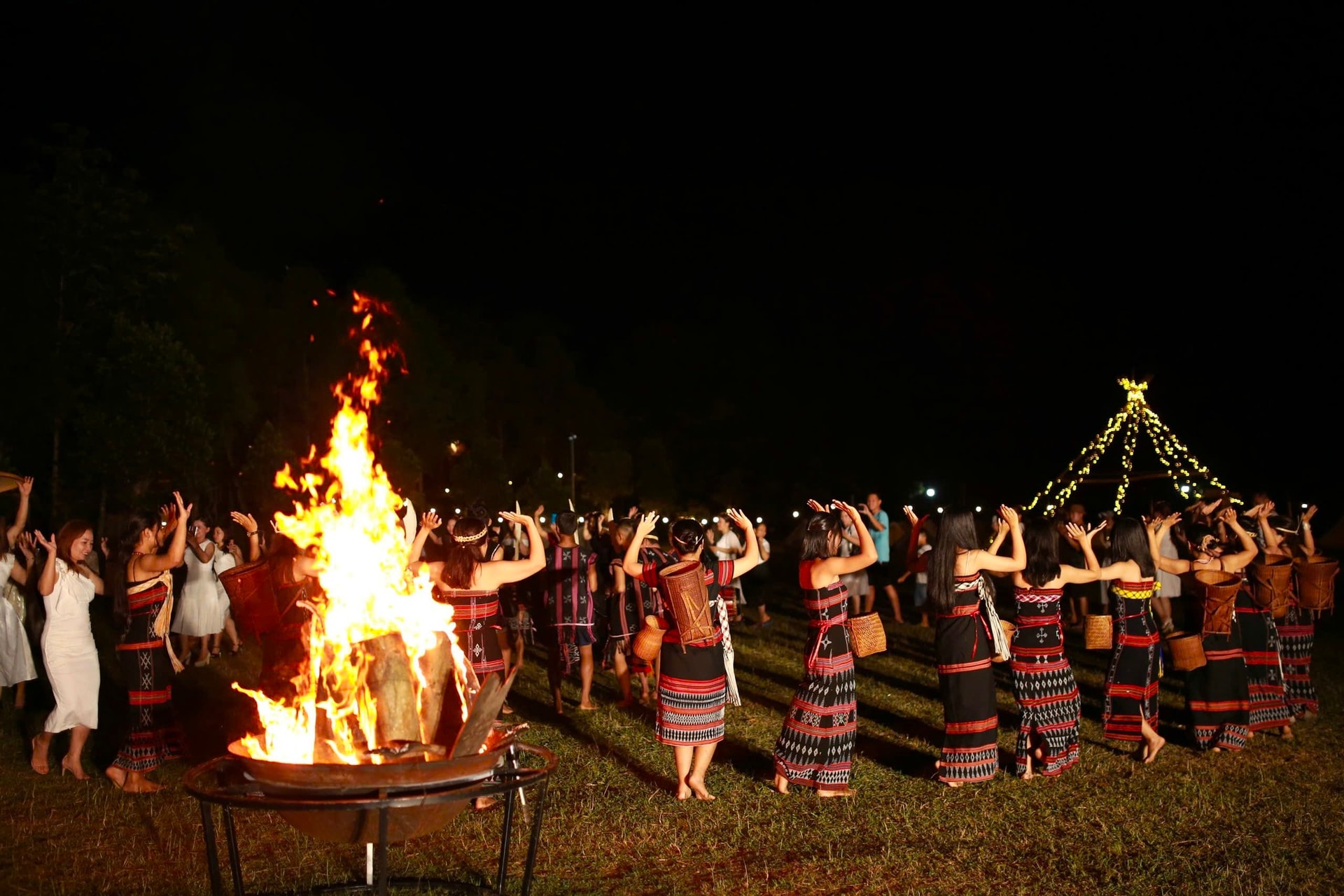
Nowadays, tourists come to Ta Lang - Gian Bi not only for relaxation, but also to immerse themselves in the life of the Co Tu people: in the morning, they hear roosters crowing amidst the mountain mist; at noon, they eat rice cooked in bamboo tubes, snails, and wild vegetables; in the afternoon, they bathe in the crystal-clear Vung Bot stream; and in the evening, they sit around the campfire, listening to the gongs and watching the Tung Tung Da Da dance.
In the flickering firelight and the lingering sound of gongs in the wind, the value of a flame becomes clearer – the flame that A Lang Nhu has preserved, lit, and is passing on to future generations.
Source: https://baodanang.vn/nhung-nguoi-tre-giu-lua-lang-3308286.html



























































Comment (0)