

For thousands of years, humankind has attempted to produce machines to automate religious, military , or agricultural tasks.
Practical needs often drive inventors, but attempts to create something for the first time are bound to lead to mistakes and undesirable results, including strange machines.
The Antikythera Machine
One of the most perplexing ancient machines is the "Antikythera mechanism," discovered in 1901 in the wreck of a Roman cargo ship near the island of Antikythera. Dating from between 205 and 87 BC, its exact purpose remains a mystery.
Some scientists believe this machine could be an astronomical computer or an orrery—a model that tracks the cycles of celestial bodies such as the moon and Earth.
The front of the mechanism features a fixed rotating ring displaying the plane of the Earth's orbit around the sun and the 12 zodiac signs.
The outer face of the rotating dial has another rotating ring, indicated by the months and days of the Sothic Egyptian calendar, as well as 12 months with 30 days each and a number of extra days.
Whatever the case, the Antikythera mechanism is the most complex machine ever found from the aforementioned period.
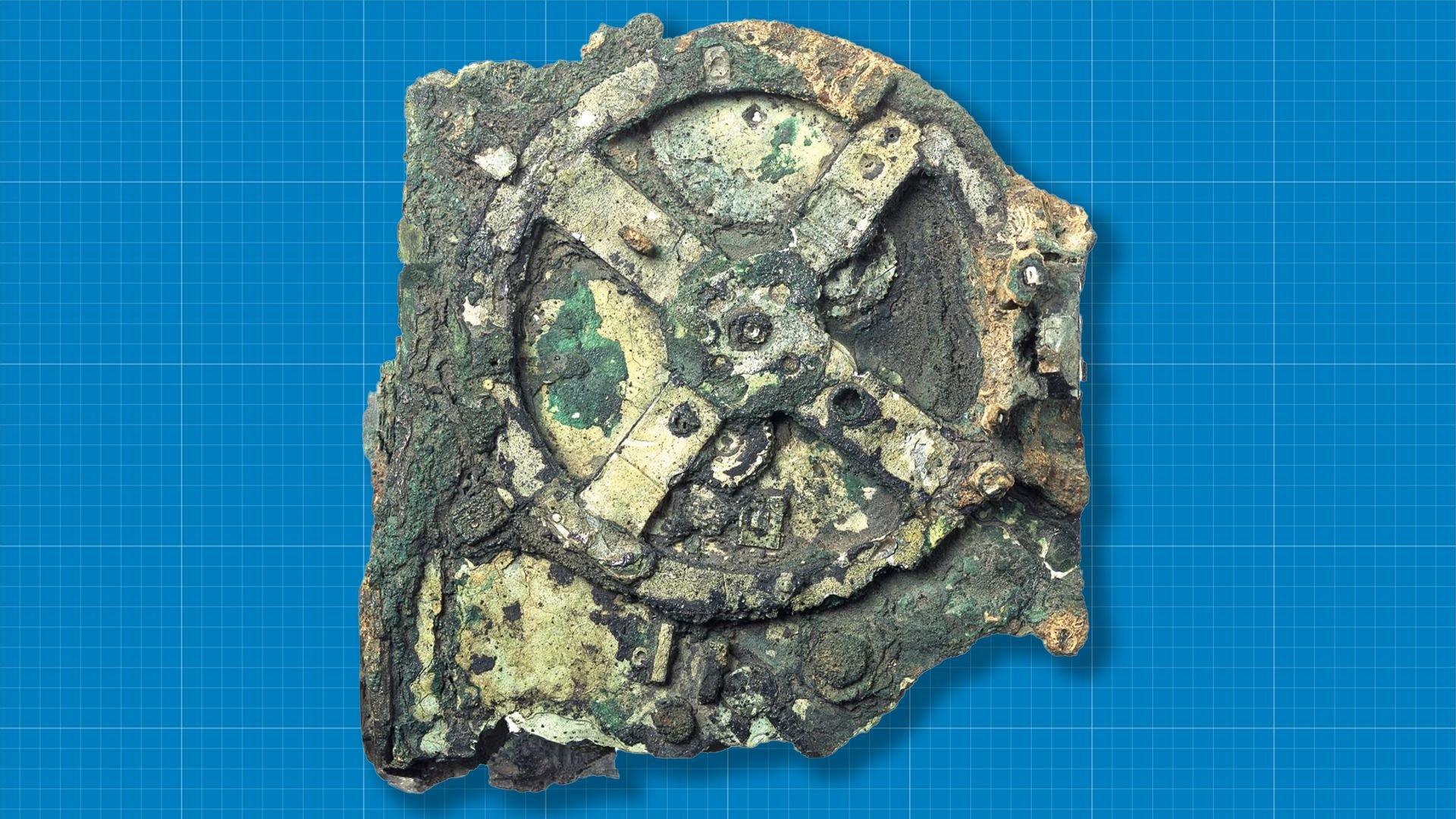
The main wheel of the Antikyther machine. Photo: National Archaeological Museum in Athens
Tsar Tank
The Russian Tsar Tank, also known as the Netopyr or Lebedenko Tank, is a massive war machine.
Designers and scientists Nikolai Lebedenko, Nikolay Yegorovich Zhukovsky, Boris Stechkin, and Alexander Mikulin created this largest armored vehicle in history.
Begun in 1914, the project was canceled in 1915 after initial tests showed the machine lacked sufficient power and was a prime target for artillery.
However, the tank continued to arouse curiosity, with its two front wheels nearly 9 meters in diameter and equipped with a 240-horsepower Maybach engine – one of the most powerful engines of its time.
According to Lebedenko, the large wheels help the vehicle overcome obstacles such as curbs and ditches. The vehicle also has a smaller wheel at the rear, 1.5 meters high. The maximum speed of the vehicle is 16 km/h.
The tank also has an 8-meter-high turret, while its 12-meter-wide hull is fitted with two additional cannons.
Although the giant wheel was supposed to be able to overcome large obstacles, the smaller wheel got stuck in soft ground due to improper weight distribution.
This occurred almost from the very beginning of the experiments, which lasted throughout 1915 until the project was canceled.
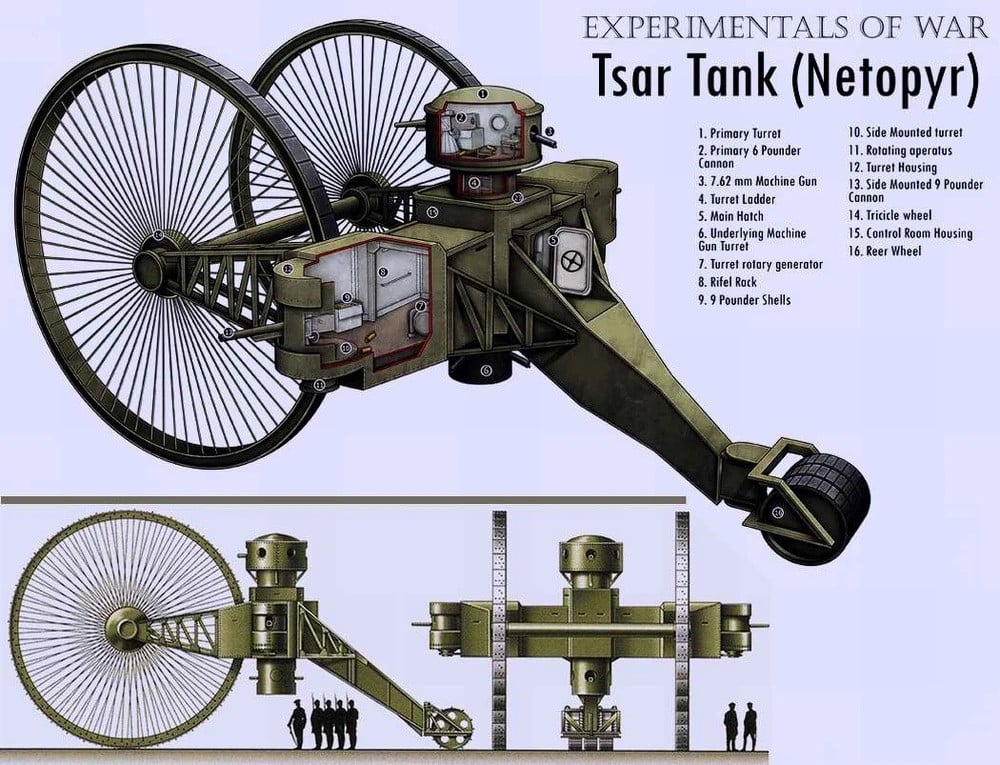
Tsar Tank. Photo: Russia Beyond
Tesla's earthquake generator
The brilliant inventor Nikola Tesla created many different designs and inventions, including some bizarre ideas. Although he initially built an oscillator to generate electricity, he later claimed a version of this invention could create earthquakes.
Tesla's original oscillator used steam to make a piston move up and down and vibrate at high speed to generate electricity.
Tesla created many different versions of the device, and at a party in 1935, he claimed that one version of the machine could produce strong vibrations—potentially enough to cause an earthquake in downtown New York City.
According to a contemporary news report, it appears that Tesla's equipment caused an earthquake near his lab in Manhattan, prompting police and emergency services to arrive.
In response to a reporter from the New York World-Telegram , Tesla reportedly shared that while he was "experimenting with vibrations, the device synchronized with the building's vibrations and caused a strange cracking sound."
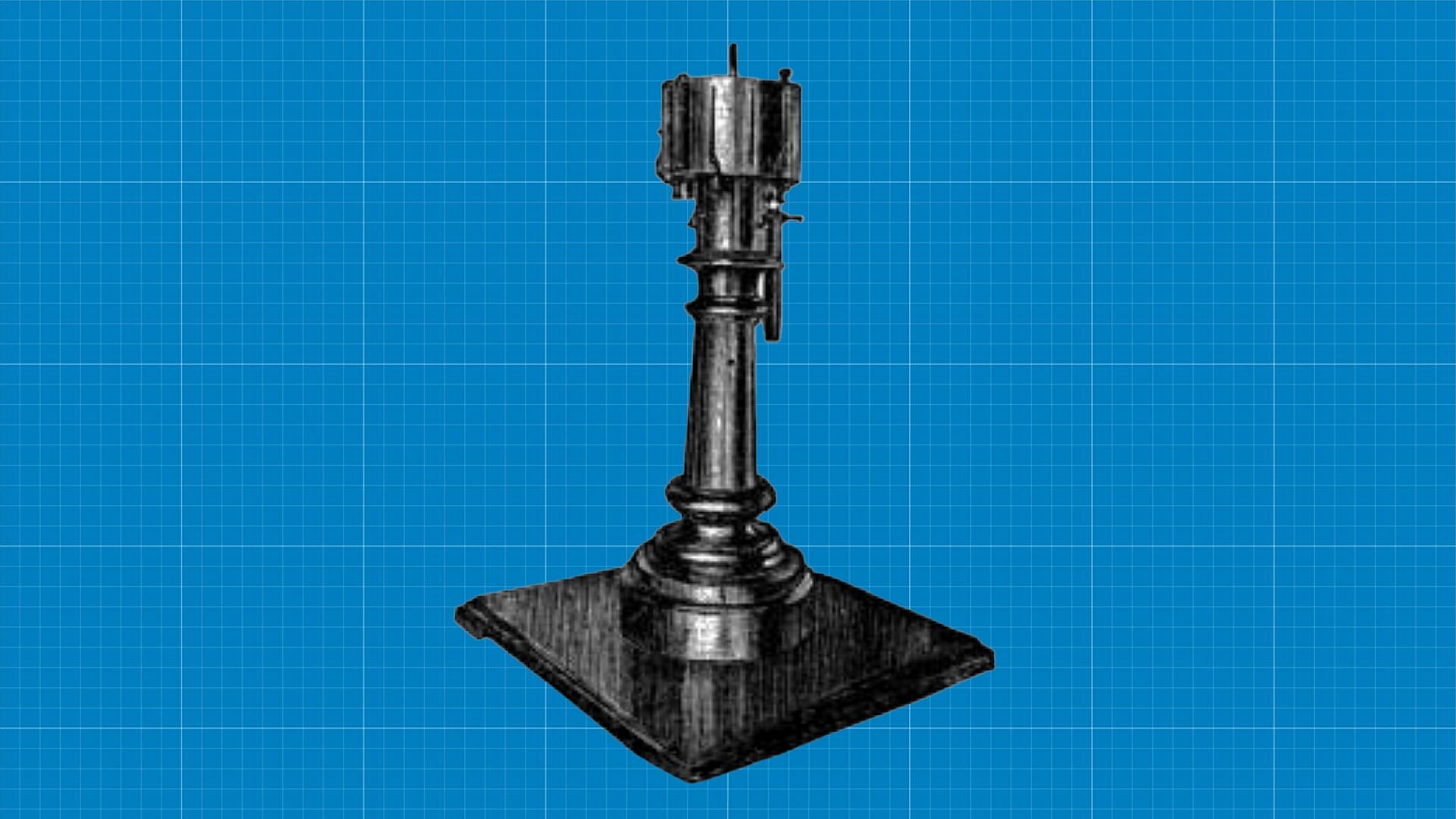
Tesla's earthquake generator at the 1893 Columbia World's Fair. Photo: Wikimedia
All sorts of disturbances occurred, causing the heavy machinery to tip over. This forced Tesla to grab a hammer and smash the machine to pieces.
Did that really happen? There isn't much evidence beyond Tesla's word, according to Interesting Engineering.
Dynasphere Unicycle
The Dynasphere unicycle, invented by British electrical engineer John Archibald Purves, was patented in 1930. The vehicle was inspired by a sketch by the renowned painter Leonardo da Vinci.
The Dynasphere can reach speeds of 48 km/h with two people inside. Another interesting feature is the unique perspective offered by sitting inside the Dynasphere. As it moves, the grid patterns in front of the driver seem to disappear as they whiz past at incredible speed.
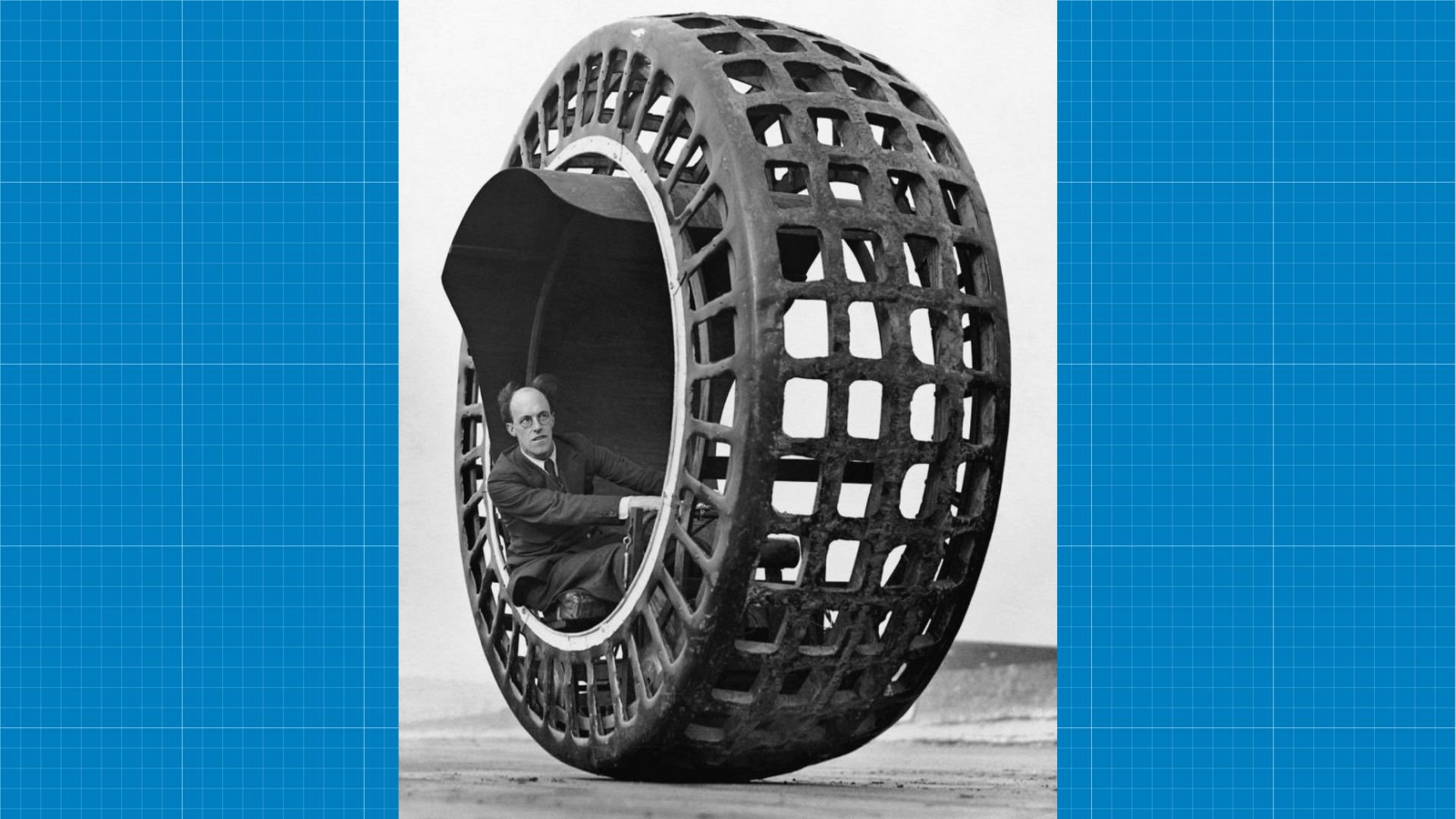
Dynasphere on the beach, piloted by the son of engineer John Archibald Purves in 1932. Photo: Wikimedia.
After building two dynasphere prototypes, Purves attempted to develop a bus version capable of carrying more people. However, this idea proved impossible due to the difficulty in driving and braking.
Ornithopter (bird-winged aircraft)
An ornithopter is a peculiar machine designed to hover in the air by literally flapping its wings, allowing humans to fly like birds or insects.
Ornithopters have been created in many different ways, and experts are still working to produce new versions.
Some versions are larger, piloted, and equipped with engines, while smaller versions are piloted by a single person who is responsible for flapping the wings.
The history of designing winged aircraft dates back at least 1,000 years. The Andalusian inventor Abbas Ibn Ferns is believed to have experimented with motorized aircraft in the 9th century.
Many different designs have been tested over the centuries up to the present day, when manned and unmanned gull-wing aircraft are produced for a variety of industrial and environmental purposes.
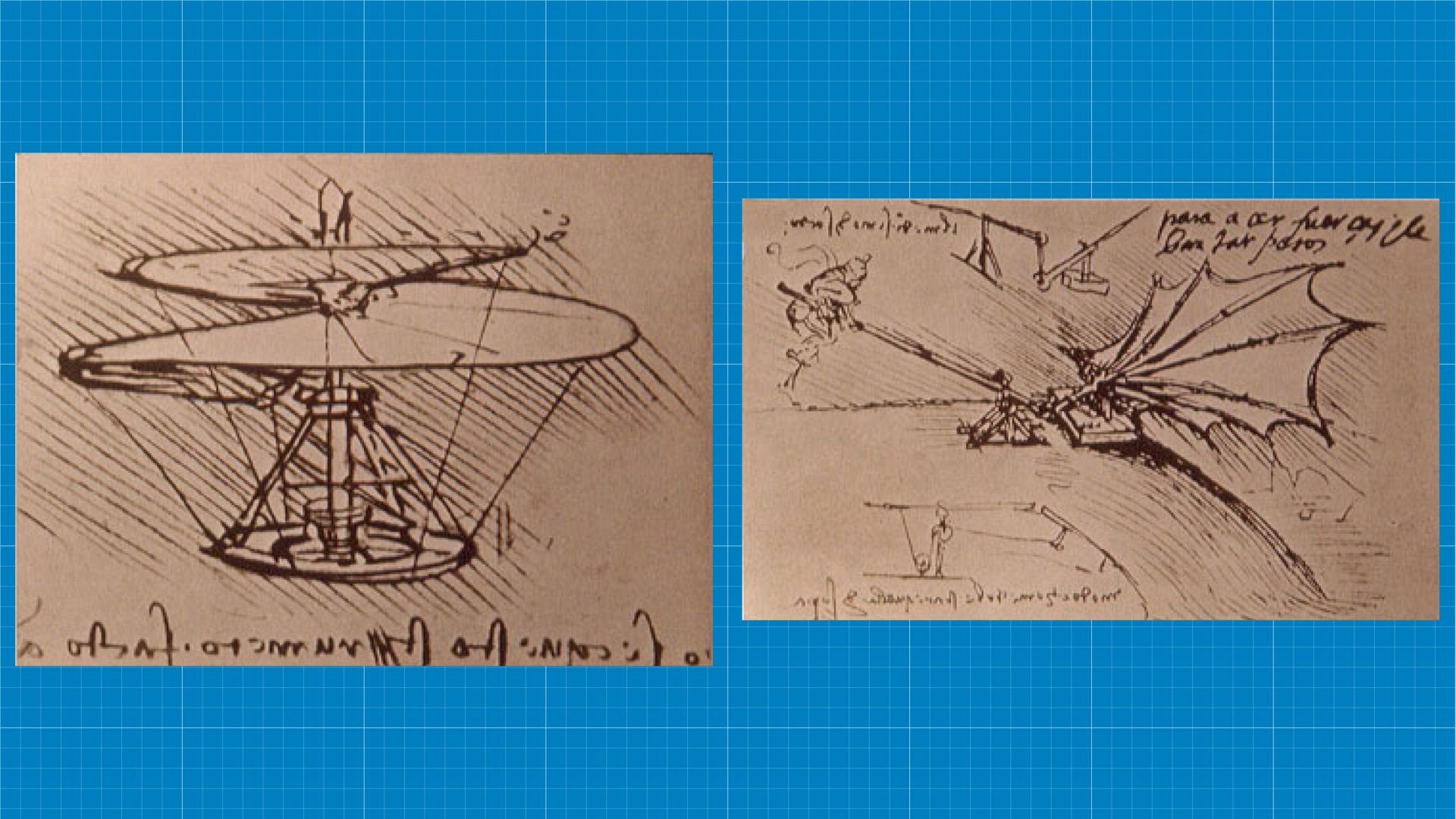
A design for a gull-winged aircraft by the renowned painter Leonardo da Vinci. Photo: Wikimedia
Source: https://giadinh.suckhoedoisong.vn/nhung-phat-minh-ky-la-nhat-lich-su-172250202073341411.htm

![[Photo] General Secretary and President To Lam presides over a working session with the Central Policy and Strategy Committee on the development of the materials industry.](https://vphoto.vietnam.vn/thumb/1200x675/vietnam/resource/IMAGE/2026/05/21/1779359935432_a3-bnd-3129-1412-jpg.webp)
![[Photo] National Assembly Chairman Tran Thanh Man working with the Standing Committee of the Law and Justice Committee](https://vphoto.vietnam.vn/thumb/1200x675/vietnam/resource/IMAGE/2026/05/21/1779378929214_ndo_br_1-4610-jpg.webp)































































Comment (0)