

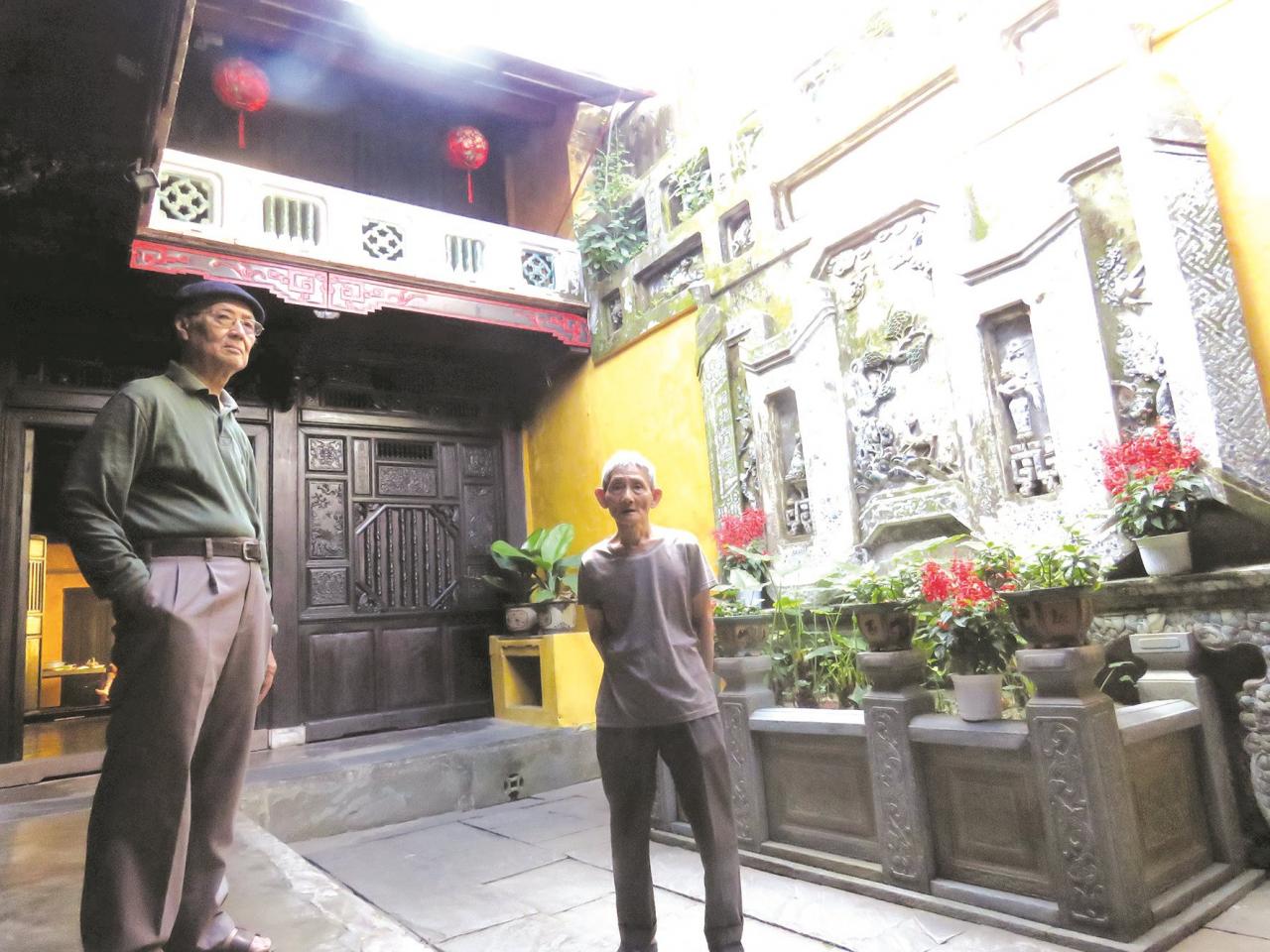
“I used to live at my aunt’s house on Nguyen Thai Hoc Street in 1952. It had a very cool skylight. People called it a ‘heavenly well,’ it let in sunlight and wind, and it was very cool living in that house.” “Did a big storm create a whirlpool?” “The house was completely surrounded by buildings, so it was fine.”
Still maintaining the taciturn manner of someone who already knows enough, Mr. Tang Xuyen (Minh Huong Street Management Board, Hoi An) mumbled that he had heard of some houses installing skylight covers, which he considered a violation of architectural function.
I remember Mr. Phong, the Chairman of the Minh An Ward People's Committee, briefly mentioning over the phone that there have been cases of violations of regulations regarding the preservation of old houses, specifically concerning skylights. People cover them completely with tarpaulins or plastic sheeting. If residents or the historical site management report it, the ward will issue a warning the first time and then issue a fine on the second occasion. To be honest, the ward has very few people monitoring urban management and land administration…
Mr. Tang Xuyen shook his head: "They do it inside the house, discreetly, how would we know?" Hearing him say that, I remembered the words of Mr. Nguyen Su, former Secretary of Hoi An, that managing the old town must be about managing from within, not standing openly on the streets!
…The Quan Thang ancient house (77 Tran Phu). The skylight, about 20 square meters, retains its serene beauty through the years. This is a historical site for tourists. The owner is Mr. Diep Bao Hung. Beneath the skylight, a relief sculpture of flowers, birds, and animals, made of ceramic, has some pieces falling off.
Flowers and ceramic pedestals accentuate the green color of the bonsai. At 9 a.m., the gentle sunlight hadn't yet touched the ancient wall. It reflected a truly pure light on the roof, like pale wine trying to evaporate.
The spring air was cool and crisp. I stood watching the two old men discussing the spring rituals, then preparing for some kind of worship ceremony in the courtyard. The scene was no different from a scene in a historical drama, with solemn events unfolding, so real that it didn't feel like acting at all.
“The pottery and furniture are still there, over 300 years old,” Mr. Hung said softly. I asked him, “Where is the drain?” “The coin is right in the corner…” Ah, there are two bricks shaped like the Tien Bao coin at the two corners of the well.
The heavy rain continued to pour in, so the homeowner had another meter of corrugated iron roofing added to support the wooden frame inside the house. Overall, however, it still looked stunning, both functionally and aesthetically, adhering to an architectural principle that people of the past didn't simply adopt.
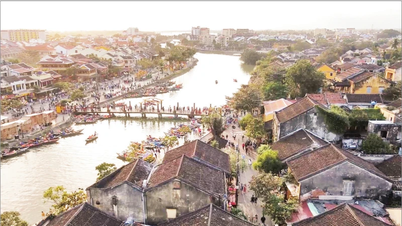
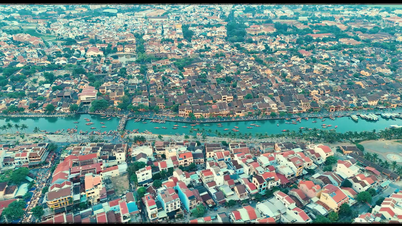
The skylights are still there, right in the old town area. They haven't been demolished, especially in the ticket booths for tourists, the unique houses, and the homes of families who have "preserved their traditions for centuries."
But when the number of rental properties reached 40%, and resale properties reached 30% of the total number of historical buildings, a whirlwind of distortion of the soul, lifestyle, and even the functionality of these old houses swept in.
The buyer might not necessarily damage or alter the property, because having paid for the antique house, they understand its historical value. The biggest fear is renting it out for business purposes with the aim of maximizing profits at any cost.
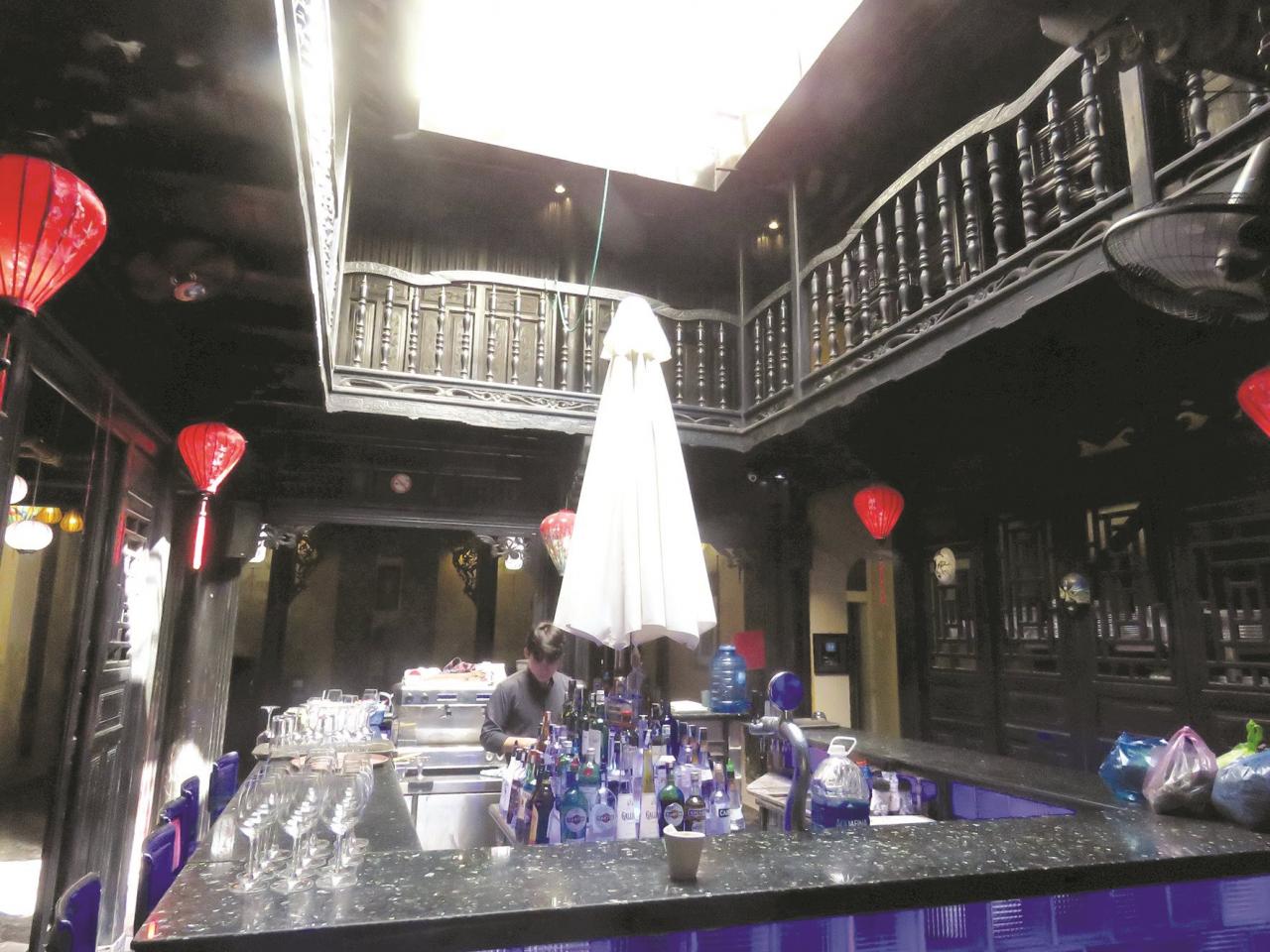
I went to the Xoài Xanh restaurant at 54 Nguyen Thai Hoc Street. It was quiet that morning. The waitress said the owner was from the North. This is a restaurant that also sells alcohol. The skylight area is practically gone, as it's now a bar. The upper level of the skylight has been covered with a metal frame and movable plastic sheets.
The nostrils were blocked, only slightly open to let in a faint glimmer of light. The owner was gone, no longer a resident of the town, so how could any breath possibly survive?
We turned back. I could see a fleeting, wistful regret in the old man's eyes. "It used to be the Tuong Lan shop, specializing in betel nuts, fish sauce, and paper offerings. The owner was one of the three wealthy Chinese merchants in Hoi An," the old man's words were enough for me to hear.
Behind the doorway, the glass bottles of the bar clinked as the young man working there cleaned them. One fell. One shattered. One was filled with sorrow.
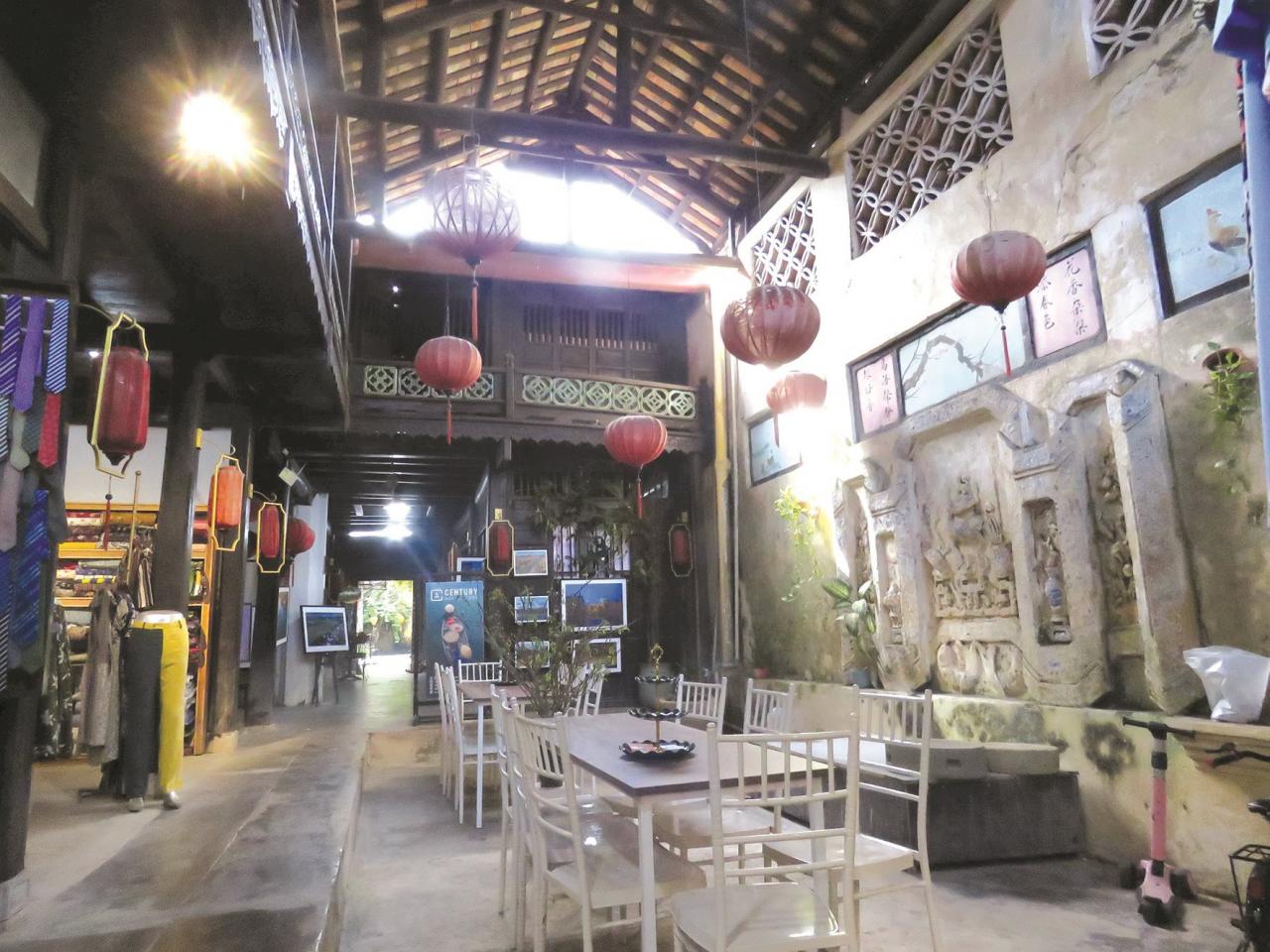
And here it is, house number 41 Nguyen Thai Hoc. It's the "Silent Cafe". The top part of the well is covered with yin-yang tiles, the wooden frame is old. One side is framed, the rest is a triangular area of about 1 square meter used for letting in light. In the middle of the well courtyard are two coffee tables. The screen is worn and faded. Two drainage pipes are covered with vines, some intact, some broken. The owner is a local resident.
The mission of harmonizing heaven and earth, both open and secret, living indoors but communicating with heaven and earth through the well as a connecting link, an intermediary lightning rod, has once been set aside.
That's the harsh reality of life. Considering basic needs, modern people don't know what's enough, because... how much is ever enough? Money replaces the elements of nature—air, wind, earth, yin, and yang. But having said that, living in those houses, trying to maintain the original state of the area, is also difficult.
Time has swept away all the reliefs and intricate details. Just look at the screens, the vents, the arrangement of this area; it's clear that it wasn't just for air, wind, and light, but also a miniature landscape where people could immerse themselves in dreams and dialogue.
"It was very difficult, back then it was so hot, I had to put up a corrugated iron roof to cover it, because it was too hot, heavy rain would splash everywhere, and the wind would blow through, but the government wouldn't allow it." The homeowner said, as if to explain... reluctantly, he had to hang a tarpaulin suspended halfway up the well.
“We need to use a tarp, so that if there’s heavy rain and strong winds, we can secure it properly. If we use a pull-down tarp, the wind will tear it all apart.” I remember the places I just visited; if the skylight isn’t covered, the wooden walls and the base of the pillars near the skylight are dull and damp. They’ll rot quickly, and it’ll cost money to repair. “My house was the first to be renovated. Back then, the courtyard and skylight were also low, but we paved it with cement, so now it’s shallow like this…”
Skylights are not a unique feature of Hoi An, as this architectural solution existed in ancient Rome, in structures like the Pantheon. Japan, India, Egypt, and many other countries also have them.
But in Hoi An, in the traditional Chinese architecture, the skylight is a way of "four waters converging into one." Here, the water refers to rainwater, symbolizing wealth and prosperity flowing into the home. That's not all; it helps balance yin and yang, absorbing the essence of the sun, moon, rain, and dew. Someone likened it to the heart of the house, as it sits in the central position.
Hoi An's true specialty isn't its ancient houses or pastries, but the people of Hoi An with their refined, harmonious, and discreet way of behaving, always preserving but never closing themselves off.
Miniature gardens, green bonsai trees—even just a few pots basking in the rain and sun—that's green thinking, isn't it? Green means connecting with nature, living fully, thinking fully, and doing fully. "Full" in the sense of cultivating cultural character and ideals of living in harmony with nature and in accordance with people's will.
A day at work is full of challenges. In the fading afternoons, on moonlit nights, and on misty mornings, those few square meters feel like windows opening up to the sky and earth.
It's not just a place to create a harmonious atmosphere, bringing people closer together; it's also a space for conversing with nature, engaging in monologues—a true Zen garden where people can balance their minds and control themselves. There, they position themselves like a speck of dust, meaning they live like a speck amidst the whirlwind of sun and wind, returning to the earth.
I sat in the courtyard by the well of Ms. Thai Hanh Huong's house, looking at the centuries-old roof tile standing alone in a corner, and remembered the Tang Dynasty poem: "The yellow crane, once gone, never returns..."
Source

























































![[Photo] Hue: Admire the 2.4 trillion VND sea bridge, the longest in Central Vietnam.](https://vphoto.vietnam.vn/thumb/402x226/vietnam/resource/IMAGE/2026/05/24/1779614018347_anh-man-hinh-2026-05-24-luc-16-13-29.png)






























Comment (0)