


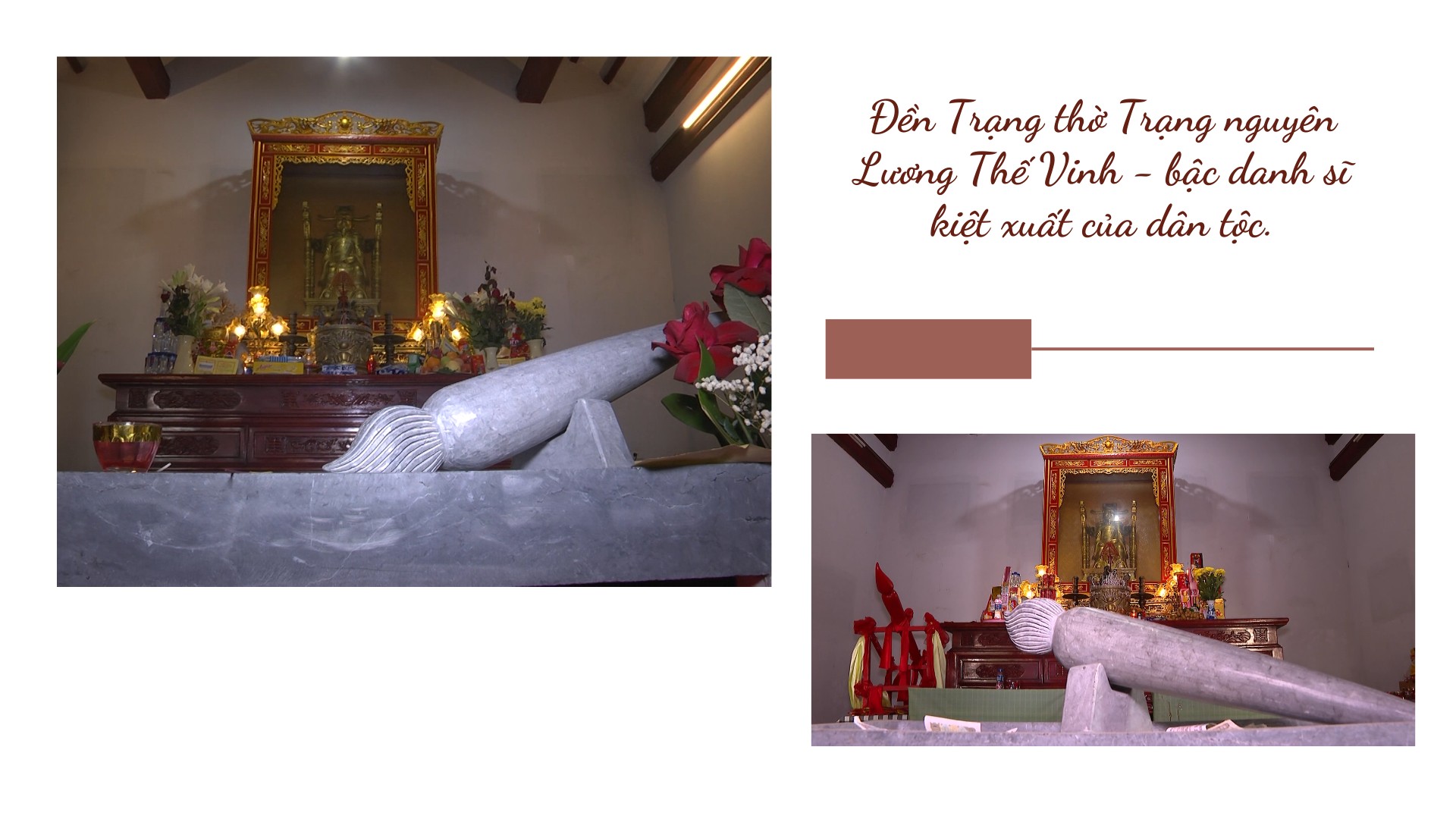
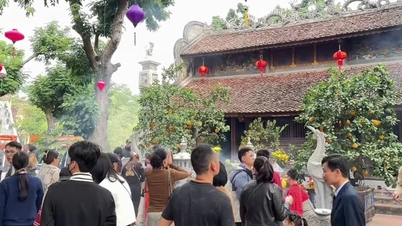
That is the Trạng Temple - a sacred temple dedicated to the First-Rank Scholar Lương Thế Vinh - an outstanding scholar of the nation, and also a spiritual anchor for those aspiring to achieve academic success.
Located in Tan Thanh village, Yen Thai commune, Van Yen district (formerly), now Mau A commune, on a high hill overlooking the Red River, Trang Temple is a place of worship for the First-Rank Scholar Luong The Vinh (also known as Trang Luong) - a renowned scholar under the reign of King Le Thanh Tong, who was bestowed the title of "Blessed Deity" by the Le dynasty, and who contributed to the establishment of the national map by the Le dynasty.
According to historical records, among the 46 top scholars (Trạng Nguyên) in the history of Vietnamese Confucian examinations from 1075 to 1919, Lương Thế Vinh was one of the most outstanding and renowned. He passed the First Class Doctoral Examination (Trạng Nguyên) in the Quy Mùi year, the fourth year of the Quang Thuận reign, at the young age of 23. He held many important positions in the Hanlin Academy and was a talented and knowledgeable man in many fields such as music, education, mathematics, and literature. He had a special talent for diplomacy , earning the king's trust and being entrusted with the important task of drafting diplomatic documents and directly receiving envoys from other countries. In particular, he had a strong belief in education and training, attracting talented individuals to the country, and possessed a noble character and a deep love for his country and people.
With his outstanding mathematical talent, Luong The Vinh was popularly known as "Trang Luong" (the Scholar of Mathematics). He was the author of "Dai Thanh Toan Phap" (Great Compendium of Mathematical Methods), a book that was included in the examination and teaching curriculum for 450 years in the history of Vietnamese education . Besides the Cao Huong communal house in his hometown of Vu Ban district, Nam Dinh province (formerly), people in many places have also erected temples in his honor, including the Trang Temple in Yen Thai commune, Van Yen district (formerly).
According to the book Hung Hoa Ky Luoc, "Quang Minh Linh Tu," also known as Trang Temple, was built in July 1806 during the reign of King Gia Long, on a royal land – a long and beautiful strip of land in Van Yen. The ancient temple was grand, complete with statues, ancestral tablets, and royal decrees to commemorate the person who contributed to surveying and naming the district. The book "Hung Hoa Ky Luoc" – from the Research Library of the Institute of History – records that in the 10th year of Quang Thuan (1469) during the reign of King Le Thanh Tong, when establishing the national map, Tran Yen district was added to Qui Hoa prefecture; at that time, the land of Yen Thai belonged to Tran Yen district.
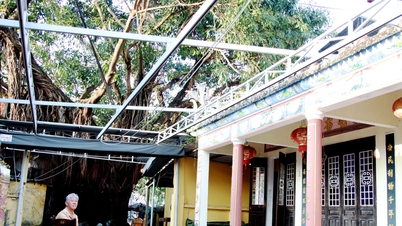
The Trạng Temple is not only a place of worship dedicated to the scholar Lương Thế Vinh, but it is also closely associated with important historical events in the early period of the protracted resistance war against the French. It served as a safe zone for the district and a special military medical station during the Sông Thao Campaign (May 19, 1949). Over time, the original temple was destroyed by nature, war, and bombs. The people have rebuilt a smaller temple using bamboo and wood for worship.
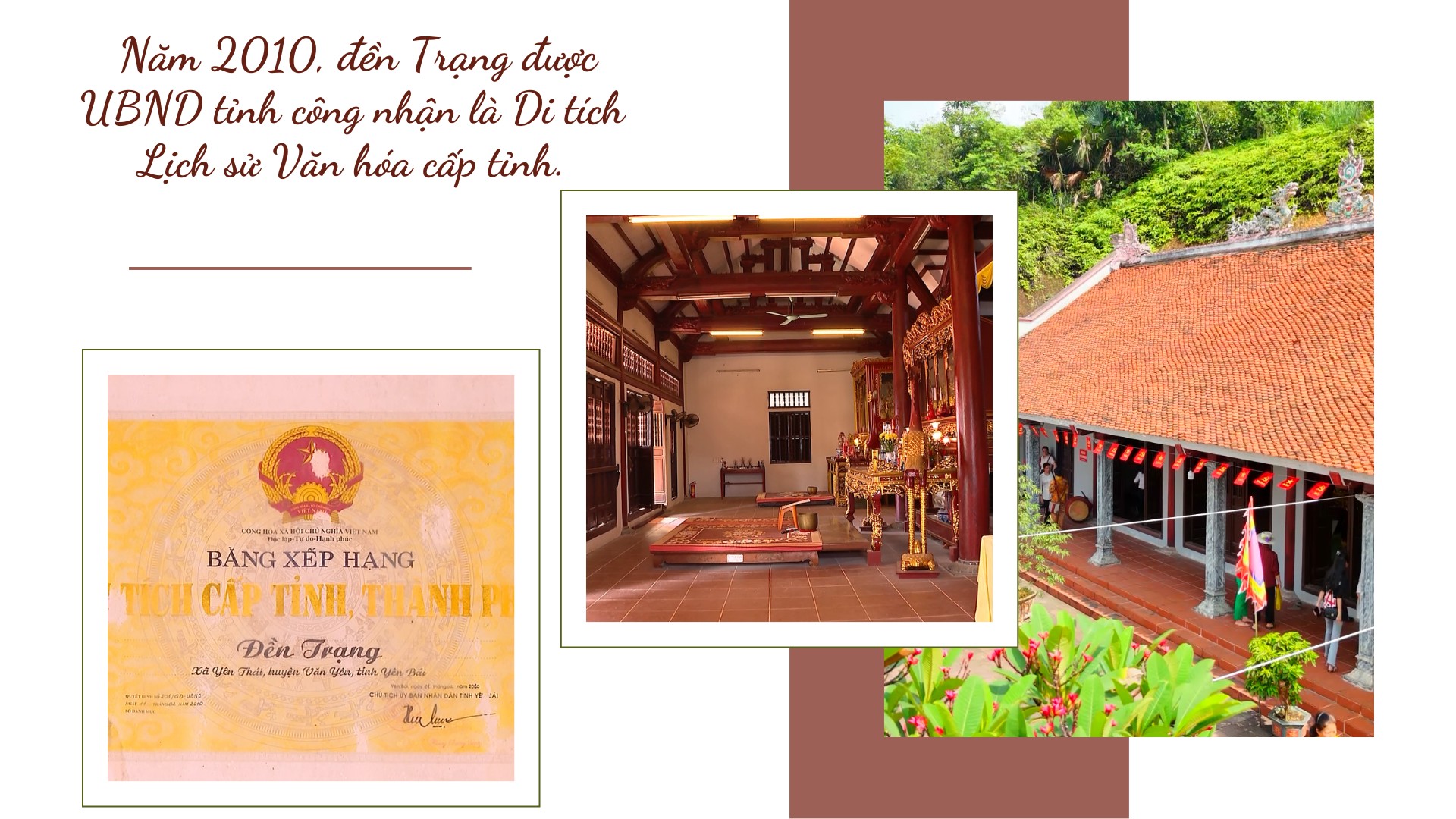
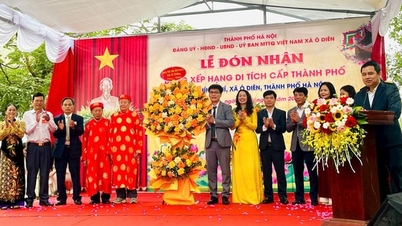
With its immense historical value, in 2010, the Trang Temple was recognized as a provincial-level historical and cultural relic by the People's Committee of Yen Bai province (before the merger). In 2018, the Trang Temple was rebuilt on its original site, with a T-shaped architecture consisting of five main halls and a rear sanctuary. In front of the temple is a wide open space overlooking the Red River, the confluence of the Trang stream, the Thia stream, and the Red River. Its back rests against a hill, creating a majestic, auspicious location where mountains meet and water gathers. On either side are hills shaped like dragons and tigers, reflecting the concept of "left Green Dragon - right White Tiger" in the temple's geomancy – a place of eternal auspiciousness chosen by the ancients to entrust their hopes for prosperity, abundance, lasting happiness, and a thriving village. The roof features two dragons flanking the moon, nestled in an open space with many curves and graceful lines, adding to the beauty of the relic.
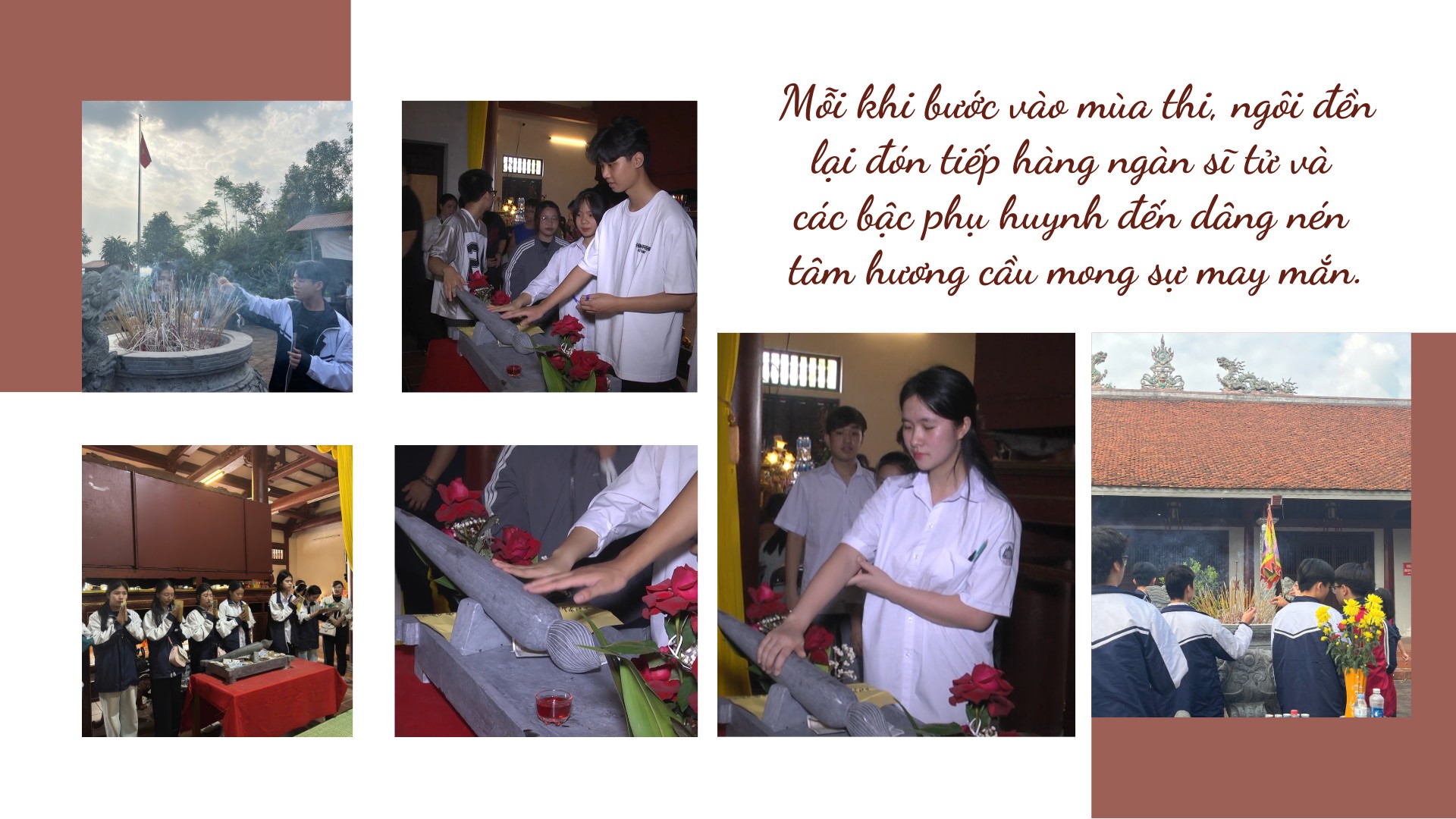
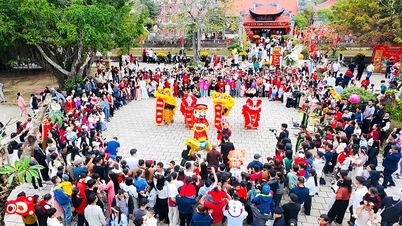
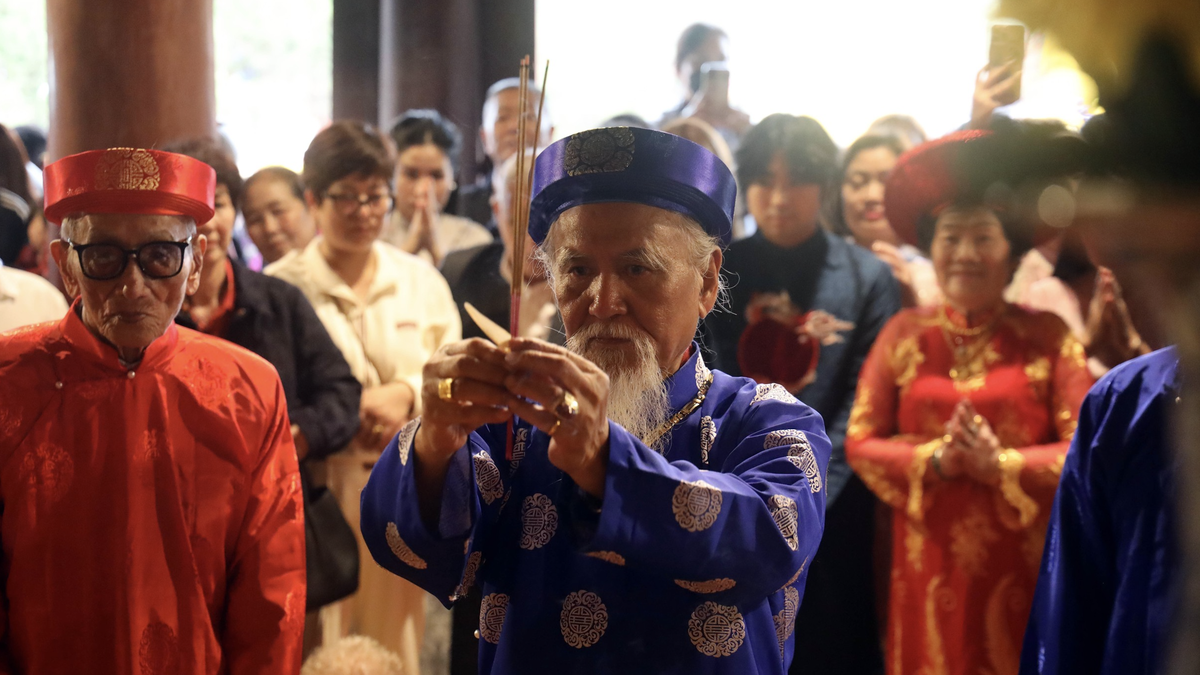
The presence of the Trạng Temple in Mậu A commune is both a spiritual architectural work and a symbol of spreading scholarship. Stepping into the temple grounds, one easily feels the tranquility and solemnity amidst the cool green trees. For the local people and those in neighboring areas, the Trạng Temple has long been a symbol of academic success. Every exam season, the temple welcomes thousands of students and their parents. They come here not only to offer incense and pray for good luck, but also to seek peace of mind and gain strength from the shining example of their ancestors. The image of young people sincerely clasping their hands before the altar of the Trạng Nguyên (the top scholar), their eyes sparkling with faith and hope, has become a distinctive cultural feature of this land.
Beyond its symbolic meaning of seeking good fortune, the Trạng Temple also serves as a vivid and engaging source of traditional education. Schools frequently organize field trips and excursions here to help students learn more about national history, the life and career of Trạng Nguyên Lương Thế Vinh, thereby fostering national pride and a desire to conquer the heights of knowledge in the younger generation.
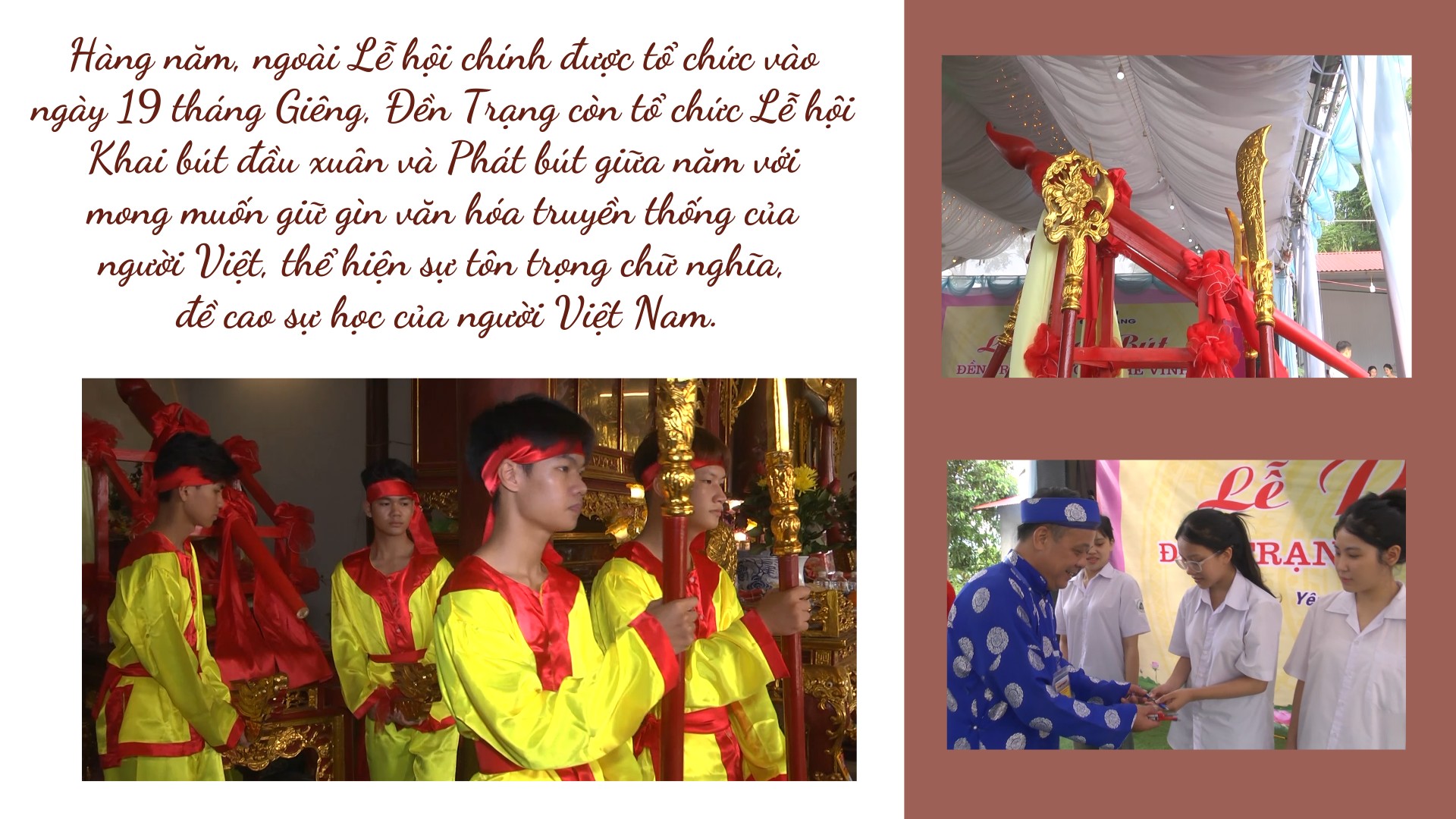
Responding to the hopes and aspirations of the people and students before the exam season, in June 2024, Yen Thai commune, Van Yen district (formerly) organized the first ever Calligraphy Festival at the temple. The festival not only showcased the tradition of respecting teachers and valuing learning, but also expressed the heartfelt reverence of the local people for the First-Rank Scholar Luong The Vinh and other revered ancestors.
The aspiration to pass the imperial examinations is not just the story of each individual student, but a shared aspiration of the entire nation, always yearning to rise through intellect. The Temple of the Scholar will forever be a place of "passing on the torch," a meeting point for academic dreams and ambitions for a glorious career. Even as time passes and examinations change in form and method, the faith and spiritual values that the Temple of the Scholar offer remain intact.
Source: https://baolaocai.vn/noi-truyen-lua-cho-khat-vong-dang-khoa-post891068.html

![[Photo] Prime Minister Pham Minh Chinh receives the Director General of TASS News Agency (Russian Federation)](https://vphoto.vietnam.vn/thumb/1200x675/vietnam/resource/IMAGE/2026/02/25/1772024599891_dsc-8041-jpg.webp)
![[Photo] Prime Minister Pham Minh Chinh presides over the meeting of the Steering Committee for the Development of Science, Technology, Innovation, Digital Transformation and Project 06.](https://vphoto.vietnam.vn/thumb/1200x675/vietnam/resource/IMAGE/2026/02/25/1772024613089_1772024091685-jpg.webp)
















































Comment (0)