
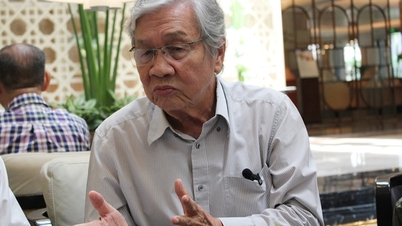
Mr. Nguyen Van Dung - owner of the Truong Thanh civet coffee brand.
Mr. Nguyen Van Dung's family farm in Phu Hiep 1 village, Gia Hiep commune, is the owner of a reputable civet coffee brand: Truong Thanh 3-star OCOP coffee. Mr. Dung is also a large-scale civet breeder for coffee production in the Di Linh coffee region, with a farm housing nearly 50 civets. Mr. Dung said that civets are intermediate animals that contribute to creating green coffee beans with a special flavor. He built his civet farm to produce civet coffee in 2019, and after six years of hard work, his achievement is having coffee beans and ground coffee that meet OCOP standards, beginning to establish his position in the "civet coffee industry".
Mr. Nguyen Van Dung said: “To ensure clean, high-quality, and chemical-free raw materials, my family has cultivated 5 acres of robusta coffee using organic methods. If the civets eat anything unsafe or unclean, they will get stomach aches, vomit, and even die. Therefore, safe coffee cultivation is essential to ensure the coffee beans meet the standards for the civets to eat.” During seasons without coffee, the civets are fed vegetables, fruits, and other food found around the house. The coffee beans, after being excreted by the civets, are harvested and processed according to a strict filtering and drying process. Importantly, the beans are not dried in direct sunlight but entirely in the shade to ensure the best flavor.
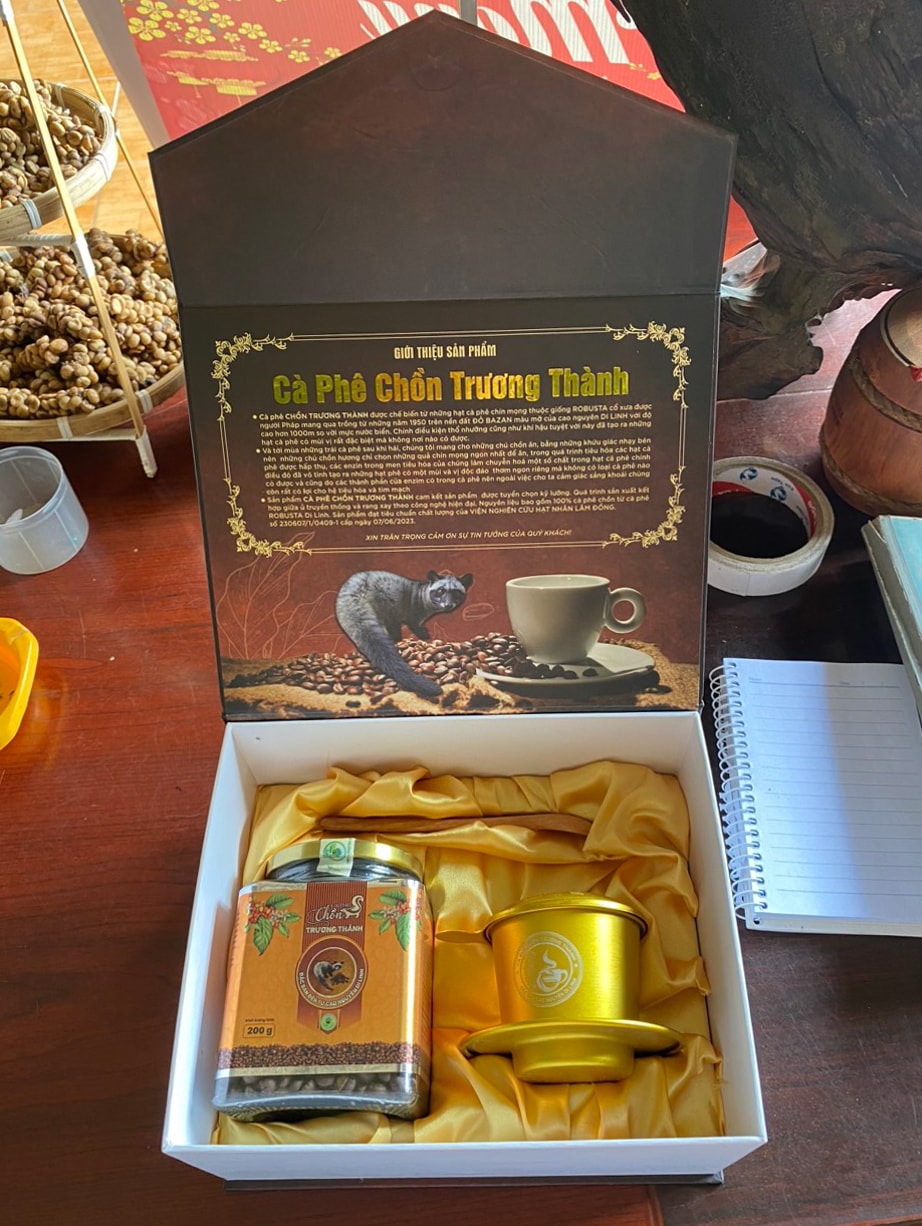
Truong Thanh Civet Coffee
“Not only Mr. Nguyen Van Dung's family, but also the communes of Gia Hiep, Bao Thuan, and Di Linh have farming households raising civets to produce specialty coffee,” said Ms. Nguyen Thi Kim Yen, former technical officer of the former Di Linh District Agricultural Center, regarding the situation of civet farming for coffee production in the area. According to data from the forestry unit, the communes in the Di Linh coffee growing region have 6 civet farms for coffee production. It is known that to support farmers, the agricultural sector guides them to register their farming activities and purchase civets from legal establishments because civets are protected wild animals.
Ms. Kim Yen stated that civets have been used in many coffee-growing regions around the world to eat ripe coffee cherries, then excrete the coffee beans. Through the digestive process, with the action of digestive enzymes, the protein and acid structure of the coffee beans is altered, making the coffee's flavor more unique. She explained that the civet only eats ripe, high-sugar coffee beans. Importantly, civets are very sensitive to pesticides in general; even a slight contact with pesticides can cause them to stop eating or even die. Therefore, coffee-growing regions used for civet coffee must ensure organic, safe farming practices and a high ripeness rate. This is also a condition for the coffee beans to achieve optimal quality and flavor, and serves as an indicator of a safely cultivated coffee region. "Beyond being a specialty civet coffee product, raising civets also helps farmers become more aware of ensuring safe and high-quality farming practices," Ms. Kim Yen assessed.
To support farmers in raising civets and producing civet coffee, local authorities have guided them through the process of obtaining permits for raising wild animals, assisted them in developing OCOP (One Commune One Product) products, and promoted and introduced civet coffee products. As a result, many civet coffee products have gained customers, expanded their markets, and built their brands.
Source: https://baolamdong.vn/nong-dan-lam-ong-lam-ca-phe-dac-san-391433.html


![[Photo] Secretary of the National Assembly Party Committee, Chairman of the National Assembly presides over the meeting of the Standing Committee and Executive Committee of the National Assembly Party Committee.](https://vphoto.vietnam.vn/thumb/1200x675/vietnam/resource/IMAGE/2026/06/03/1780480353201_ndo_br_bnd-2585-jpg.webp)
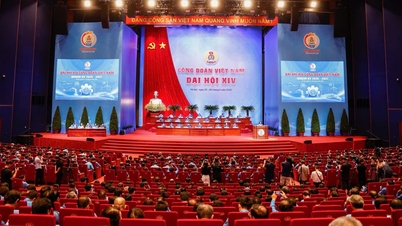
![[Photo] First session of the 14th Congress of the Vietnam Trade Union](https://vphoto.vietnam.vn/thumb/1200x675/vietnam/resource/IMAGE/2026/06/03/1780465947883_ndo_br_img-3852-jpg.webp)
![[Photo] General Secretary and President To Lam presides over a meeting with the Central Organizing Committee.](https://vphoto.vietnam.vn/thumb/1200x675/vietnam/resource/IMAGE/2026/06/03/1780482764658_a1-bnd-4741-3342-jpg.webp)






































![[Video] Sunset at Lap An Lagoon – Where the sun sets over the fishing nets](https://vphoto.vietnam.vn/thumb/1200x675/vietnam/resource/IMAGE/2026/05/31/1780192137701_beach-landscape-sea-water-nature-grass-745871-pxhere-com.jpeg)




























Comment (0)