

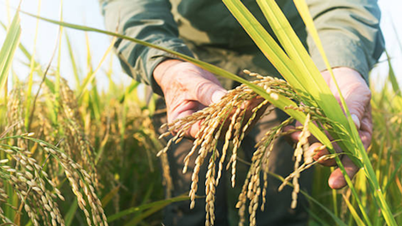
Using plastic sheeting to keep out rats helps retain enough water to protect rice plants from the cold.
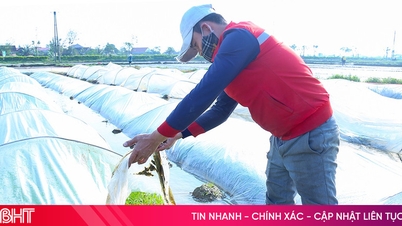
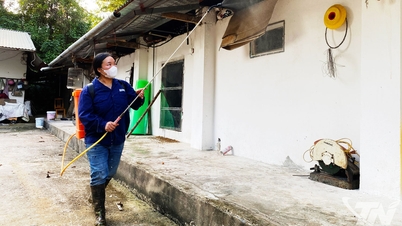
On January 22nd, the weather turned cold and strong winds blew down the plastic sheeting used to protect the rice fields from rats. Ms. Nguyen Thi An from Thanh Chuong went to the field to re-erect the stakes and re-stitch the plastic sheeting.
“The rice was sown two days ago. Before sowing, I added more manure and phosphorus fertilizer to keep the rice warm. In the field, I kept just enough water to keep it warm and help the rice grow. When the rice leaves are about 3-4 centimeters tall and the weather is still cold, I will spray a growth stimulant to increase resistance, protect against the cold, and help the rice plants develop roots,” Ms. An said.
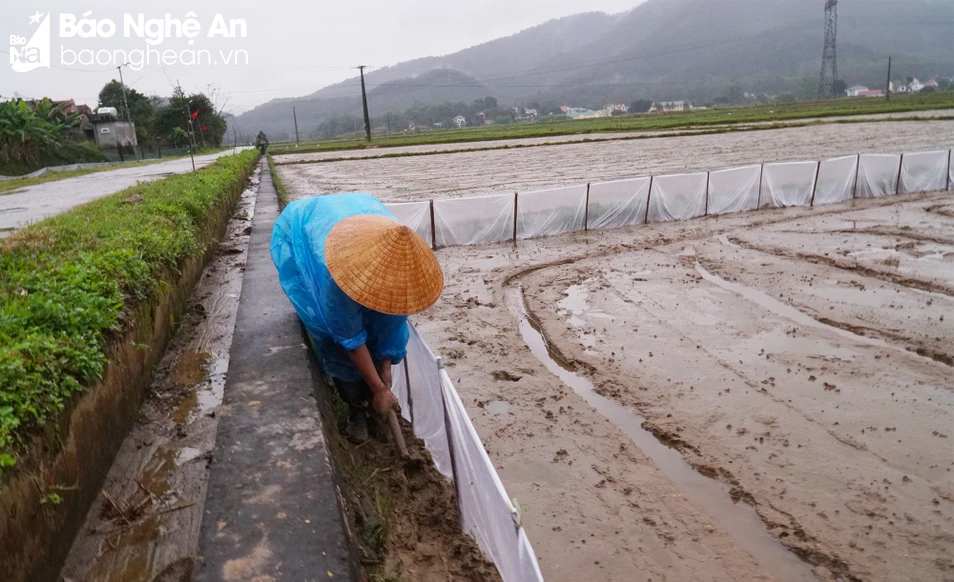
Mr. Le Dinh Thanh, Vice Chairman of the Thanh Chuong District People's Committee, said: Before this cold spell, Thanh Chuong had sown and planted over 2,500 hectares out of 8,500 hectares of spring rice, of which about one-third was direct sowing. We expect to complete sowing and planting before December 26th (lunar calendar). In the fields, almost all the rice seedlings are covered with plastic sheeting, so we are quite reassured. Currently, the district is directing communes to focus on advising and guiding farmers to maintain sufficient water in the fields to keep the seedlings and newly sown rice warm.
Even amidst the cold and rainy weather, many people in various localities are focusing on working in the fields to implement measures to protect their spring rice crop from the cold. Before sowing, Mr. Vuong Dinh Nam in Nam Thung hamlet, Nam Dan town, knew that cold monsoon winds were coming, but he still had to sow because the seeds had been soaked and germinated for 4 days, and the sprouts had already emerged; if he didn't sow them, the seeds would be ruined. The difficulty in protecting his family from the cold is that since the rice is sown directly, the only measures they can take are maintaining sufficient water and adding fertilizer.
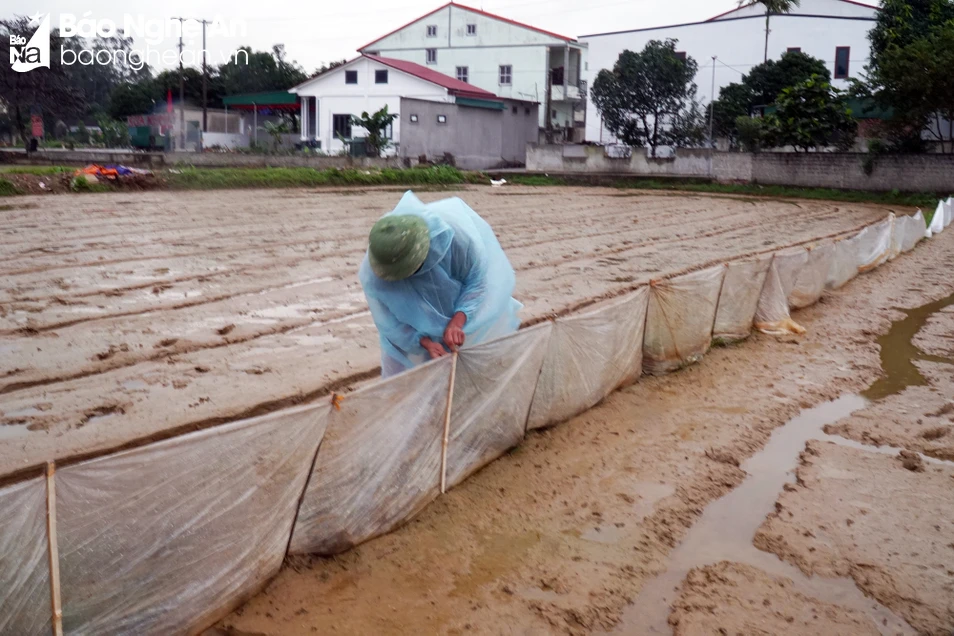
Mr. Nam said: "Every year, spring crop production is affected by cold rain, and in many years we've had to replant because the rice died from the cold. If it stays this cold for about a week, the rice will be ruined, so I've prepared by buying extra seeds as a backup. If there's damage, I'll store more to replant. Along with the cold, we also have to focus on controlling rats. One day after sowing the rice, if we see rats eating the seeds, we have to buy plastic sheeting to cover them and apply rat poison."
Mr. Le Thanh Hai, from Ha Long Hamlet, Nam Dan Town, owns 4 sao (approximately 0.4 hectares) of rice fields. Instead of direct sowing, he transplanted seedlings starting on January 5th. Currently, the seedlings are ready for transplanting, but many patches are sparse due to rat damage, with many rows almost completely destroyed. Five days ago, he had to buy more rice seeds to resow more than half of his seedling area.
"There are too many rats, it's impossible to get rid of them all. Even though we've put plastic sheeting around the fields, covered the rice seedlings with plastic, checked them several times a day, and used rat poison constantly, the rats still come in and destroy everything," Mr. Hai said dejectedly.
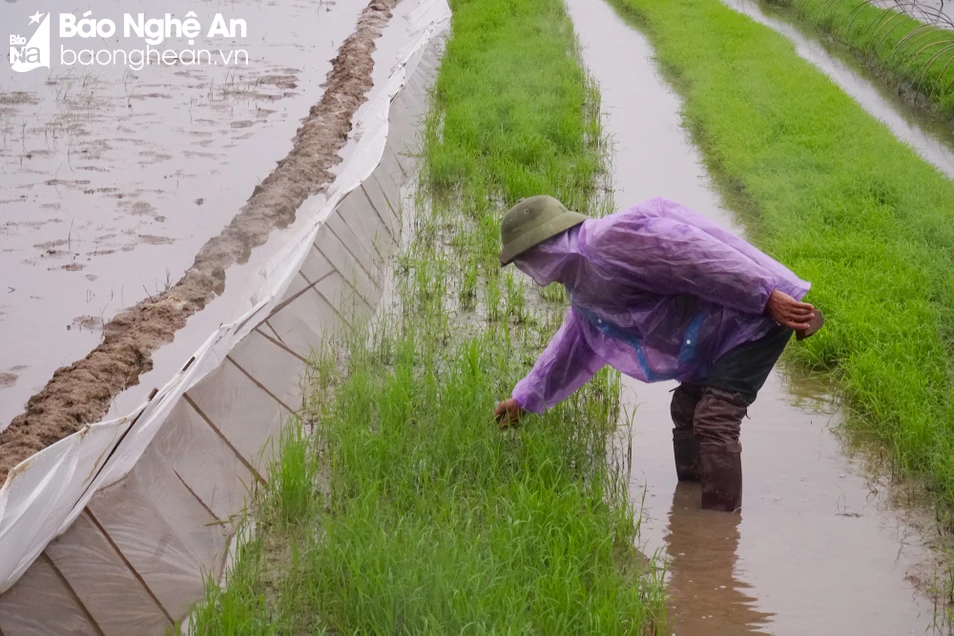
With temperatures dropping, like many other farmers, he is temporarily suspending rice planting and focusing on sheltering and caring for the spring rice seedlings, waiting for warmer weather before transplanting them to avoid affecting the growth and development of the rice plants in the early stages of the season.
This spring, Nam Dan district planted nearly 6,800 hectares of rice. According to Mr. Nguyen Dinh The, head of the district's Department of Agriculture and Rural Development, about 4,500 hectares have been planted so far, including over 3,000 hectares of direct seeding. Before starting production, the district provided pesticides and organized a rat extermination campaign to protect crops. Currently, some areas have been newly sown, and some seedlings are ready for transplanting. The district is currently focusing on advising farmers on measures to protect rice from the cold.
Monitor the weather closely to respond promptly.
As of January 17th, the entire province had sown over 1,677 rice seedlings, with a total planted rice area of over 29,575 hectares. Currently, Nghe An is being affected by a cold front, with the lowest temperatures at night and early morning generally ranging from 9 to 12 ° C. This severe cold coincides with the time when farmers are focusing on planting the spring crop, so without appropriate measures, the crops will be severely affected.
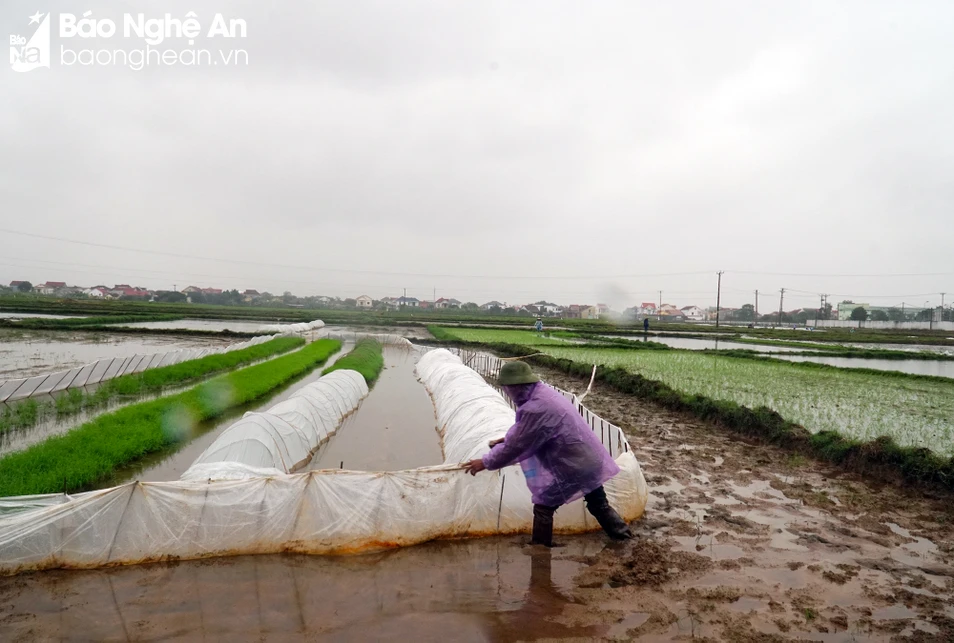
According to Mr. Nguyen Tien Duc, Head of the Provincial Department of Crop Production and Plant Protection: For early-planted spring rice crops where the rice has already taken root, the current cold weather will not have much impact. The concern is for newly sown rice seedlings and late-planted rice crops that are being prepared for transplanting and sowing. The specialized agency advises: Absolutely do not transplant or sow rice on days with severe cold (average daily temperature below 15 ° C). If the seeds have been soaked and germinated, they must be kept dormant until warmer weather arrives before sowing.
Do not apply nitrogen fertilizer during severe cold weather; instead, supplement with wood ash or potassium to increase the seedlings' resistance to cold. This is especially important when the outdoor temperature is above 15 °C. C. Open the plastic sheeting at both ends of the seedbed, but do not open it completely at once to avoid thermal shock to the seedlings. Continue covering with plastic sheeting during cold nights.
For areas where rice has been transplanted or directly sown: Always maintain a minimum water level of 2-3 cm to keep the plants warm. For newly sown rice fields, do not drain water into the field; maintain it in the furrows, ensuring the surface of the ridges remains sufficiently moist.
Local authorities must closely monitor weather developments, regularly inspect and assess the situation of crops dying due to cold weather, especially for areas of direct-seeded rice, in order to guide farmers in preparing short-day reserve seeds, and at the same time, plan to register with seed suppliers to proactively secure seeds to remedy the situation when necessary.
In addition to protecting rice – the main crop of the spring season – from the cold, agricultural agencies also advise farmers to focus on caring for and implementing measures to protect fruit trees and vegetables from the cold. These measures include increasing the use of wood ash and organic fertilizers to enhance cold resistance, and even covering with plastic sheeting. Furthermore, in the early morning, if frost occurs, farmers should use a water sprayer to rinse the leaves to prevent leaf burn. Areas ready for harvest should be harvested early to avoid losses.
Source



![[Photo] High-altitude schools proactively take measures to protect students from the cold.](https://vphoto.vietnam.vn/thumb/402x226/vietnam/resource/IMAGE/2026/01/08/1767883787301_a34-9332-jpg.webp)

































































Comment (0)