

Longing for home
According to research by Associate Professor Dr. Nguyen Duy Thieu, former Deputy Director of the Vietnam Museum of Ethnology, in the early 17th century, a new wave of Vietnamese migration from Thuan Hoa, Quang Nam, and Phu Yen provinces began to explore and settle in the Thuy Chan Lap region (present-day Southern Vietnam). A portion of the population migrated south by sea and settled on Phu Quy Island, coexisting with the indigenous population.
We visited Gành Son (Chí Công commune, Tuy Phong district, Bình Thuận province), considered a stopover point for most sailing boats and fishing vessels traveling across the sea. This area is also where people from Quảng province stop before heading to Khoai Xứ islet (called Thuận Tình island during the Nguyễn dynasty).
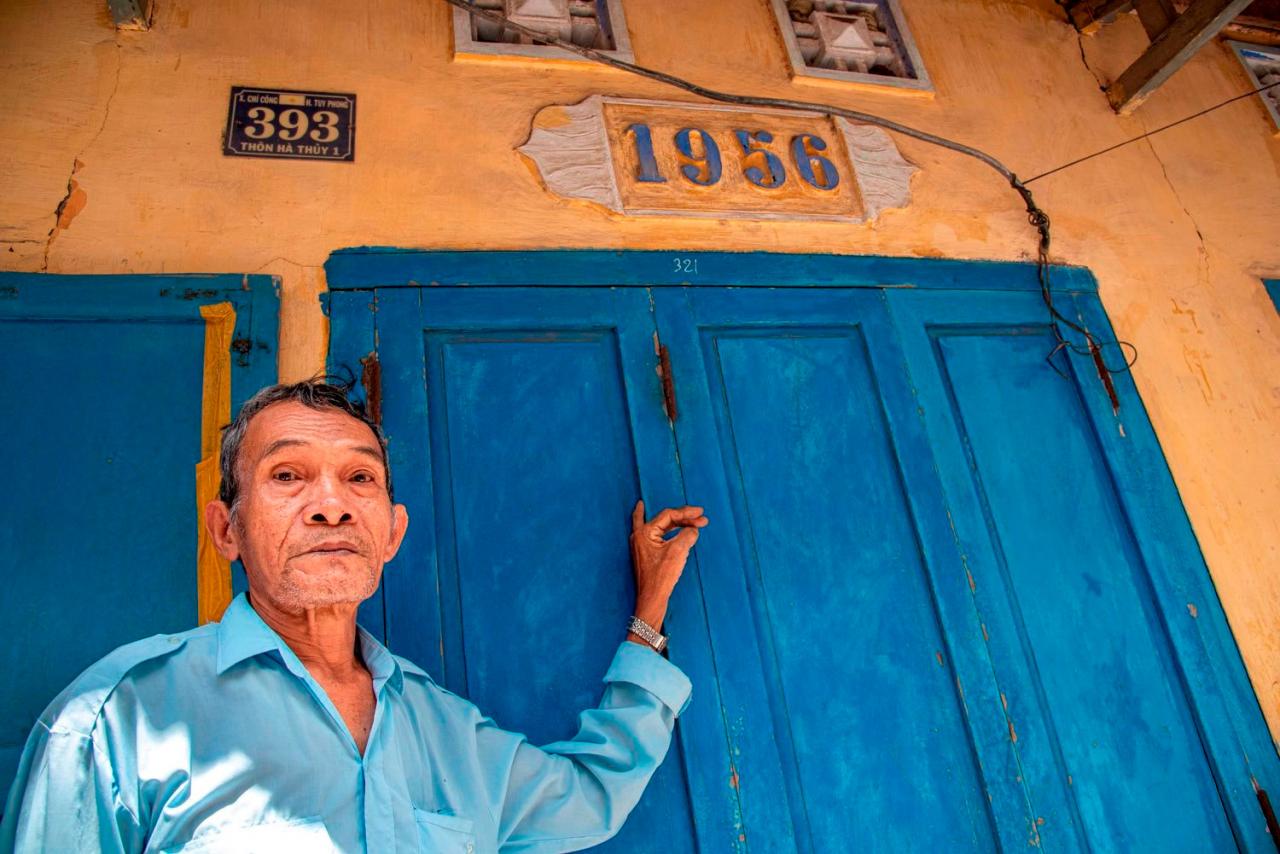
Mr. Mai Hoai Thao (born in 1952), who lives in a house with a sign indicating it was built in 1953 right in Chi Cong commune, reminisces about the memories he heard about Quang Nam province.
When he was a child, Thao often heard his father, Mai Hue, tell stories about his grandparents, whose surname was Mai and who originated from Quang Nam. While fishing with nets, they drifted all the way to Ganh Son (now Chi Cong commune).
There were three Mai brothers; one drifted to Phu Quy Island, and two remained on the mainland. All three brothers stayed and established their lives there, giving rise to the Mai family lineage that continues to this day.
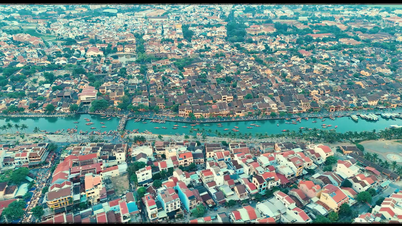
I returned to Phu Quy Island for the third time, in mid-April 2024. The island was in its peak tourist season, with thousands of visitors, creating a bustling atmosphere similar to Hoi An Ancient Town. Mr. Nguyen Van Ba from Tam Thanh commune on the island said that people here still wonder, "Our ancestors, hundreds of years ago, went fishing with nets and drifted to this island. We don't know which village or commune in Quang Nam they originated from."
Mr. Ba pointed me to a place with the same name as Quang Nam province: the Hai Chau mausoleum, built in 1845. On the inscribed stele at the mausoleum, there are lines recounting the hardships faced by people on Phu Quy Island in the past, where women occasionally had to cross the waves to the mainland to glean rice in the villages. Therefore, the custom of carrying a basket on a mountain slope, like the people of the mountainous regions, is still maintained here.
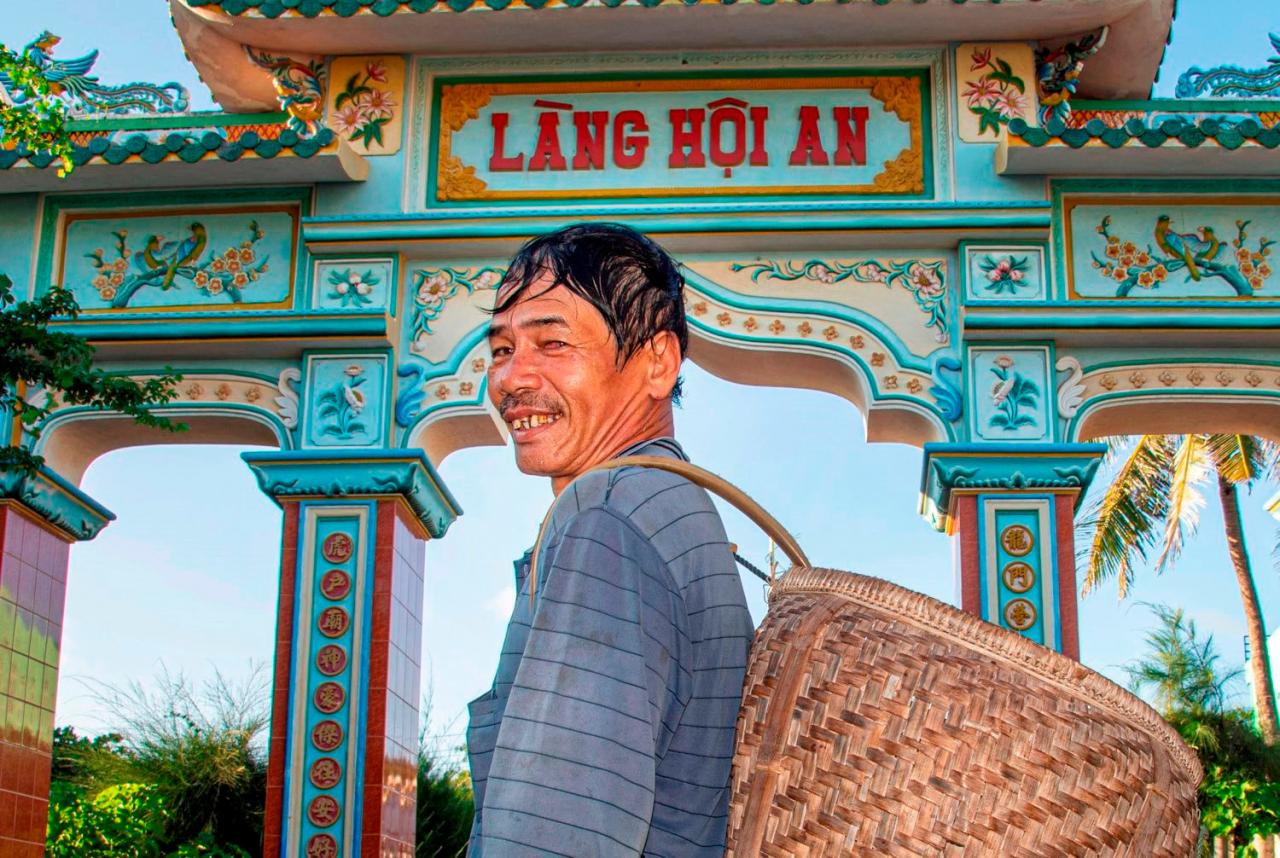
Located in Tam Thanh commune, the Hoi An communal house and temple complex was built around the late 18th century. The Hoi An communal house and temple complex is a place of worship for the local tutelary deity, the god of the South Sea, and the village's ancestors. Every year, three main ceremonies are held at the Hoi An communal house and temple complex: one in spring and one in autumn, following the custom of "praying in spring and receiving blessings in autumn," and the commemoration ceremony on the 1st day of the 6th lunar month.
The origin is through folk songs.
In the past, even though they lived on remote islands, people from the mainland could still enjoy cultural performances. Popular shows included traditional opera and folk singing.
The Tan Lap (now named Dong Tam) traditional opera troupe was founded in 1880 by Mr. Tran Doi, a member of the Xoe dance and Bai Choi singing group, following the tradition of the female merchant Dao Hat and some fishermen from Binh Dinh who took shelter on the island from the wind while fishing with flying fish.
Mr. Tran Thanh Phong, a former official of Long Hai commune, is now the successor in charge of the traditional opera troupe. Mr. Phong remains deeply concerned about his ancestral origins.
He visited every old house, every communal house and temple, meeting with elders to record parts of history that had faded into oblivion after centuries. He brought all the recorded materials back and transformed them into more than 200 traditional opera songs and poems to tell history to the people through performances.
According to the Binh Thuan Provincial Museum, Phu Quy Island is home to a vast collection of ancient documents, including royal decrees, household registration records, couplets, horizontal plaques, land registers, administrative documents, Nôm poems, and traditional operas. There are 154 funeral orations, 93 royal decrees, 380 couplets, and over 2,000 pages of Nôm script documents, including administrative documents, household registration records, land registers, and tax collection receipts. This is also an important source of historical data for tracing the origins of the island's inhabitants.
Dong Duong style
Tam Thanh commune in Phu Quy island district is home to Linh Quang Pagoda, the oldest pagoda in Binh Thuan province, built in 1747. In 1996, Linh Quang Pagoda was recognized as a national scenic spot. In the late 17th century, the pagoda was destroyed by fire, burning down many of its ancient relics.
The stele at Linh Quang Pagoda in Tam Thanh commune reads: "Remembering our ancestors who ventured to expand the territory, riding the waves from the mainland across the vast ocean… amidst the stormy seas, human lives seemed like a thread hanging by a bell…". Besides the statues of Avalokiteśvara Bodhisattva and the Lamp-Lighting Buddha, the pagoda also contains other statues, and archaeological researchers have noticed a striking coincidence.
These statues have oval, round faces, flat noses, eyebrows that almost meet, and fairly loose decorative motifs. Overall, the statues are very similar to those found at the Dai Huu and Dong Duong archaeological sites in Quang Nam.
This Buddha statue bears the characteristics of Mahayana Buddhism from Champa. It is known that the Dong Duong Buddha statue is a statue of Shakyamuni Buddha that was discovered by the French archaeologist Henri Parmentier in April 1911 in Dong Duong, Binh Dinh commune, Thang Binh district.
Source



![[Photo] First session of the 14th Congress of the Vietnam Trade Union](https://vphoto.vietnam.vn/thumb/1200x675/vietnam/resource/IMAGE/2026/06/03/1780465947883_ndo_br_img-3852-jpg.webp)
![[Photo] General Secretary and President To Lam presides over a meeting with the Central Organizing Committee.](https://vphoto.vietnam.vn/thumb/1200x675/vietnam/resource/IMAGE/2026/06/03/1780482764658_a1-bnd-4741-3342-jpg.webp)
![[Photo] Secretary of the National Assembly Party Committee, Chairman of the National Assembly presides over the meeting of the Standing Committee and Executive Committee of the National Assembly Party Committee.](https://vphoto.vietnam.vn/thumb/1200x675/vietnam/resource/IMAGE/2026/06/03/1780480353201_ndo_br_bnd-2585-jpg.webp)




































![[Video] Sunset at Lap An Lagoon – Where the sun sets over the fishing nets](https://vphoto.vietnam.vn/thumb/1200x675/vietnam/resource/IMAGE/2026/05/31/1780192137701_beach-landscape-sea-water-nature-grass-745871-pxhere-com.jpeg)





























Comment (0)