

Professor and Academician Tran Dai Nghia, whose real name was Pham Quang Le, was born on September 13, 1913, in Chanh Hiep village, Tam Binh district; now Hoa Hiep commune, Tam Binh district, Vinh Long province.
In 1946, while living a life of luxury abroad, at the invitation of President Ho Chi Minh and with his heart yearning for his beloved homeland, he abandoned his opulent life in Paris to return to Vietnam with President Ho Chi Minh to participate in revolutionary activities. President Ho Chi Minh gave him the new name Tran Dai Nghia. He was an outstanding representative of the country's scientific community, one of President Ho Chi Minh's most distinguished disciples, living a simple and exemplary life, earning the love and respect of his colleagues and the people.
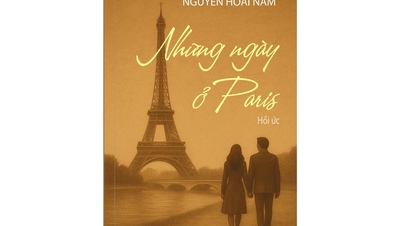
In his childhood, when the poor student Pham Quang Le was just starting elementary school, his father passed away. Because of poverty, his older sister had to drop out of school so that he could continue his education. His mother toiled tirelessly day and night to raise her two children. The family's poverty and the absence of a father from a young age instilled in Pham Quang Le a strong sense of independence and self-discipline in his studies. Every day, he went to school in a small boat, steered by his older sister across the Mang River. The Mang River remained deeply etched in his memory throughout his life, as it was associated with his hardworking mother and capable older sister; the place where he went to school during his impoverished childhood. Even later, when he moved to Paris – the glamorous capital of France, home to the famous Seine River – the Mang River in his poor hometown remained vividly in his memory, especially during his afternoons gazing at the Seine and in his dreams of his birthplace...
After finishing primary school, Pham Quang Le won a full scholarship to attend Fertruts Ky School in Saigon (now Le Hong Phong High School for the Gifted - Ho Chi Minh City). With the intellect of a genius, he went to study in France. There, he graduated with engineering and mathematics degrees from the following universities: Paris Polytechnic University; Mining University; Electrical University; Sorbonne University; Paris University of Civil Engineering; and later stayed in France to work at the Aircraft Research Institute…
During this period, patriotic movements (such as the movement demanding amnesty for Phan Boi Chau, the funeral of Phan Chu Trinh, the Nghe Tinh Soviet movement, etc.) greatly influenced his patriotic sentiments, arousing in him an interest in researching the historical issues of the nation. He particularly studied the uprisings against French colonialism and sought to understand why, despite the unwavering loyalty of his people, every uprising ultimately failed and disintegrated. After researching historical documents, he concluded that a very important reason for the failure of patriotic movements from the early 19th century to the early 20th century was their unwillingness to embrace the first scientific and technological revolution (for the Nguyen Dynasty) and their lack of necessary weapons for self-defense (for the patriotic movements of the intellectuals). And deep within him, he always harbored a great, secret ambition: to study and acquire sufficient knowledge for researching, designing, and manufacturing weapons so that he could later return to serve the cause of liberating his country.
From 1936, while studying in France, student Pham Quang Le heard of and knew the name of Nguyen Ai Quoc. From this point on, Nguyen Ai Quoc's patriotic ideology guided the political direction of the young Pham Quang Le. During his 11 years of studying and working in France, in addition to his role as an explosives expert – possessing a thorough understanding of chemical reactions and related fields such as bridge construction and aviation – he also worked as a chief engineer for an aircraft manufacturing research institute, earning a salary equivalent to about 22 gold ounces per month at that time.
On July 5, 1946, along with tens of thousands of Vietnamese expatriates in France, engineer Pham Quang Le went to Le Beurget airport to welcome President Ho Chi Minh and the high-ranking Vietnamese government delegation to France. With his affection, respect, and trust in President Ho Chi Minh, and possessing extensive knowledge of the Vietnamese intellectual community in France at that time, engineer Pham Quang Le had the opportunity to accompany President Ho Chi Minh in meetings and working sessions with the Vietnamese diaspora. During his two months of work and visits to Vietnamese expatriates (from July to September 1946), engineer Pham Quang Le shared with President Ho Chi Minh his understanding and assessments of the situation during World War II, especially regarding his work, studies, and scientific research, with the desire to serve the Fatherland... On September 8, 1946, President Ho Chi Minh summoned Pham Quang Le, informed him that the Fontainebleau Conference had failed, and then suggested: "I am returning to the country, you come with me..." And when President Ho Chi Minh returned to Vietnam from Paris, engineer Pham Quang Le followed him back to the Fatherland after more than 11 years of living, studying, and working in France.
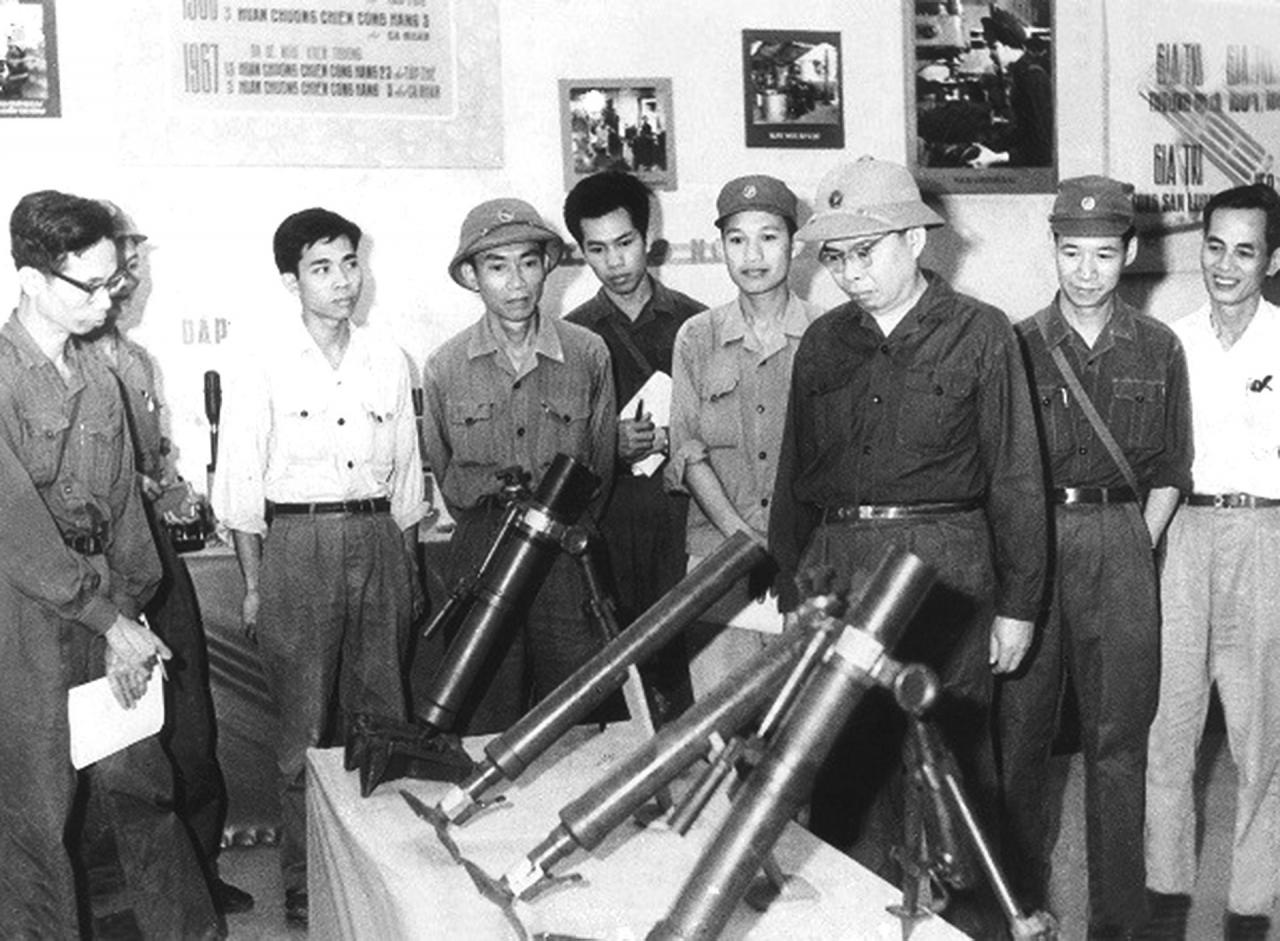
Seven days after returning to Vietnam (October 27, 1946), engineer Pham Quang Le was directly assigned to Thai Nguyen to research and manufacture anti-tank guns based on the American bazooka model, using two rounds supplied by Professor Ta Quang Buu. On December 5, 1946, President Ho Chi Minh invited engineer Pham Quang Le to the Presidential Palace. There, he personally appointed him Director of the Ordnance Department and gave him the new name Tran Dai Nghia. Entrusted with this task by President Ho Chi Minh, engineer Tran Dai Nghia, along with many comrades, built and developed the ordnance industry, manufacturing many new weapons under extremely scarce conditions of materials and equipment. Most notably, the bazooka and SKZ recoilless rifles played a crucial role in our army's victories on the battlefield. Engineer Tran Dai Nghia also opened many training courses to provide theoretical and practical training in weapon manufacturing for cadres and workers in the ordnance industry during the early days of the resistance war. For his selfless contributions, at the First National Congress of Heroes and Emulation Fighters in Viet Bac in 1952, engineer Tran Dai Nghia was awarded the title of Hero of Labor by the State, one of the first seven Heroes of Labor of the Democratic Republic of Vietnam.
From the 1950s until the end of his life, scientist Tran Dai Nghia was trusted by the Party and the State and entrusted with many important responsibilities: Director of the Ordnance Department, Director of the Artillery Department, Deputy Head of the General Department of Logistics, and then Deputy Head of the General Department of Technology (Ministry of National Defense). From Deputy Minister of Industry and Trade to Deputy Minister of Industry, in every position he held, he completed his assigned tasks excellently and continued to be appointed to many new important responsibilities: Deputy Head of the State Committee for Basic Construction, Head of the State Committee for Basic Construction, Head of the State Committee for Science and Technology. After peace was restored, he held the position of Director of the Vietnam Academy of Science and then President of the Vietnam Union of Science and Technology Associations... Each successful stage of his career was recognized with prestigious medals and awards such as: Hero of Labor title, Resistance Medal, Ho Chi Minh Medal, Ho Chi Minh Prize, and he was elected a member of the Soviet Academy of Sciences (formerly). In 1996, he was honored by the State with the Ho Chi Minh Prize for his research and development of the bazooka and recoilless rifle during the resistance war against the French. His research works have been highly appreciated internationally and widely applied in the Army.
On August 9, 1997, he fell ill and passed away in Ho Chi Minh City. Throughout his life, Professor and Academician Tran Dai Nghia dedicated himself entirely to science and, above all, to the entire Vietnamese nation. Physicist Nguyen Van Hieu said: "For our generation, the contributions and ethics of this scientist have gone down in history as a legendary figure." General Vo Nguyen Giap called Tran Dai Nghia: "the Buddha who invented weapons."
Source
![[Photo] National Assembly Chairman Tran Thanh Man attends the policy seminar to promote Vietnam-Türkiye cooperation.](https://vphoto.vietnam.vn/thumb/1200x675/vietnam/resource/IMAGE/2026/04/16/1776351415367_vna-potal-chu-tich-quoc-hoi-tran-thanh-man-du-toa-dam-chinh-sach-thuc-day-hop-tac-viet-nam-tho-nhi-ky-8705791-jpg.webp)


















![[Image] Bridges and roads connecting the eastern part of Ho Chi Minh City](https://vphoto.vietnam.vn/thumb/1200x675/vietnam/resource/IMAGE/2026/04/16/1776328595108_ndo_br_bh-vt5-jpg.webp)



















![[Infographic] Details of the Hanoi-Quang Ninh High-Speed Railway Project](https://vphoto.vietnam.vn/thumb/402x226/vietnam/resource/IMAGE/2026/04/16/1776338188424_anh-man-hinh-2026-04-16-luc-18-16-10.png)

![[Photo] National Assembly Chairman Tran Thanh Man meets with the Speaker of the Georgian Parliament](https://vphoto.vietnam.vn/thumb/402x226/vietnam/resource/IMAGE/2026/04/16/1776338494029_anh-man-hinh-2026-04-16-luc-18-21-21.png)











Comment (0)