Parallel to the transformation of production methods is the development of the collective economy . Cooperatives are increasingly becoming a strong bridge between farmers and businesses, helping to increase the value of key agricultural products.
At the Ba Dinh General Agricultural Cooperative , electronic logs, materials management software, and traceability systems are applied throughout the rice-shrimp production process. According to Mr. Nong Van Thach, Chairman of the Board of Directors and Director of the Cooperative, digitizing data helps reduce costs, increase transparency in the production process, create a foundation for building a brand of clean, organic rice, and expand the market through linkages with businesses and trade promotion. Digital transformation is therefore not only a management tool but also a competitive advantage for the Cooperative.
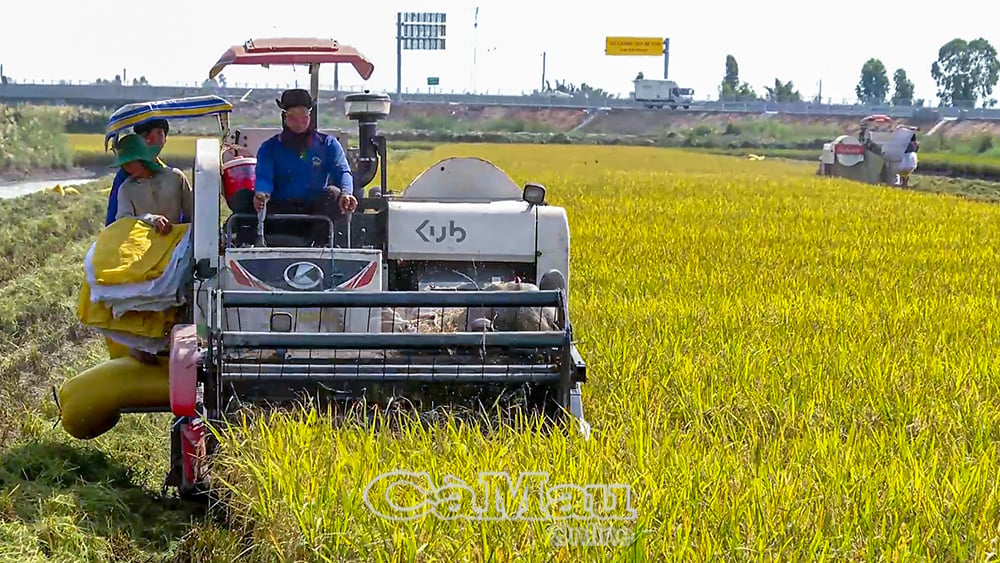 Ba Dinh General Agricultural Cooperative harvests BL9 rice grown using safe farming practices.
In the shrimp farming sector, many businesses continue to collaborate with localities to build internationally certified raw material areas , develop ecological farming models, recirculating aquaculture systems (RAS-IMTA), and high-tech farming applications. According to Mr. Tran Quoc Binh, M.Sc., from the Mekong Shrimp Technical Department of De Heus Vietnam, the RAS-IMTA model will be effective when organized into concentrated farming areas, linked with cooperatives and businesses that guarantee purchase. This approach helps improve quality, reduce emissions, meet traceability requirements, and create a foundation for building a high-tech shrimp brand for Ca Mau.


While the shrimp industry gains an advantage through technology and internationally standardized raw material sources, the crab industry possesses a distinct advantage stemming from its mangrove ecosystem and ecological farming model. As a company operating in the procurement, processing, and distribution of crabs for many years, Du Thai Binh Co., Ltd. recognizes that the green consumption trend is opening up opportunities for Ca Mau crabs to access markets with high demands for origin and quality.
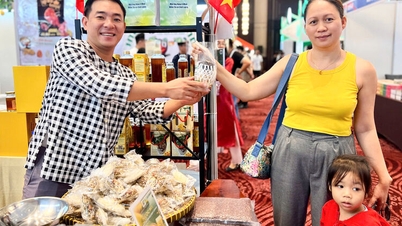
 Du Thai Binh Co., Ltd. promotes Ca Mau crab at the 2nd Ca Mau Crab Festival in 2025, in Ho Chi Minh City. Photo: ANH TUAN
However, according to company representatives, to increase added value, the crab industry needs to shift strongly from exporting raw materials to developing deeply processed products, while simultaneously promoting brand building, applying digital transformation in traceability, and expanding markets through e-commerce. Along with that, strengthening linkages between farmers, cooperatives, and businesses is a decisive factor in building a sustainable value chain and enhancing the competitiveness of Ca Mau crabs in both domestic and international markets.
New drivers of growth
It is clear that the growth potential of the three key agricultural sectors – shrimp, crab, and rice – remains very large. However, this potential has not been exploited to its full potential. In some localities, production organization lacks decisiveness; linkages between businesses, cooperatives, and farmers are not sustainable; industry data, farming area codes, and traceability are not synchronized; and many cooperatives still face difficulties in management capacity and market expansion. These are "bottlenecks" that need to be addressed soon to enable Ca Mau's agriculture to achieve breakthrough development in the coming period.
In response to increasing growth demands, digital transformation has been identified by Ca Mau province as a crucial foundation in managing its agricultural sector. Accordingly, the province will focus on building databases, managing farming and production areas, digitizing processes, ensuring traceability, and connecting to markets to improve management efficiency, reduce production costs, and meet market requirements. Simultaneously, developing concentrated raw material areas, expanding internationally certified models, improving the operational efficiency of cooperatives, and strengthening supply chain linkages will continue to be important solutions to increase product value.
 Deep processing helps enhance the competitiveness and export value of Ca Mau shrimp.
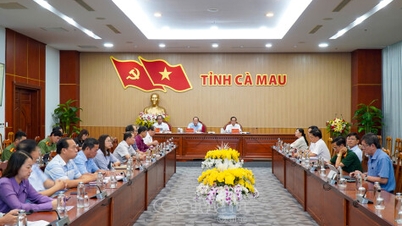
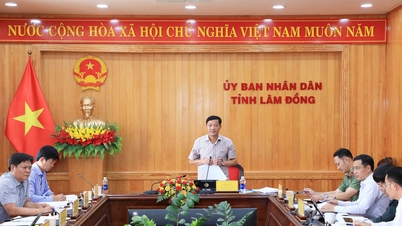
At the conference reviewing the development of key industries, Vice Chairman of the Provincial People's Committee Le Van Su requested that departments, agencies, and localities urgently review the growth potential of each industry, develop development scenarios suitable to actual conditions, and link them to the responsibility of the head of each agency.


Effectively exploit all potential, ensuring no growth opportunities are wasted; simultaneously, promote the application of science, technology, innovation, and digital transformation to improve production efficiency, sustainably develop key industries, and create new growth drivers for the province's economy.
In fact, the driving force for growth in the new phase will not only come from increasing production and expanding cultivated area, but also from science, technology, innovation, digital transformation, the collective economy, and value chain linkages. When these solutions are implemented synchronously and effectively, the three key industries will continue to play a leading role, contributing positively to GRDP growth and creating a foundation for Ca Mau's rapid and sustainable development.
Huyen Trang
Source: https://baocamau.vn/dot-pha-nganh-hang-chu-luc-a130021.html




![[Photo] Prime Minister Le Minh Hung presides over the thematic session on promoting science and technology development and innovation.](https://vphoto.vietnam.vn/thumb/1200x675/vietnam/resource/IMAGE/2026/06/23/1782207872934_ndo_br_dsc-1724-jpg.webp)