

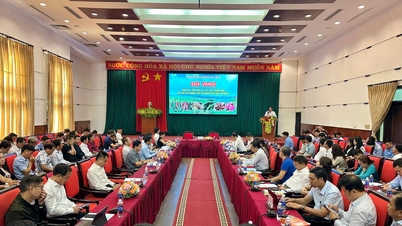
On May 22nd, the Ho Chi Minh City People's Committee organized a workshop to consult with experts, scientists , and prominent intellectuals on the draft Law on Special Urban Areas.
Building a superior legal framework.
The workshop was co-chaired by Mr. Nguyen Manh Cuong - Alternate Member of the Central Committee of the Communist Party of Vietnam, Vice Chairman of the People's Committee of Ho Chi Minh City; Ms. Nguyen Thi Hong Hanh, Director of the Department of Justice; and Mr. Truong Minh Huy Vu, Director of the Ho Chi Minh City Institute for Development Research.
In his opening remarks, Vice Chairman of the Ho Chi Minh City People's Committee Nguyen Manh Cuong stated that the draft Law on Special Urban Areas was researched and developed by city agencies based on a thorough understanding of the central government's guidelines. It also builds upon the practical experience gained from implementing special mechanisms and policies in Ho Chi Minh City over the past period.
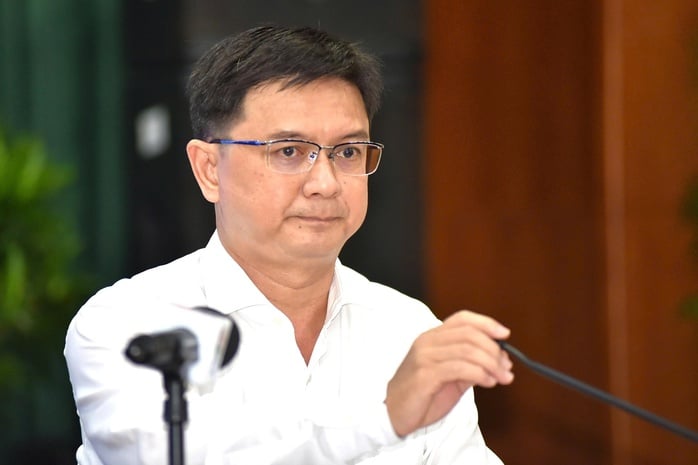
Nguyen Manh Cuong, alternate member of the Central Committee of the Communist Party and Vice Chairman of the Ho Chi Minh City People's Committee, co-chaired the workshop. Photo: LE VINH
The draft consists of 9 chapters and 45 articles, containing many groundbreaking mechanisms to help Ho Chi Minh City achieve outstanding development.
"With the spirit of 'local decision, local action, local responsibility,' the draft law aims to build a superior and unique legal framework, creating new development spaces and enhancing the proactiveness and accountability of the city government," said Mr. Nguyen Manh Cuong.
Currently, nearly 300 powers are included in the draft law. Among these, Ms. Nguyen Thi Hong Hanh stated that the Ho Chi Minh City People's Council is proposed to be granted over 140 powers, similarly, the City People's Committee over 130 powers and the Chairman of the City People's Committee over 20 powers.
Director of the Department of Justice Nguyen Thi Hong Hanh views the Law on Special Urban Areas as a draft law on decentralization. Accordingly, except for 4 areas, other areas are thoroughly and maximally decentralized.
Regarding the principle of decentralization, according to Ms. Nguyen Thi Hong Hanh, the powers of the National Assembly are proposed to be transferred to the City People's Council, the powers of the Government are proposed to be transferred to the City People's Committee, and the powers of the Prime Minister are proposed to be transferred to the Chairman of the City People's Committee.
Incorporate social housing into TOD (Transit-Oriented Development).
Speaking at the workshop, Dr. Tran Du Lich, an economic expert, emphasized the importance of clear decentralization in the Law on Special Urban Areas to definitively resolve the "request-and-grant" mechanism. He also proposed that the Law on Special Urban Areas allow the Ho Chi Minh City government to independently manage its local budget. This autonomy would be based on the principle that, since it is a local budget, the level of expenditure or the scale of projects, regardless of size, must be decided by the City People's Council.
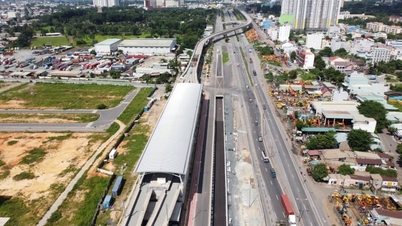
Regarding the content of TOD (Transit-Oriented Development), Dr. Ngo Viet Nam Son, an architect and urban planner, commented that the draft law focuses on exploiting commercial value. However, if the focus is too heavily on economic issues, it could easily push vulnerable groups out of TOD areas.
"The law needs a provision stipulating that 20%-30% of urban land in TOD zones should be reserved for public ownership, with a portion allocated to social housing for officials and civil servants. For example, the city could prioritize social housing in TOD zones for officials who work far from home," suggested Dr. Ngo Viet Nam Son, an architect and scientist.
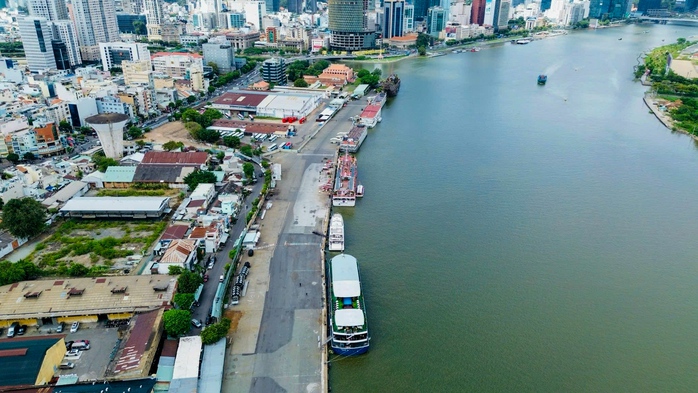
The Law on Special Urban Areas is expected to lay the foundation for Ho Chi Minh City to develop into a regional financial, science and technology, and innovation center... Photo: HOANG TRIEU
Sharing the view that mandatory social housing should be added to TOD zones and urban redevelopment areas, Dr. Do Thien Anh Tuan, from the Fulbright School of Public Policy and Management, added that Ho Chi Minh City should be given the right to regulate the minimum percentage of social housing, rental housing, worker housing, and public spaces in projects that benefit from increased planning quotas or public infrastructure.
Regarding public assets, according to Associate Professor Pham Thi Thanh Xuan, Deputy Director of the Institute of Banking Technology Research, University of Economics and Law, the draft law requires the exploitation of public assets "for the correct purpose, function, standards, norms, and regulations".
This expert commented that while this writing style is safe, if strictly applied, it could lock down the mechanism for exploiting public assets. Many public houses and land plots are currently vacant and no longer conform to their original functions, standards, and norms. Therefore, Associate Professor Pham Thi Thanh Xuan proposed that, under the Law on Special Urban Areas, Ho Chi Minh City "be allowed to handle cases where existing standards and norms are no longer appropriate."
Completed many important tasks.
Professor Nguyen Ky Phung, Head of the Management Board of Ho Chi Minh City High-Tech Park, assessed the draft Law on Special Cities as a major breakthrough in urban governance thinking and institutional reform. The draft creates a foundation for the city to develop into a regional center for finance, science and technology, and innovation.
However, to create a real international competitive advantage, Professor Nguyen Ky Phung believes that the draft law needs further refinement in the areas of AI, data, digital infrastructure, innovation, strategic technology, and high-quality human resources. If these mechanisms are fully supplemented, the Law on Special Cities could become one of Vietnam's most groundbreaking laws in the new development phase.
According to Associate Professor Dr. Nguyen Duc Loc, Director of the Institute for Social Life Research, a special city is not only measured by the scale of its infrastructure and the efficiency of its administrative apparatus, but also by the quality of life for its people.
"A sustainable city is one where both low-income workers and residents in vulnerable areas can see their future within a shared development vision," said Associate Professor Dr. Nguyen Duc Loc.
The Director of the Institute for Social Life Research proposed adding the principle of putting people at the center to the draft law, so that as the city grows stronger, no citizen will be left behind.
Source: https://nld.com.vn/phan-quyen-manh-cho-do-thi-dac-biet-tphcm-196260522211217994.htm





































































Comment (0)