



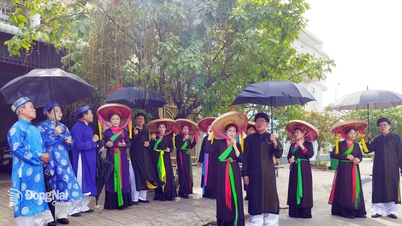
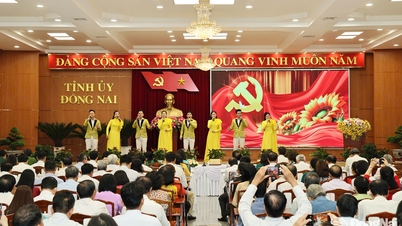
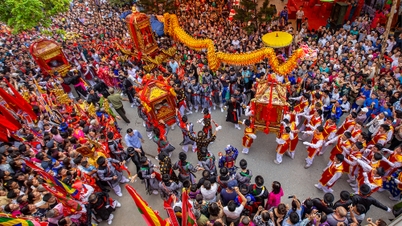
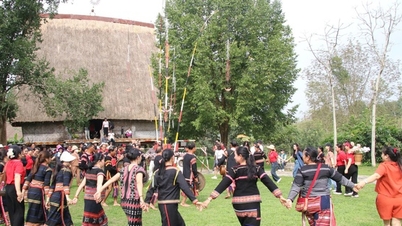
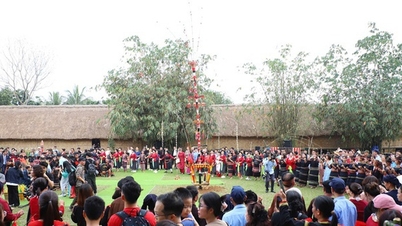
Cultural performances at the ceremony of offering incense to national hero Nguyen Trung Truc. Photo: LE TRUNG HIEU
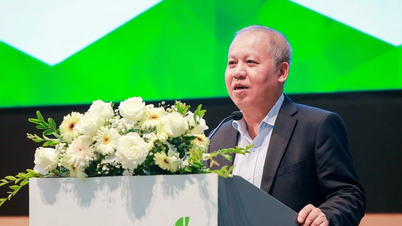
According to Politburo member, Central Committee Secretary, and Head of the Central Propaganda and Mass Mobilization Department Trinh Van Quyet, Resolution No. 80-NQ/TW was issued when the country was finalizing strategic documents to be presented at the 14th Party Congress, and the demands of development in the new era placed very high requirements on culture. This is not only a continuation of the Party's consistent viewpoints and guidelines on culture, but also a new development in thinking, vision, and methods of implementation aimed at overcoming long-standing limitations and shortcomings, while simultaneously creating new impetus for rapid and sustainable development.
While culture was previously defined as the spiritual foundation of society, Resolution No. 80-NQ/TW affirms three times that culture and people are the foundation of development; cultural development must truly become a solid foundation. Party committees, party organizations, cadres, party members, and the people need to fully, deeply, and comprehensively understand the inherent strength of culture for national development. The Resolution demonstrates the inheritance and development of the understanding of culture, affirming a profound, comprehensive, and new perspective on the position and role of culture.
A key new development is placing culture in an all-encompassing position, deeply permeating all areas from politics, economics , society, and the environment to national defense, security, and foreign affairs. Culture is defined as the nation's soft power and must be present in all development plans, programs, and projects with a long-term vision and high standards, ensuring consistency and synergy with policies for economic development, education, science, technology, and digital transformation.
From that vision, the resolution for the first time established two categories: Culture as a pillar and a regulator for the rapid and sustainable development of the country. Along with politics, economics, and society, culture became one of the four pillars of development, playing a role in harmonizing, guiding, and supporting other fields.
In the context of a fiercely competitive world of cultural values and industries, the resolution emphasizes the task of building a cultural security posture, linked to human security and digital cultural sovereignty . This is seen as a "shield" against the negative impacts of foreign cultures, harmful, offensive, and deviant information on the internet, especially on cross-border online platforms.
Resolution No. 80-NQ/TW also establishes a system of specific goals and targets for each cultural sector, linking the requirement to improve development quality with clear quantitative criteria. Cultural industries strive to contribute 7% of GDP by 2030 and 9% by 2045, and to form 5-10 national brands. The resolution requires allocating at least 2% of the total annual state budget expenditure to culture, gradually increasing according to practical needs.
Human development continues to be identified as the central, core task and the highest goal of cultural development. The Resolution clarifies the dialectical relationship between cultural development and the perfection of Vietnamese human character in the new era. At the same time, it emphasizes the need for the synchronized implementation of national values, cultural values, family values, and the standards of Vietnamese human conduct.
Furthermore, Resolution No. 80-NQ/TW links three key elements in a major task: developing cultural infrastructure; mobilizing and effectively utilizing resources; and improving the quality of cultural human resources. This is considered a decisive condition for realizing the goals and tasks of cultural development in the coming period.
Comrade Trinh Van Quyet emphasized that Resolution No. 80-NQ/TW contains many comprehensive and all-encompassing contents, with new methods and thinking, and is groundbreaking. The serious, synchronized, and effective implementation of the resolution will contribute to building a new position and stature for a modern, advanced Vietnamese culture, rich in national identity; directly contributing to the rapid and sustainable development of the country, and making a worthy contribution to the flow of human civilization.
| General Secretary To Lam requested that every official and Party member be a nucleus for spreading a culture of integrity and exemplary conduct, and seriousness in performing their duties; avoiding shirking responsibility, passing the buck, and being indifferent. Setting an example must become the most persuasive method of leadership. |
LE TRUNG HIEU
Source: https://baoangiang.com.vn/phat-huy-suc-manh-mem-a478055.html














































Comment (0)