


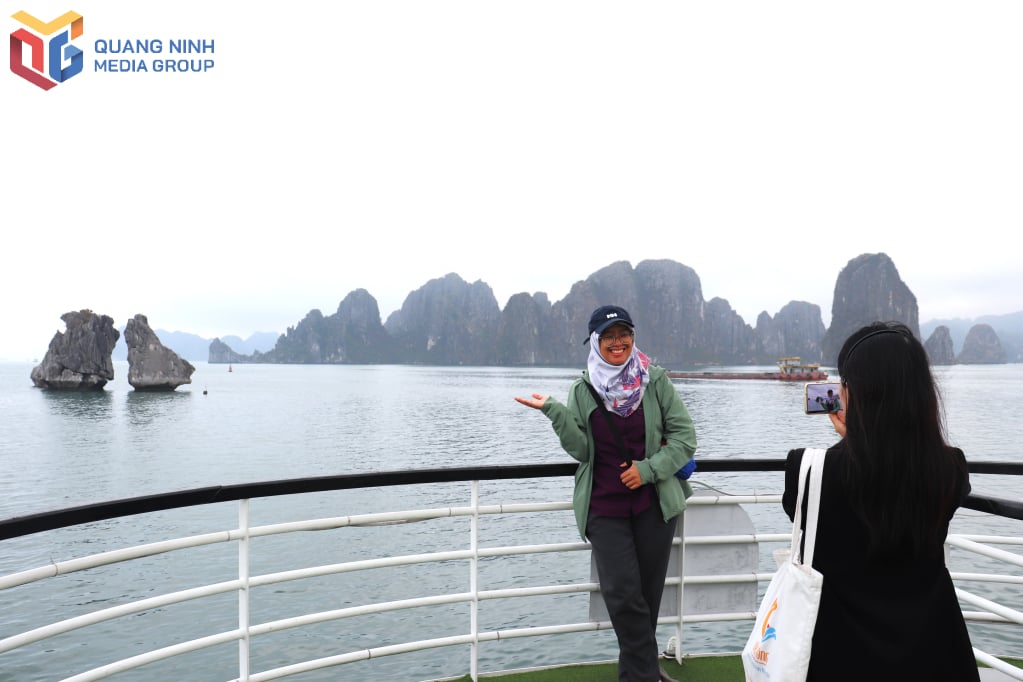
Over the years, the province has closely followed and fully implemented Vietnamese law and international conventions on the protection of world cultural and natural heritage to comprehensively and effectively implement many solutions in the management, conservation, and sustainable development of the Ha Long Bay World Natural Heritage Site. In particular, the province has implemented many pioneering and groundbreaking solutions, demonstrating its determination to prioritize the preservation of the heritage values intact, such as: relocating fishing villages on the Bay to live on land since 2014; prohibiting fishing in the strictly protected area of the Heritage Site since 2018; establishing aquaculture planning sites outside the strictly protected area of the Heritage Site; and ending the loading and unloading of bulk cargo such as clinker, cement, and wood chips in Ha Long Bay.
In addition, the province has implemented numerous solutions to protect the environment, such as: attracting projects and resources to protect the Bay's environment and control pollution at its source; implementing the "Ha Long Bay Plastic-Free" program; closely coordinating with Hai Phong City to control and protect the environment of Ha Long Bay; focusing on collecting floating waste in tourist service areas and tidal flats, island bases, and sandy beaches in the Bay, transporting it ashore for processing; and collecting waste from the coastline and drainage pipes leading to Ha Long Bay. Simultaneously, relevant units conduct quarterly monitoring and surveillance of the Bay's water environment, regularly monitoring and inspecting the environment, and strictly handling violations.
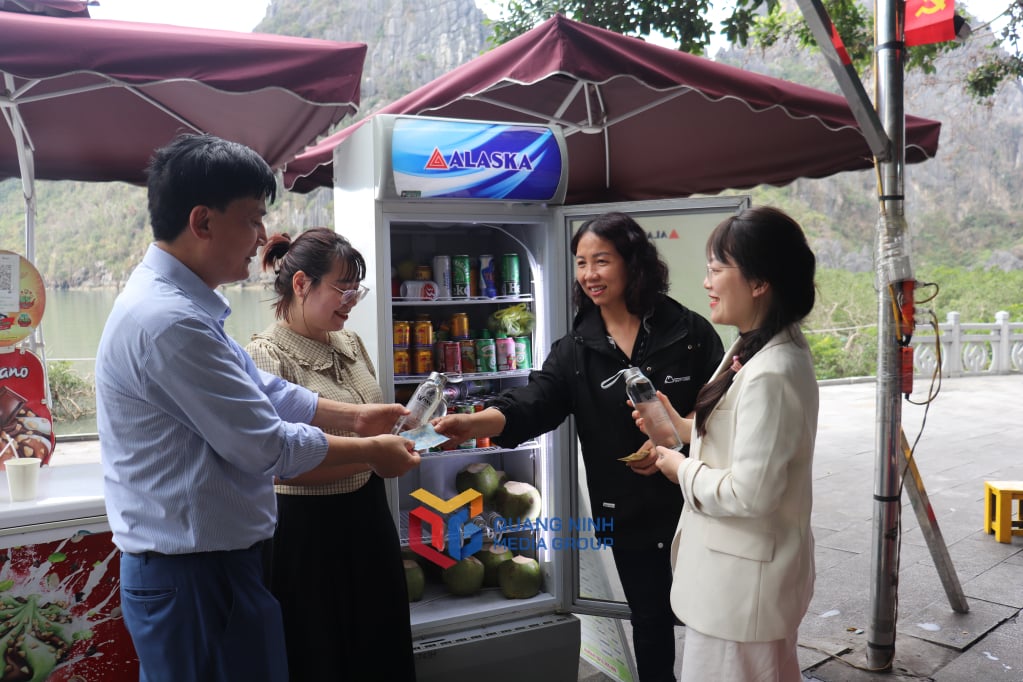
Mr. Michael Burnside, an expert from the University of New South Wales, shared: "During my visit to Ha Long Bay as part of the 'Promoting Marine and Coastal Resource Accounting' workshop, I was very impressed with the beauty of Ha Long Bay. In particular, hearing about environmental protection and the development of Ha Long Bay's value gave me valuable experience to incorporate into future research projects. Quang Ninh is doing a great job of putting its residents, and even tourists, at the center of sustainable environmental protection solutions for Ha Long Bay. They are the ones participating in waste collection, reducing waste sources, and raising awareness to encourage the community to work together to protect Ha Long Bay."
The province is determined to implement a plan to replace tourist boats in Ha Long Bay, focusing on reducing the number while increasing quality, safety, and operational efficiency. Annually, the province conducts inspections, assessments, and classifications of boats based on aesthetics, safety, and fire prevention. The province requires 100% of tourist boats to sign operating contracts with the Heritage Management agency for management, inspection, and supervision. Simultaneously, the "Green Sail" eco-label criteria are applied to tourist boats; all business activities and services in Ha Long Bay are comprehensively reviewed and strictly managed and controlled. Activities promoting, publicizing, and educating the community; leveraging the effective role of social media in communication; and applying information technology and digital technology are being intensified, contributing to improved management, conservation, and sustainable development of the Ha Long Bay Heritage site.
From 1996 to the present, Ha Long Bay has welcomed nearly 58 million visitors, including over 26 million Vietnamese and 32 million foreign tourists; generating over 8,823 billion VND in entrance fees. |
The province's policies and solutions for the sustainable development of Ha Long Bay have always received support, advice, and endorsement from international organizations, through close ties with organizations such as: the World Heritage Committee, the World Heritage Centre, the International Union for Conservation of Nature (IUCN), the Japan International Cooperation Agency (JICA), the Marine Protected Areas Network, the Asia-Pacific Network of World Natural Heritage Sites, the Club of the World's Most Beautiful Bays, etc. Through these collaborations, many exchange activities with countries within and outside the region in economic and cultural fields, especially in the management and conservation of heritage sites, have been implemented, and numerous programs and projects have been funded and carried out.
To enhance the value of its heritage, the province is diversifying tourism products and services, improving the quality of visitor experiences, and aiming for sustainable tourism development. Specifically, the province is improving the quality of traditional tourism products; developing new tourism routes, destinations, products, and services; expanding tourism spaces to enhance experiences, extend the length of stay for tourists, and reduce pressure on heritage areas; directing the addition of new tourism services to meet the needs of high-spending tourists, such as: new beaches, caves, and areas with beautiful and safe landscapes; and developing unique souvenir products reflecting the distinctive character of the Bay...
In the Quang Ninh Provincial Planning for the period 2021-2030, with a vision to 2050; and the Ha Long City Planning to 2040... the conservation and sustainable development of Ha Long Bay is linked as a key objective and task in their long-term orientations.
Mr. Vu Kien Cuong, Head of the Ha Long Bay Management Board, said: Quang Ninh focuses on improving governance efficiency by continuing to review and refine heritage management mechanisms, completing and implementing plans, regulations, and sustainable tourism development plans for Ha Long Bay. At the same time, we are also building a digital database on resources and heritage values, implementing periodic monitoring tasks on conservation status, effectively managing special-use forests, minimizing waste and wastewater; strengthening the role and participation of local people, communities, and stakeholders, linking this with raising awareness about heritage protection, resource and environmental protection based on innovative thinking, behavioral changes, and a sense of responsibility towards nature and the environment, aiming for a green lifestyle.
Source: https://baobinhphuoc.com.vn/news/4/171497/phat-trien-ben-vung-vinh-ha-long
![[Photo] Prime Minister Pham Minh Chinh receives the Director General of TASS News Agency (Russian Federation)](https://vphoto.vietnam.vn/thumb/1200x675/vietnam/resource/IMAGE/2026/02/25/1772024599891_dsc-8041-jpg.webp)
![[Photo] Prime Minister Pham Minh Chinh presides over the meeting of the Steering Committee for the Development of Science, Technology, Innovation, Digital Transformation and Project 06.](https://vphoto.vietnam.vn/thumb/1200x675/vietnam/resource/IMAGE/2026/02/25/1772024613089_1772024091685-jpg.webp)


































































![[Photo] Lung Phinh is covered in white plum blossoms.](https://vphoto.vietnam.vn/thumb/402x226/vietnam/resource/IMAGE/2026/02/25/1772036291497_tl-z7563533595318-d0f6815e01d4b292632a5f65d005af7d-8745-jpg.webp)










Comment (0)