

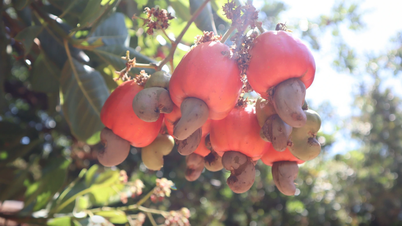
Through crop restructuring by 2030, Lam Dong's agricultural sector will sustainably develop key fruit crops suitable to the topography, soil, and climate conditions of each ecological sub-region; create a synchronized and highly effective linkage between production, processing, and consumption, contributing to increased export value and brand building in the market.
 |
| The "Ong Tinh Avocado" variety, known for its dense flesh and delicious aroma, produced in Lien Nghia town, Duc Trong district, has been granted a trademark certificate by the Intellectual Property Office. |
By 2030, the province aims for a total fruit tree area of 30,800 hectares of intercropped orchards and 20,200 hectares of monoculture orchards, with a total production of 633,500 tons. Of this, 94% will be dedicated to key fruit crops including durian, avocado, jackfruit, banana, persimmon, passion fruit, mangosteen, and citrus fruits, corresponding to an area of 48,000 hectares and a production of 601,500 tons; the area of high-tech fruit tree cultivation will reach 12,000 hectares. Notably, approximately 10,000 hectares of fruit trees will be granted planting area codes, and 30 packaging facilities will be assigned codes. This will increase the proportion of processed fruit to 30% of the total production (approximately 190,000 tons); and fruit export revenue will exceed 200 million USD. At least 60% of the total fruit production is sold through the supply chain, generating an average income of over 300 million VND/ha/year.
Specifically, by 2030, the province will have 10,600 hectares of intercropped durian trees and 15,000 hectares of monoculture, with a production of 267,556 tons. Concentrated production areas and yields will be found in the districts of Di Linh (6,500 hectares, 63,380 tons); Da Huoai (6,410 hectares, 81,255 tons); Bao Lam (3,600 hectares, 34,700 tons); Dam Rong (2,365 hectares, 19,994 tons); Da Teh (2,150 hectares, 29,820 tons); Lam Ha (1,700 hectares, 12,644 tons); Cat Tien (1,400 hectares, 10,500 tons); and the remaining 1,475 hectares of durian will be distributed across Lac Duong, Don Duong, Duc Trong districts and Bao Loc City. The province has 1,245 hectares of avocado trees planted as monoculture and 10,810 hectares as intercropped, with a production of 146,831 tons. Production is mainly concentrated in the following areas: Di Linh (3,500 hectares, 41,980 tons), Bao Lam (3,325 hectares, 35,064 tons); Lam Ha (2,530 hectares, 33,592 tons); Duc Trong (690 hectares, 17,709 tons); Lac Duong (525 hectares, 2,900 tons); Bao Loc City (450 hectares, 5,188 tons); Da Lat City (330 hectares, 3,793 tons) and the remaining 705 hectares are produced in the districts of Cat Tien, Da Teh, Don Duong and Dam Rong.
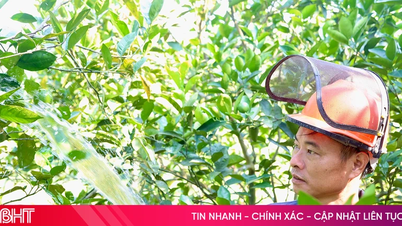
Regarding bananas, the province has 570 hectares of pure banana cultivation and 1,220 hectares of intercropping, with a production of 50,400 tons. The main banana production areas are in the districts of Di Linh (350 ha, 8,223 tons); Lam Ha (311 ha, 8,054 tons); Duc Trong (275 ha, 11,025 tons); Bao Lam (230 ha, 6,460 tons); Dam Rong (155 ha, 4,960 tons); Cat Tien (110 ha, 1,987 tons); Don Duong (100 ha, 2,880 tons); and 259 hectares scattered across Lac Duong and Da Teh districts and Bao Loc and Da Lat cities. In addition, the province aims to achieve by 2030 a total area of pure and intercropped cultivation and production of other key crops such as jackfruit (2,493 ha, 32,480 tons). Persimmon (1,990 ha, 33,850 tons); passion fruit (1,499 ha, 52,506 tons); mangosteen (1,273 ha, 4,581 tons); citrus trees (1,300 ha, 12,956 tons).
Based on the arrangement of concentrated key fruit production areas, by 2030 the entire province aims to "establish 10 new production and consumption linkage chains for fruit, bringing the total to 55 chains with a total area of 10,000 hectares (accounting for approximately 25% of the business area), with a consumption volume through the chains reaching 379,100 tons (accounting for approximately 60% of the total fruit production of the entire province), and 2,000 households participating in the linkages…". Through this, the province will support the establishment of 150 new planting area codes and 15 packaging codes for key fruit crops with an area of 3,500 hectares and a production volume of 150,000 tons; bringing the total to 200 planting area codes and 30 packaging codes by 2030 with an area of over 10,000 hectares and a total production volume of approximately 250,000 tons. Of that total, at least 60% is exported, contributing to a total export value exceeding 200 million USD.
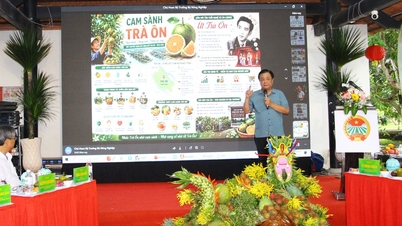
To achieve the above-mentioned goal of developing key fruit crops by 2030, the Lam Dong Department of Agriculture has identified five key solution groups. Firstly, diversifying investment capital sources from businesses, individuals, and other legal sources to build raw material areas linked to the processing, manufacturing, and consumption chain of products. Secondly, supporting the recognition of superior mother tree gardens and the publication of seedling quality standards. Researching and introducing fruit tree varieties from other regions in the country or conducting selective trials of fruit tree varieties that are resistant to pests and diseases, achieve high yields and quality, and adapt to climate change. Thirdly, applying scientific research projects and technology transfer to find fruit tree varieties suitable for each ecological sub-region, achieving high economic efficiency. Applying effective pest management measures, managing plant health; using environmentally friendly herbal pesticides. Fourthly, developing fruit tree brands associated with geographical indications and the One Commune One Product program; Promoting trade, fostering cooperation and linkages for domestic consumption and export. Fifth, implementing policies to encourage businesses to invest in agriculture and rural areas; transferring science and technology into the production of key crops in the region...
Source



![[Photo] First session of the 14th Congress of the Vietnam Trade Union](https://vphoto.vietnam.vn/thumb/1200x675/vietnam/resource/IMAGE/2026/06/03/1780465947883_ndo_br_img-3852-jpg.webp)




































![[Video] Sunset at Lap An Lagoon – Where the sun sets over the fishing nets](https://vphoto.vietnam.vn/thumb/1200x675/vietnam/resource/IMAGE/2026/05/31/1780192137701_beach-landscape-sea-water-nature-grass-745871-pxhere-com.jpeg)



























Comment (0)