

With its long-standing tradition of effective traditional medicine and diverse range of valuable native herbs, Vietnam has full potential to develop health tourism , especially traditional medicine tourism products.
Following the Covid-19 pandemic, tourists are increasingly concerned about health factors during their travels, especially in the context of climate change and rising environmental pollution. This presents an opportunity to develop unique traditional Vietnamese medicine services and products to attract tourists.
A promising direction
According to statistics, Vietnam possesses approximately 400 hot mineral springs with high therapeutic value for healing, rehabilitation, and healthcare. Along with these are over 5,000 species of plants and fungi, more than 400 species of animals, and 75 types of minerals with medicinal uses. Furthermore, Vietnam also possesses a rich and long-standing treasure trove of traditional medicine knowledge, with many valuable remedies whose effectiveness has been proven over time…
This is an invaluable resource for developing the medicinal herb and traditional medicine industry, serving the health care needs of both locals and tourists. Associate Professor, Dr. Dau Xuan Canh, Chairman of the Vietnam Traditional Medicine Association, believes that health and aesthetics are currently two factors of great global interest. Treatment using products derived from natural herbs is particularly popular due to its high therapeutic value, gentle nature, and minimal side effects. A survey by the Wellness Tourism Association shows that 76% of respondents are willing to spend more on health-improving travel, and 55% would pay extra for psychological therapy services or activities. This indicates that developing health tourism in general, and traditional medicine tourism in particular, is a very promising direction for attracting high-spending, long-stay tourists. Therefore, this not only helps to promote and showcase the strengths of Vietnamese traditional medicine, but also helps to diversify tourism products and enhance the competitiveness of the country's "green economy ".
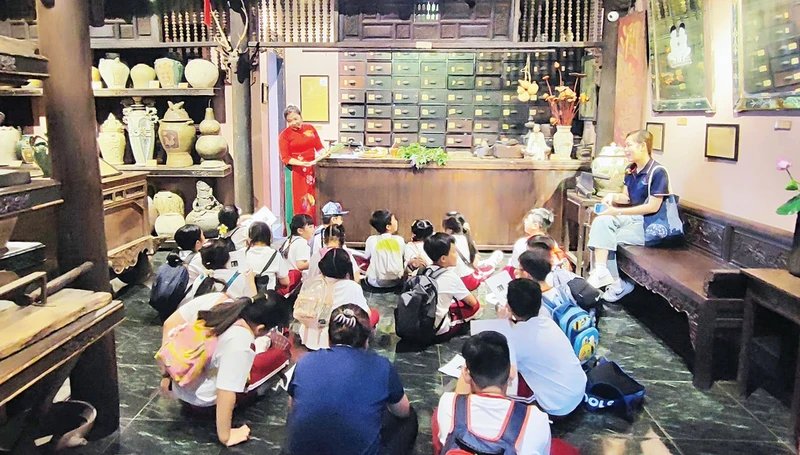
Anticipating the aforementioned trend, several localities in Vietnam have recently shown greater interest in developing health tourism, with Ho Chi Minh City emerging as a pioneering destination. In 2023, the city's health and tourism sectors announced 30 combined tour packages integrating medical tourism and healthcare, suitable for both domestic and international markets. Notably, in collaboration with travel companies, the Ho Chi Minh City Institute of Traditional Medicine welcomed hundreds of international tourists to experience medical tourism products and traditional treatment methods last year. The Vietnam Traditional Medicine Museum, located in District 10, Ho Chi Minh City, has also been a popular destination for domestic and international tourists for many years. In 2023, Da Nang Traditional Medicine Hospital also examined and treated thousands of international visitors, with the largest number coming from South Korea and the United States. However, generally speaking, experts believe that the development of traditional medicine tourism in Vietnam has not lived up to its potential, lacks synchronization, lacks attractiveness, and has not created a brand for its products and services. Bui Van Dung, Permanent Vice President of the Vietnam Association of Tourist Guides, stated that currently, health tourism in Vietnam is mainly focused on activities such as relaxation and beauty treatments, primarily conducted in resorts. There are not many tours that allow tourists to directly experience the production process of traditional medicine products, listen to experts explain the process, meaning, and effects of the products, and purchase products directly at the production site.
Develop it into a major tourist destination.
To make traditional Vietnamese medicine a leading, high-quality tourism product that brings economic benefits to both tourism and healthcare, the Ministry of Health has issued Decision 2951/QD-BYT approving the Project on Developing Traditional Medicine Services and Products for Tourists until 2030.
Five main lines of traditional medicine and pharmaceutical services and products for tourists are being developed: Traditional medicine-based health tourism (a chain of medical examination and treatment facilities; rehabilitation, sauna, massage, acupressure, physiotherapy, etc.); traditional medicine-based beauty tourism (a chain of hospitals, beauty salons, spas, etc.); medicinal herb and traditional medicine tourism (providing services for visiting and purchasing medicinal herbs and traditional medicines for tourists at a chain of drug production facilities and medicinal herb cultivation areas, etc.); traditional medicine and local culture exploration tourism (providing services for visiting, learning about, exploring, shopping for, experiencing, and using unique traditional medicine services in various regions and localities, enjoying traditional medicine-based dishes from different regions, etc.). Traditional medicine and medical tourism (organizing training courses and short-term programs on some skills in preventing and treating simple diseases using traditional medicine methods...).
Immediately after the project was approved, many provinces and cities simultaneously issued implementation plans based on their local potential and strengths, promising a rapid development of traditional Vietnamese medical tourism.
According to tourism expert, Ms. Truong Thi Bich Ngoc, despite its abundant potential, Vietnam's traditional medicine tourism products are still underdeveloped. The number of facilities recognized as meeting standards for serving tourists is small, the workforce is limited, and the technical infrastructure is also inadequate. Therefore, policies are needed to mobilize social resources for investment, upgrading infrastructure and technology, improving the quality of services and traditional medicine products for tourists; to promptly recognize facilities, products, and services that meet standards; and to develop a training and development plan for professional human resources to ensure sufficient qualifications and skills to serve tourists.
According to Ms. Nguyen Thi Huong Lien, Deputy General Director of Sao Thai Duong Joint Stock Company, the immediate priority is to combine and standardize healthcare processes based on traditional medicine and tourism. “Our approach is to use evidence and scientific research to confirm the effectiveness of natural herbs. We have strengths in herbs, and combining them with traditional techniques will create a unique method, reflecting Vietnamese identity,” Ms. Huong Lien emphasized.
Commenting on the importance of linking tourism professionals and traditional medicine, Associate Professor, Dr. Pham Hong Long, Head of the Department of Tourism Studies, University of Social Sciences and Humanities (Vietnam National University, Hanoi), stated: In reality, some forms of health tourism have emerged in Vietnam, but there are still very few specialized tours, mainly limited to individual experiences such as hot spring baths, spas, massages, and acupressure… Meanwhile, today's tourists not only need physical health care but also mental health care.
Therefore, it is essential to have close connections between suppliers of traditional medicine products and services and travel companies to create complete products that offer a comprehensive experience for tourists…
According to nhandan.vn
Source: https://baohanam.com.vn/du-lich/phat-trien-du-lich-cham-soc-suc-khoe-129927.html


![OCOP during Tet season: [Part 3] Ultra-thin rice paper takes off.](/_next/image?url=https%3A%2F%2Fvphoto.vietnam.vn%2Fthumb%2F402x226%2Fvietnam%2Fresource%2FIMAGE%2F2026%2F01%2F28%2F1769562783429_004-194121_651-081010.jpeg&w=3840&q=75)





Comment (0)