

Deputy Prime Minister Tran Hong Ha instructed the Ministry of Transport to identify areas that have been successfully completed and areas that need improvement, in line with the spirit of "a streamlined ministry and strong provinces".
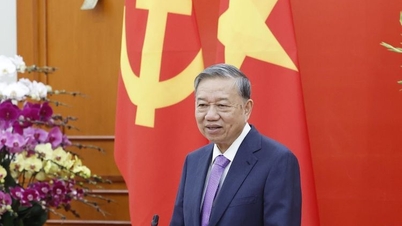
On the afternoon of December 30th, the Ministry of Transport held a conference to summarize its work in 2024 and outline key tasks for 2025. Deputy Prime Minister Tran Hong Ha attended and chaired the conference.
Acknowledging and appreciating the achievements of the transport sector, the Deputy Prime Minister said that attending the Ministry of Transport's summary conference today was a "very special" experience.
"This is a historic conference as the country enters a new era. After nearly 80 years, the transport sector is preparing to enter a new period," the Deputy Prime Minister said.
According to the Deputy Prime Minister, the Ministry of Transport will soon have a new organizational model that will synchronize transport issues with urban and rural development. This change is aimed at strengthening and synchronizing the system, contributing to building a "lean, efficient, effective, and efficient" state apparatus as directed by the Party, State, and Government leaders.
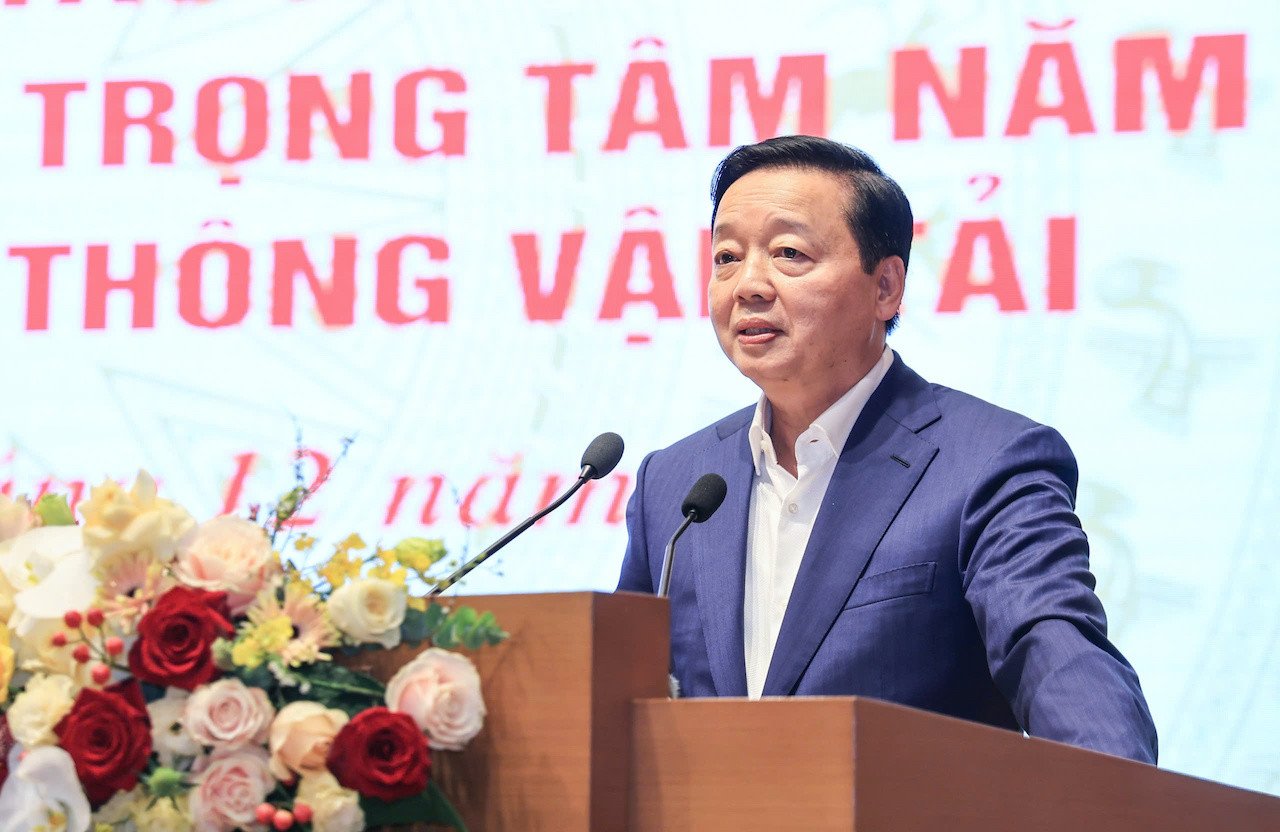
"With its pioneering mission, the transport sector creates connections between economic sectors, between localities and countries," the Deputy Prime Minister said. He added that despite many difficulties in 2024, Vietnam recorded many bright spots such as being among the top 15 developed countries attracting the highest FDI; the Happiness Index increased by 11 ranks, standing at 54th out of 143 countries; and the Innovation Index ranked 44th out of 132 countries.
For the transportation sector, especially the road sector, while in the nearly 20 years prior to 2021, the country only invested in nearly 1,200km of expressways, from 2021 to the present, the total length of completed and operational expressways has reached nearly 900km. The total length of expressways has increased to 2,021km.
Over the past year, the Ministry of Transport has coordinated the development and completion of two laws, the Road Law and the Road Traffic Order and Safety Law, which have been submitted to the Government and the National Assembly for promulgation. These laws reflect innovative thinking and contain many groundbreaking points.
Regarding future tasks, the Deputy Prime Minister requested that the Ministry of Transport, following the merger process, should improve upon what has been done well, in line with the spirit of "a streamlined ministry and a strong province," gradually training a team of officials with innovative and groundbreaking thinking, organizing the management apparatus in the direction of "Sleek - Compact - Strong - Efficient - Effective - Effective," integrating with the management of urban and rural areas, and building a comprehensive strength.
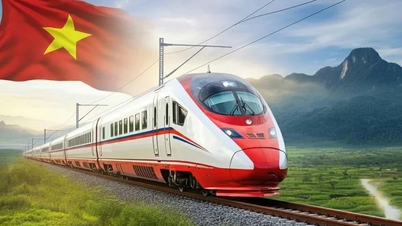
The transportation sector also needs to proactively seize opportunities and take the lead in industrial development, especially opportunities arising from high-speed rail and urban rail projects.
"In 2025, the transport sector must identify key investment projects and address institutional reforms in railways, maritime transport, inland waterways, and aviation. The Ministry should promptly prioritize key projects such as the North-South high-speed railway line, the Ho Chi Minh City-Can Tho line, and the Lao Cai-Hanoi-Hai Phong line, expediting investment procedures, commencement, and inclusion in national key projects to accelerate progress," the Deputy Prime Minister instructed.
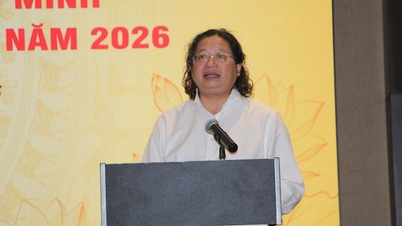
Minister of Transport Tran Hong Minh stated that the Deputy Prime Minister's directives are important guidelines to help the sector effectively implement key tasks in 2025 and subsequent periods.
The Minister emphasized that 2025 is a very important year, a year of accelerated breakthroughs towards the finish line. This is also the final year of the five-year socio-economic development plan (2021-2025).
Building upon the achievements and overcoming the shortcomings and limitations of 2024, the entire transport sector will strengthen unity and focus its efforts with the highest determination to successfully implement the assigned tasks and plans for 2025.
In 2024, the Ministry of Transport completed its research and report, and the Politburo and the Central Committee approved a Resolution on the investment project for the North-South high-speed railway. The 15th National Assembly also approved the investment plan at its 8th session.
The Ministry has commenced construction on 10 projects and inaugurated and put into operation 8 projects. To date, the progress of key projects is on schedule. Responding to the 500-day intensive emulation campaign to bring 3,000km of expressways to completion by 2025, several component projects of the North-South expressway section from Quang Ngai to Khanh Hoa are expected to be completed 3-6 months ahead of schedule.
Source: https://vietnamnet.vn/pho-thu-tuong-sau-sap-nhap-nganh-gtvt-thuc-hien-tinh-than-bo-tinh-tinh-manh-2358294.html
![[Photo] Prime Minister Pham Minh Chinh presides over a meeting on private sector economic development.](/_next/image?url=https%3A%2F%2Fvphoto.vietnam.vn%2Fthumb%2F1200x675%2Fvietnam%2Fresource%2FIMAGE%2F2025%2F12%2F20%2F1766237501876_thiet-ke-chua-co-ten-40-png.webp&w=3840&q=75)


![[Photo] Prime Minister Pham Minh Chinh presides over the conference announcing the establishment of the International Finance Centre in Vietnam.](/_next/image?url=https%3A%2F%2Fvphoto.vietnam.vn%2Fthumb%2F1200x675%2Fvietnam%2Fresource%2FIMAGE%2F2025%2F12%2F21%2F1766309817714_ndo_br_dsc-3400-jpg.webp&w=3840&q=75)









































































Comment (0)