

Since time immemorial, the Vietnamese people have valued community spirit and their homeland—the place where they were born and raised—as a place to return to their roots and nurture their souls. The legend of "the Dragon and the Immortal" has deeply ingrained in the hearts of every Vietnamese person a sense of national pride and the long-standing unity and solidarity of the Vietnamese community.
President Ho Chi Minh, the beloved leader of the nation, affirmed: "As descendants of Lac and Hong, everyone has, to a greater or lesser extent, patriotism." He instructed: "Our people should remember the word 'unity': unity of sentiment, unity of strength, unity of heart, unity of alliance" and "Unity, unity, great unity/Success, success, great success."
The "great unity" ideology of the great President Ho Chi Minh is also a beautiful inheritance and development of the tradition of "descendants of the Dragon and the Immortal," reminding us of our bond, sharing, and responsibility to the nation, our homeland, and our country. Wherever we are, we are still brothers and sisters, sharing the same Lac Hong blood, all Vietnamese with red blood and yellow skin!
In the current context, as the country enters a new era of national progress to stand shoulder-to-shoulder with the world's leading powers, the reorganization of administrative units is a major strategic policy of the Party and the State.
The ultimate goal is to streamline the administrative apparatus, improve the efficiency of state management, concentrate and mobilize resources to promote socio-economic development, ensure national defense and security, and ensure the well-being and happiness of the people. Therefore, the merger is not a "loss" but a "combination," a necessary step to create new administrative units that are larger, stronger, have more room for development, and are capable of addressing the challenges of the new development phase.
Many people agree with the policy of reorganizing administrative units and streamlining the organizational structure, and are ready to adapt to this significant change, sacrificing personal interests for the common good of the country. However, alongside the support, there are still some concerns about disruptions to daily life and the potential impact on local cultural values when administrative units are reorganized.
In particular, many people use social media to express their thoughts and concerns about the provincial reorganization, the names after the reorganization, and the location of the new administrative center with negative attitudes, criticism, rejection, and even derogatory language about customs and traditions, comparing one locality to another, saying "my province is like this, your province is like that..." We completely empathize with and share the thoughts and worries of the people regarding the merger, naming, and selection of the new political and administrative center of the new administrative unit after the reorganization.
However, the use of inflammatory and propaganda by social media users, which incites negative sentiment and causes public panic, is an action contrary to the common interests of the nation and its people. It not only creates division and localism but also hinders efforts to develop the country in accordance with the Party's major policies and directions in this new era and with new opportunities for the nation.
Indeed, the names of villages, communes, districts, and provinces are not just place names on maps, but also repositories of cultural and historical values, the unique imprint of each region. However, there is a truth: although names and administrative boundaries may change over time, the core values of one's homeland are always preserved, promoted, and recognized through ancient architectural structures, traditional customs, and the language of its people.
"Homeland" will always be a cherished memory, a place in the heart of every person. Looking more broadly, four thousand years of nation-building and defense have proven that, despite countless upheavals and changes, the cultural essence and spirit of Vietnam have always endured. This is especially true during the more than a thousand years of Chinese rule—a period that seemed capable of erasing all traces of Vietnamese culture and identity.
However, despite the efforts of foreign powers to impose and assimilate culture, economy, and language, the patriotic spirit and will for independence of the Vietnamese people, of the descendants of Lac and Hong, have always been a continuous, strong, and unceasing current.
Historic victories such as Bach Dang, Chi Lang, Dong Da, Dien Bien Phu, and the victorious Ho Chi Minh Campaign on April 30, 1975… have demonstrated the indomitable spirit of unity and patriotism – the “soul” of Vietnam, which cannot be subdued by any force.
In reality, each stage of the country's revolution presented its own historical demands. Therefore, after numerous divisions and mergers, although place names like Hoa Lu capital, Thang Long capital, Ai Chau district, Gia Dinh city, Ha Dong city, Pho Hien trading port... no longer appear on contemporary administrative maps, the cultural and historical values of these lands continue to live on and are constantly nurtured, developed, and spread through tangible and intangible heritage.
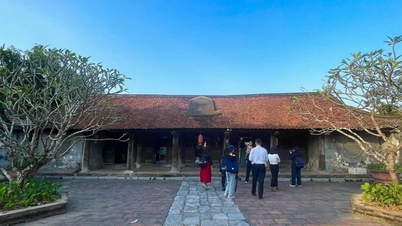
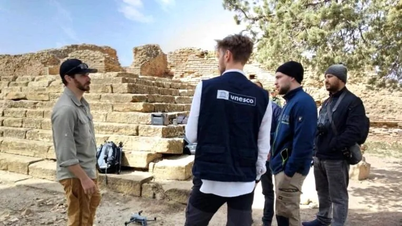
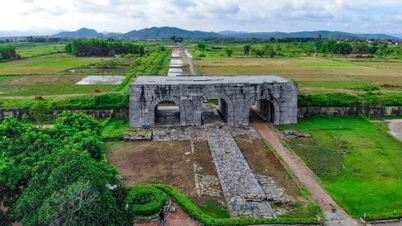
The Hoa Lu Ancient Capital National Special Monument, Thang Long Imperial Citadel, Temple of Literature - National University, Ho Dynasty Citadel, Ben Thanh Market, Van Phuc Silk Village, Pho Hien National Special Monument... are all testaments to the cultural identity of these ancient places.
And amidst the modern pace of life, we still recognize the familiar echoes in the distinctive accents of people from the North, Central, and South of Vietnam, Thanh Hoa, Nghe An, Quang Nam, and other regions. Traditional dishes, imbued with the flavors and culture of each region, such as banh chung, banh tet, banh day, Hue beef noodle soup, Quang noodles, etc., will always remain a source of pride, enriching the cultural essence and connecting Vietnamese people across the country and overseas. Therefore, changing the name is not a denial of the past, but a building of the future on the foundation of history and culture.
General Secretary To Lam once said: "When mergers occur, it's understandable that there's a feeling of nostalgia for one's homeland, and I fully understand that. But the country is our homeland, and we must prioritize its common development. Merging to streamline operations and save costs is only part of the solution; what's truly important is creating momentum and room for further development!"
The General Secretary's words strongly affirm the national spirit of "compatriots." "Homeland is where we are born and raised, but the Fatherland is the common home of all of us," he said. "The country is where our people are united. On this S-shaped strip of land, every inch of land, every mountain, every river is a part of the Fatherland's flesh and blood!"
And General Secretary To Lam's statement has also opened up a profound and responsible perspective for us regarding higher priorities and the destiny of the entire nation: The greatest fear is not the change in administrative names or "losing our homeland," but the risk of falling behind and losing our national standing on the international stage.
In the process of national development, change is inevitable. We need to view the changes in the arrangement and selection of political-administrative centers and the new administrative names after the reorganization with a constructive spirit and a forward-looking vision. Let's put national and ethnic interests above all else to work together to build a strong and prosperous Vietnam.
Let love for our homeland and aspirations for a bright future guide us; do not let negative public opinion hinder the nation's progress. Because this beautiful land belongs to us, and the future of our homeland lies in the unity and efforts of every Vietnamese citizen.
Source: https://baophapluat.vn/que-huong-trong-tim-and-trach-nhiem-voi-su-phat-trien-cua-dat-nuoc-post544294.html


![[Photo] Prime Minister Pham Minh Chinh presides over a meeting on private sector economic development.](/_next/image?url=https%3A%2F%2Fvphoto.vietnam.vn%2Fthumb%2F1200x675%2Fvietnam%2Fresource%2FIMAGE%2F2025%2F12%2F20%2F1766237501876_thiet-ke-chua-co-ten-40-png.webp&w=3840&q=75)

















































Comment (0)