

The Ministry of Natural Resources and Environment is urgently finalizing the draft Law on Geology and Minerals to submit to the Government and the National Assembly for approval as planned. The Ministry has revised and supplemented some contents in the draft to suit the practical situation in order to resolve the difficulties and obstacles of the 2010 Mineral Law.
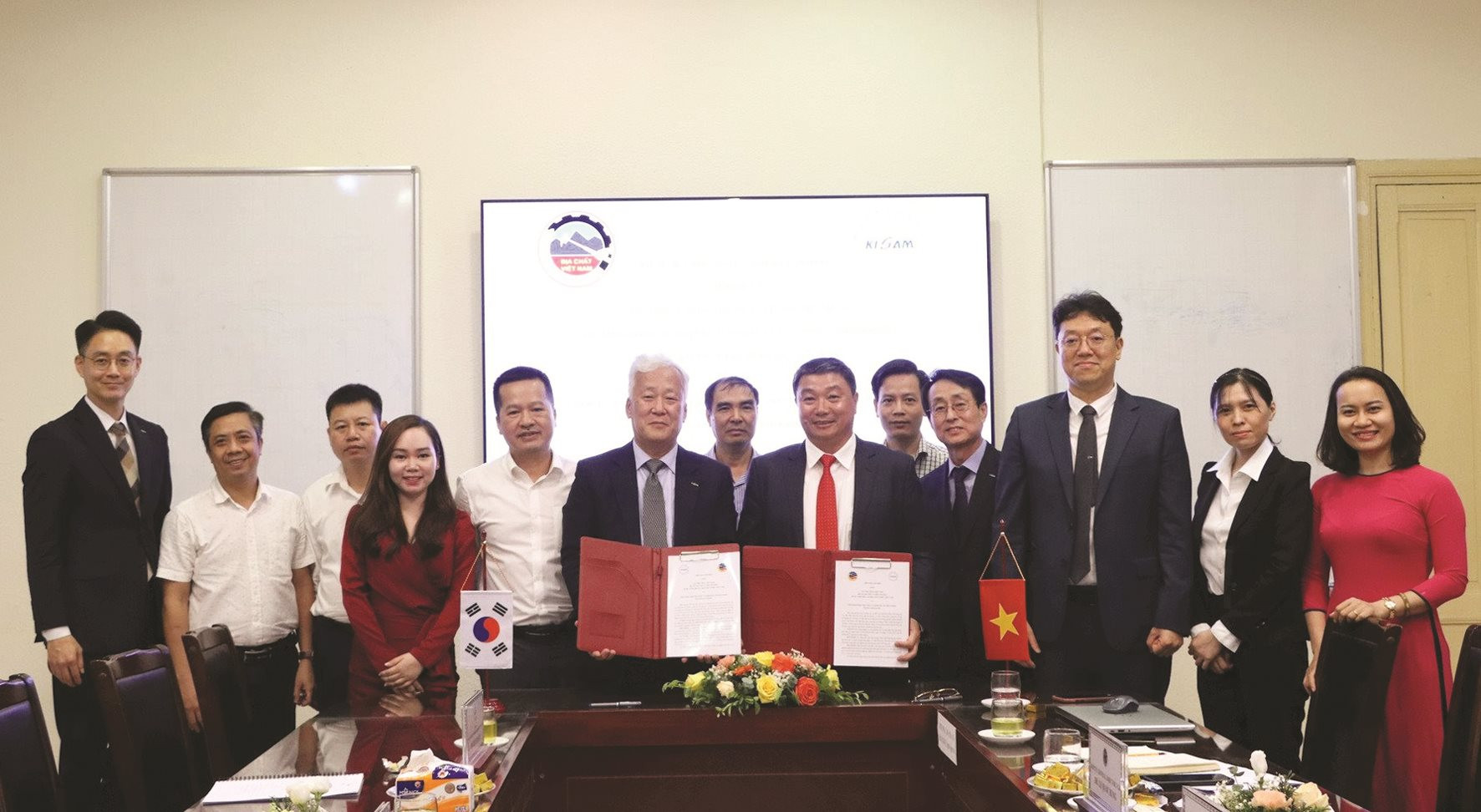
The difficulties include the fact that cooperation in the investigation, exploration, exploitation, and processing of certain minerals abroad has not been significantly implemented, mainly by a few private enterprises. Large enterprises investing abroad lack experience and understanding of geological conditions and laws, resulting in low efficiency.
Furthermore, it must be acknowledged that appropriate and effective policies and solutions to encourage businesses to adopt advanced technologies in mineral extraction and processing, as well as to encourage foreign investors in mineral activities to modernize the mining industry, are still limited.
To contribute to addressing these challenges, right from the drafting stage of the Law on Geology and Minerals, the Ministry of Natural Resources and Environment has included international integration and cooperation in geology and minerals as one of the important contents of the Draft Law, clearly stipulating the principles and responsibilities in international integration and cooperation in geology and minerals.
Specifically, the Draft Law on Geology and Minerals stipulates that international cooperation in basic geological research and surveys, basic geological surveys of minerals, and mineral resource management must be placed within the overall socio -economic development strategy of the country in each period; the geological, mineral, and mining industry strategy; comply with Vietnamese law and international treaties to which the Socialist Republic of Vietnam is a party; and ensure consistency with Vietnam's foreign policy.
At the same time, international cooperation in basic geological research and surveys, basic geological surveys of minerals, and mineral resource management must ensure the principles of equal cooperation and mutual benefit on the basis of respect for independence, sovereignty , and territorial integrity, non-interference in each other's internal affairs, respect for Vietnamese law, and relevant international treaties to which the Socialist Republic of Vietnam is a party.
In addition, international disputes concerning geology and minerals are resolved through peaceful means, in accordance with international practice, international law, and the laws of the parties involved.
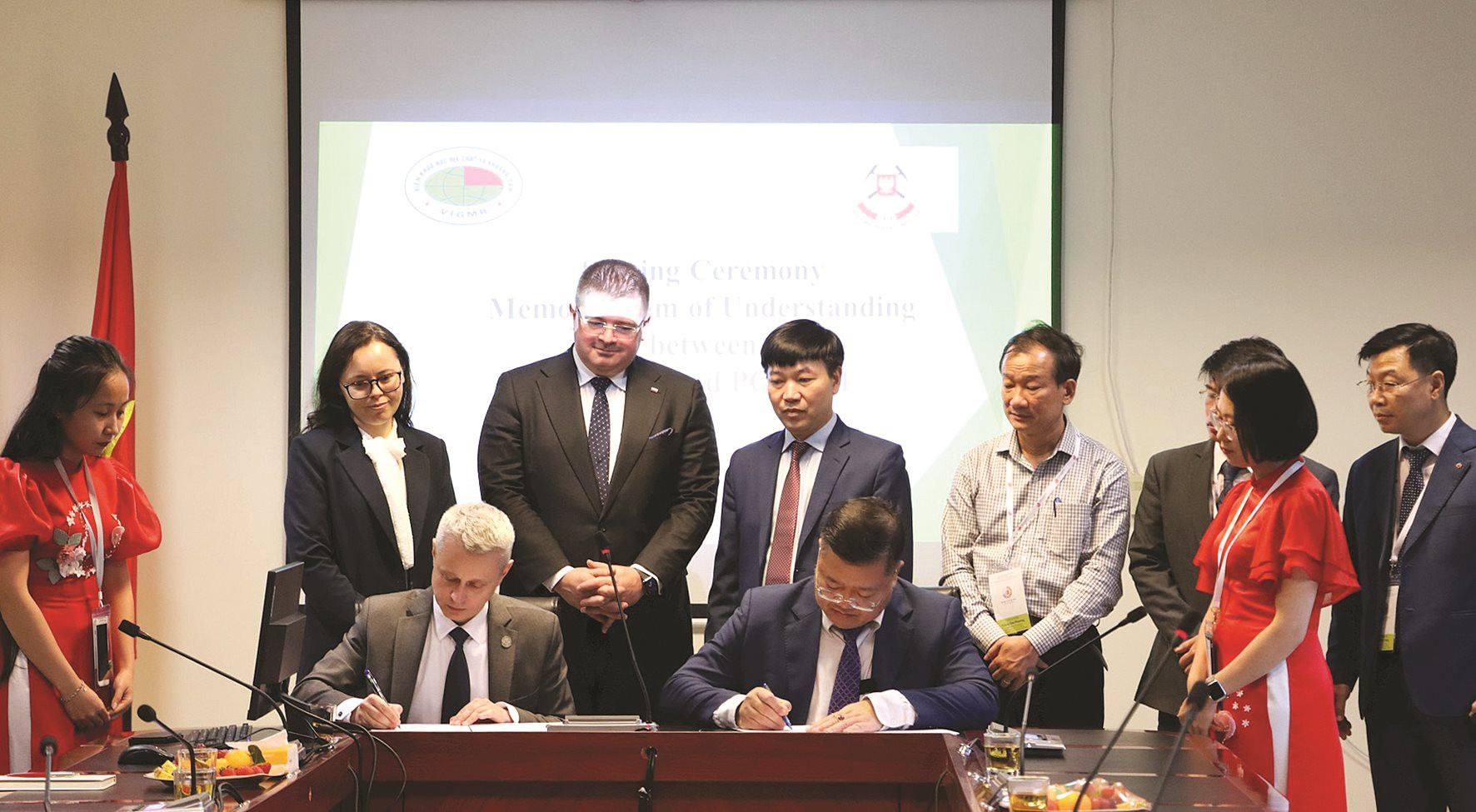
Decision No. 866/QD-TTg of the Prime Minister: Approving the Plan for exploration, exploitation, processing and utilization of minerals for the period 2021 - 2030, with a vision to 2050, also emphasizes that the goal for processing is to focus domestic resources and promote international cooperation to invest in the deep processing of minerals such as bauxite, titanium, rare earth elements, nickel, chromite, etc.
The draft Law on Geology and Minerals also stipulates responsibilities in international integration and cooperation on geology and minerals, including: The State encourages proactive international integration in research and development of science and technology in the fields of basic geological surveys, basic geological surveys of minerals, control of mineral activities, and application of circular economy models in mineral exploitation and processing.
In addition, organizations and individuals should proactively implement international requirements, conditions, and standards related to basic geological surveys, basic geological surveys of minerals, and mining activities that are internationally recognized and widely applied to enhance their competitiveness in international trade.
On the part of the Ministry of Natural Resources and Environment, the Ministry is the focal agency for coordinating international cooperation activities in geological research and basic surveys, mineral geological surveys, and mineral resource management.
Meanwhile, ministries, sectors, and People's Committees of provinces and centrally-administered cities that engage in international cooperation activities related to basic geological surveys, basic geological surveys of minerals, and mineral resource management are responsible for annually assessing the situation of their international cooperation activities and submitting reports to the Ministry of Natural Resources and Environment for compilation and reporting to the Prime Minister.
International cooperation on geology and minerals is not only stipulated in the Draft Law on Geology and Minerals, but it is also mentioned repeatedly in Decision No. 334/QD-TTg of the Prime Minister approving the Strategy on Geology, Minerals and Mining Industry until 2030, with a vision to 2045.
According to this Decision, in order to improve the legal system on basic geological and mineral surveys and the mining industry, it is necessary to improve policies to encourage cooperation and foreign investment in the use of advanced and modern technologies in mineral exploitation and processing, aiming to master advanced technologies transferred from developed countries, narrowing the gap in development level compared to advanced countries in geology, minerals, and the mining industry; and to encourage domestic enterprises to invest abroad in the field of geology and minerals, especially for important minerals, in order to increase domestic mineral reserves.
The decision also stated that in order to enhance the application of advanced and modern science and technology and international cooperation in geology, minerals, and mining industry, it is necessary to promote international cooperation and learn from experience in research and investigation of underground space, investigation of hidden minerals, investigation of geological heritage, building geological and mineral databases, and mineral resource management...
To implement the Strategy, the Ministry of Natural Resources and Environment is responsible for strengthening international cooperation in research and investigation of underground space, investigation of deep-seated minerals, building geological and mineral databases and mineral resource management; and cooperating in research on technology for exploiting lignite in the Red River Delta.
Hopefully, with the Ministry of Natural Resources and Environment and other relevant ministries and agencies paying attention to promoting international cooperation in geology and minerals, Vietnam's mining industry will experience positive changes and strong growth in the coming time.
Source
![[Photo] Prime Minister Pham Minh Chinh receives the Chinese Ambassador to Vietnam](https://vphoto.vietnam.vn/thumb/1200x675/vietnam/resource/IMAGE/2026/04/05/1775397481797_ndo_br_dsc-5512-jpg.webp)






























































Comment (0)