The distorted narratives of subversive forces.

But it is precisely in this space that a paradox exists: the more access to information is expanded, the greater the risk of being misled by false information; the more freedom to express one's opinions is available, the more opportunities there are for the abuse of freedom to distort, slander, and incite. That is why every civilized nation must constantly improve its laws to ensure that freedom is exercised responsibly.
Therefore, the Government issued Decree No. 174/2026/ND-CP stipulating administrative penalties for violations in the fields of postal services, telecommunications, radio frequencies, electronic transactions, and information technology, effective from July 1, 2026. This decree increases the penalties for disseminating fake or false information on social media, a necessary step in line with practical requirements. However, as a pre-programmed reaction, some opposition organizations and individuals overseas, along with some sycophants and impersonators of democracy and human rights activists, immediately launched distorted narratives such as: "The government is exploiting resources," "People are being silenced," "Speaking the truth will result in fines"... Of course, discerning people can clearly see that their purpose is not to offer policy suggestions but to deliberately create misconceptions in public opinion, equating freedom of speech with the right to disseminate false information.

This tactic is not new, but it is still repeated. Because, if we acknowledge the truth that the decree only deals with acts of spreading fake news, slander, distortion, defamation, or causing harm to society, then all distorted arguments become meaningless. It must be affirmed that no country in the world allows unlimited freedom on the internet. Even countries considered the cradle of freedom of speech have strict sanctions against the dissemination of false information, incitement to hatred, slander, or infringement of the legitimate rights and interests of others.
Freedom of speech is a fundamental human right, but that right does not include the right to fabricate the truth. Freedom also does not equate to irresponsibility. In a society governed by the rule of law, the rights of each individual are always accompanied by the obligation to respect the rights of the community and those around them.
Recent experiences in Vietnam show that fake news is becoming a dangerous form of "information pollution." A single edited video , a fabricated article, or an unverified status update can spread at breakneck speed, reaching millions of people in just a few hours. Many incidents have caused serious consequences. Some false information causes public panic and affects production and business; some baseless rumors cause significant losses to businesses; and some slanderous content seriously damages the honor and dignity of individuals. More dangerously, many individuals have used social media as a tool to undermine the Party's ideological foundation, incite discontent, and sow discord within the national unity. However, for a long time, the penalties for these actions have not been commensurate with the consequences. Some individuals profit greatly from views and interactions on false content, but the penalties are too low and insufficient to deter them. This inadvertently creates a mentality of disregard for the law, leading many people to readily violate it for immediate gain.
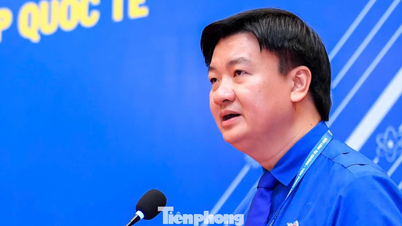
Therefore, increasing penalties is not intended to restrict citizens' freedom but to re-establish order in the digital environment. The online space cannot be a place where anyone can say whatever they want, slander anyone they want, or fabricate anything they want without accountability. Speaking at the Conference on Disseminating the Code of Conduct for a Culturally Advanced Digital Environment (May 22nd), Mr. Le Quang Tu Do, Director of the Department of Broadcasting, Television and Electronic Information, emphasized: “In 2026, the management of online activities is developing to a new level. It conveys the message of the Party and Government that all activities related to advertising, performing arts, influencers (KOLs), and online activities must be brought within the framework of the law.” This message reflects a modern management mindset: development must go hand in hand with management; innovation must be linked to discipline; and freedom must be accompanied by responsibility.
Decree No. 174/2026/ND-CP is not simply about administrative penalties, but also a step forward in building a culture of conduct in the digital space. A civilized society cannot exist if honest people speak out cautiously, while those who spread fake news operate openly. A healthy digital environment cannot be formed if truth and falsehood are treated equally. The freer the online space, the more it needs laws. This is not only a requirement of state management but also a condition for protecting human rights, protecting the truth, and protecting social trust. When information is verified, when violations are strictly punished, and when each social media user is clearly aware of their responsibilities, the online space will truly become an environment that promotes creativity, spreads positive values, and serves the development of the country.
Cleaning up cyberspace is therefore not about restricting freedom, but about protecting genuine freedom; not about suppressing the voices of the people, but about ensuring that honest and responsible voices are respected and heard. This is also an essential requirement of a rule-of-law state, of a civilized society, and of a nation confidently entering a new era of development.



Trung Tin
Source: https://baophutho.vn/quyet-liet-lam-sach-khong-gian-mang-256859.htm